


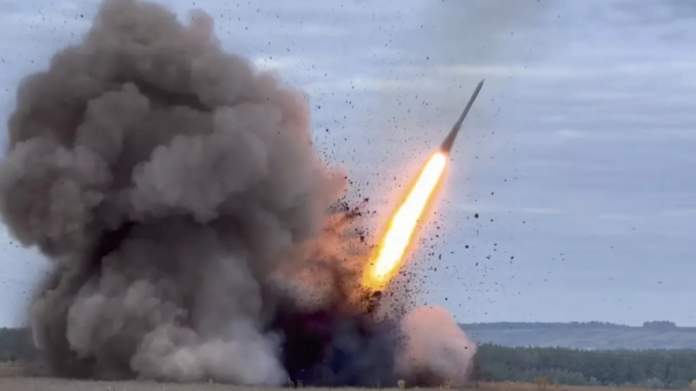
Iran has launched fresh wave of drone and missile attacks on energy infrastructure across Gulf countries on Thursday, sending global oil prices soaring again amid the escalating war involving the United States and Israel.
The renewed assaults came hours after two oil tankers were struck near Iraq, intensifying fears of disruption to global energy supplies.
Authorities said at least one crew member was killed, while 38 others were rescued following the attack on the vessels in the Persian Gulf.
The strikes form part of a wider escalation in the conflict that began after U.S. and Israeli military action against Iran, which has since spread across the Middle East.

Gulf Energy Targets Hit
On Thursday morning, Bahrain advised residents to remain indoors and shut windows after Iranian strikes targeted fuel storage tanks in the country.
In Saudi Arabia, authorities said air defence systems intercepted drones heading toward the Shaybah Oil Field as well as the diplomatic district.
Earlier, drones struck fuel storage facilities at the Salalah Port in Oman, forcing authorities to suspend operations at the facility.
Shipping activity around the strategic Strait of Hormuz also came under renewed threat.
A container ship near the United Arab Emirates was hit by what maritime authorities described as an “unknown projectile,” sparking a small fire on board. All crew members were reported safe.
Tanker Attacks in Iraqi Waters
The maritime incidents followed another attack on two oil tankers close to Iraqi waters.
Officials said the vessels were subjected to suspected sabotage, killing one crew member while rescue teams saved dozens of others.
The Iraqi government described the development as deeply concerning for regional energy security.
Strait of Hormuz Under Threat
Tensions remain especially high in the Strait of Hormuz, a narrow waterway through which roughly one-fifth of the world’s oil supply passes.
Iran has warned that it would block oil exports from the Gulf as long as U.S. and Israeli attacks on its territory continue.
In the past 24 hours alone, several maritime incidents involving commercial vessels have been reported in the region, including an attack on a Thai bulk carrier that left three crew members missing, according to shipping company Precious Shipping.
Despite the escalating attacks, U.S. President Donald Trump insisted Iran was nearing defeat.
“They are pretty much at the end of the line,” Trump told reporters, though he cautioned that the conflict would not end immediately.
He also warned that Washington could target infrastructure in Iran that might take decades to rebuild, while saying he preferred restraint if possible.
Earlier, Trump said U.S. forces had already destroyed 28 Iranian vessels used for laying naval mines.
The widening conflict has triggered sharp fluctuations in global energy markets.
Oil prices climbed above $100 per barrel, despite the International Energy Agency announcing a record release of 400 million barrels from strategic reserves.
The move includes 172 million barrels from the United States, but analysts say the release may not be enough to stabilise markets if the conflict continues to escalate.
Meanwhile, Iran’s Islamic Revolutionary Guard Corps warned it could target economic infrastructure linked to the United States and Israel across the region.
Ali Fadavi, an adviser to the Guards’ commander-in-chief, said Washington and its allies should prepare for a prolonged conflict.
“The United States and Israel must consider the possibility that they will be engaged in a long-term war of attrition that will destroy the entire American economy and the world economy,” he said on Iranian state television.
The conflict has also intensified fighting in Lebanon, where Israeli strikes targeting Iran-backed Hezbollah have killed more than 630 people, according to Lebanese authorities.
The violence has displaced more than 800,000 people, with thousands forced to take shelter in public buildings or sleep outdoors, including along the seafront in Beirut




