


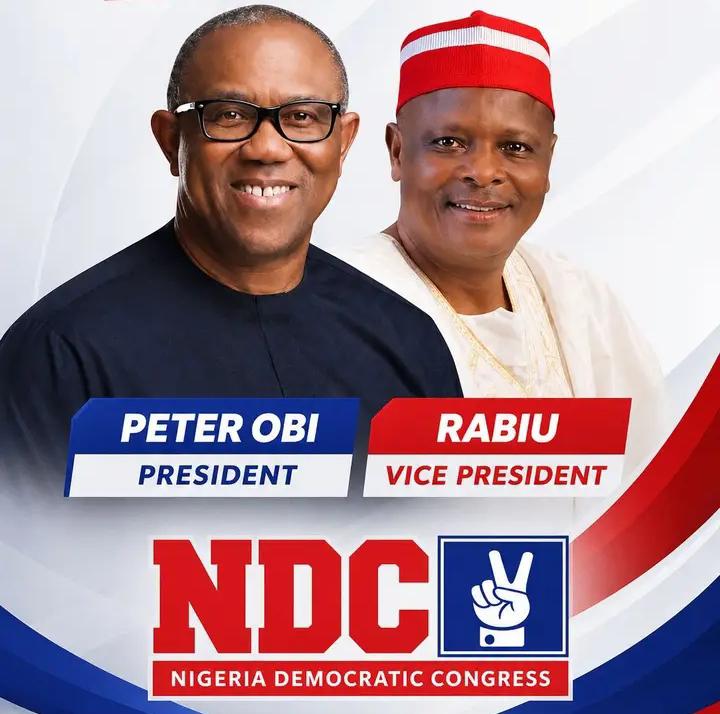
ABUJA, NIGERIA — Two major political figures, Peter Obi and Rabiu Musa Kwankwaso, are set to formally leave the African Democratic Congress (ADC) and join the Nigeria Democratic Congress (NDC) in a move that could reshape the country’s political landscape ahead of the 2027 presidential election.
The development is expected to be officially announced today, Sunday, during a scheduled event in Abuja, where both politicians will publicly declare their allegiance to the NDC.
According to information circulated to journalists through the party’s media communication channels, the declaration ceremony is billed to take place at 2:00 PM in Abuja, drawing attention from political observers and stakeholders nationwide.
The event will be hosted by key leaders of the NDC, including its National Leader, Seriake Dickson, a former governor of Bayelsa State, and the party’s National Chairman, Moses Cleopas.

Members of the National Working Committee (NWC) are also expected to be present, underscoring the significance of the development within the party’s leadership structure.
Party officials have described the anticipated defection as a major boost, portraying it as a reflection of growing national confidence in the NDC as a viable political platform.
The move comes despite earlier public denials and speculations surrounding the political future of both Obi and Kwankwaso, who have remained influential figures in Nigeria’s opposition politics.
Analysts believe the decision could signal early positioning for the 2027 general elections, with both politicians widely regarded as potential presidential contenders with strong grassroots followings.
Their expected entry into the NDC may strengthen the party’s national outlook, potentially altering alliances and recalibrating opposition dynamics across the country.
The African Democratic Congress, from which they are departing, may also face internal adjustments as it responds to the exit of two high-profile members.
Observers note that political realignments ahead of major elections are common in Nigeria, often driven by strategic calculations, coalition building, and the search for stronger electoral platforms.
As the declaration unfolds, attention will focus on how this development influences broader political alignments and whether it triggers further defections or alliances in the lead-up to 2027.
The event is expected to attract significant media coverage, with stakeholders closely watching for statements that could outline the political direction and ambitions of the two leaders within their new party.




