


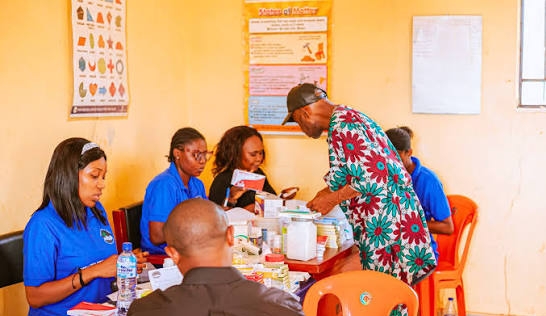
In a remarkable demonstration of compassion translated into meaningful action, the Michael Odokoro Foundation recently carried out a comprehensive medical outreach aimed at improving the health and overall well-being of children living with developmental conditions at the Mother Louisa Charity Home in Enugu. Held on March 1, 2026, the initiative formed part of the foundation’s broader commitment to expanding access to essential healthcare services for underserved and vulnerable communities across Nigeria. The outreach was not merely a routine visit but a carefully coordinated intervention designed to address longstanding healthcare gaps affecting children who often exist at the margins of medical and social support systems.
Across Nigeria and much of Africa, access to basic healthcare and educational resources remains uneven, leaving many families to navigate complex medical challenges without adequate professional guidance. These realities are even more pronounced for children living with developmental and neurological conditions such as autism spectrum disorder, Attention Deficit Hyperactivity Disorder (ADHD), and cerebral palsy. Specialized care for such conditions is frequently limited by cost, availability of trained professionals, and societal awareness, creating barriers that can significantly affect a child’s quality of life. Recognizing this urgent need, the Michael Odokoro Foundation designed the outreach as a practical response to bridge these gaps by bringing healthcare directly to children and caregivers who need it most.
From the early hours of the outreach day, the Mother Louisa Charity Home transformed into a hub of coordinated medical activity as healthcare professionals, volunteers, and foundation representatives worked together to create a supportive and reassuring environment for the children. Medical personnel conducted detailed health examinations, offering individualized consultations tailored to each child’s condition and medical history. Medications were administered where necessary, while caregivers received practical guidance on managing symptoms and supporting developmental progress within the home environment. The atmosphere combined professionalism with warmth, ensuring that both children and caregivers felt seen, heard, and supported.
For many caregivers at the facility, the outreach represented more than access to healthcare; it was an opportunity to gain knowledge and reassurance. Training sessions provided practical strategies for daily care routines, behavioral management, and emotional support for children living with developmental challenges. Experts emphasized the importance of early intervention, structured routines, and consistent therapeutic engagement, empowering caregivers with tools that extend beyond the day’s medical services. The guidance offered helped reinforce confidence among caregivers who often shoulder immense responsibilities with limited resources or formal training.
According to representatives of the foundation, the outreach marked the second phase of a carefully structured four-stage intervention strategy aimed at delivering sustainable and long-term impact. The first phase involved an extensive needs assessment to understand the medical, emotional, and infrastructural requirements of the charity home. The second phase, now implemented through the medical outreach, focused on direct healthcare delivery and immediate support. Future phases will include continuous follow-up interventions as well as long-term infrastructural and facility improvements designed to strengthen the home’s capacity to provide consistent care. This phased approach underscores the foundation’s intention to move beyond short-term charity toward measurable and lasting transformation.
Beyond medical consultations, the outreach extended into broader welfare support. Food supplies, hygiene materials, and care packages were distributed to the facility, easing some of the operational pressures faced by the home. Counseling sessions were also organized, recognizing that emotional and psychological well-being is inseparable from physical health. Both caregivers and children benefited from these sessions, which created safe spaces for expression, encouragement, and emotional healing. The inclusion of psychosocial support highlighted the foundation’s holistic approach, acknowledging that healthcare encompasses not only treatment but also dignity, empathy, and human connection.
An important component of the outreach involved research and data collection conducted ethically and with the consent of caregivers. Members of the foundation’s research team gathered insights aimed at informing future evidence-based interventions. By documenting patterns, needs, and outcomes, the foundation hopes to design more targeted programs that can be replicated in other communities facing similar challenges. This data-driven approach reflects a growing recognition within humanitarian work that sustainable impact requires informed planning supported by measurable evidence.
The event was comprehensively documented by the foundation’s media team through photography and videography, capturing moments of interaction, care delivery, and shared hope. These visual records not only serve as documentation but also help raise awareness about the realities faced by children with special needs and the importance of inclusive healthcare initiatives. Coverage by DDM News further amplified the significance of the outreach, bringing national attention to an often-overlooked segment of society and highlighting the transformative potential of community-driven interventions.
For facilities like Mother Louisa Charity Home, which can sometimes go months without access to specialized medical professionals, initiatives such as this outreach represent a critical lifeline. The presence of trained experts provided immediate relief while also reinforcing a sense of partnership and continuity. Foundation representatives explained that the visit served as a preliminary engagement, with plans already underway for additional visits that will introduce financial assistance programs, specialized therapies, and ongoing medical monitoring tailored to the children’s evolving needs.
The outreach also demonstrated the power of collaboration between healthcare professionals, volunteers, and community organizations united by a shared vision of social responsibility. Volunteers assisted in organizing activities, engaging children in interactive sessions, and ensuring smooth coordination throughout the day. Their involvement underscored how collective effort can magnify impact, transforming a single-day intervention into a catalyst for long-term change.
Guided by its mission of “Restoring Health, Spreading Hope,” the Michael Odokoro Foundation continues to position itself as a proactive advocate for inclusive healthcare access. The outreach at Mother Louisa Charity Home illustrated how compassion, when paired with structured action and strategic planning, can reshape outcomes for vulnerable populations. By addressing medical, emotional, and social needs simultaneously, the foundation reaffirmed the idea that meaningful development begins with care that recognizes every individual’s worth.
As reported by DDM News, the success of the initiative has already sparked conversations about expanding similar programs to other regions where children with developmental conditions remain underserved. For the children and caregivers at Mother Louisa Charity Home, the outreach was more than an event—it was a renewed assurance that they are not forgotten, and that sustained compassion, backed by action, can indeed transform lives and restore hope for the future.




