


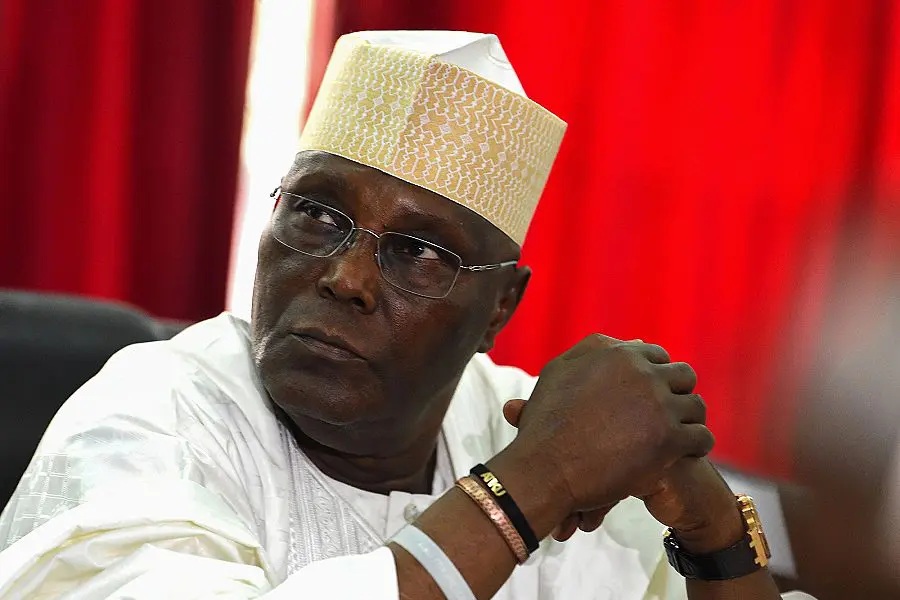
Mr. Paul Ibeh, the spokesman of former Vice President, Atiku Abubakar, on Tuesday accused President Bola Tinubu and the chairman of the Independent National Electoral Commission (INEC) of working to undermine opposition and democracy in Nigeria.
This is coming following the delisting of David Mark’s leadership of the African Democratic Congress (ADC) by INEC.
Diaspora Digital Media reported that Mohammed Haruna, INEC’s commissioner for information and voter education, in a statement said the commission would refrain from engaging the two factions in ADC, citing the March 12 judgement of the court of appeal.
The commission added that it would not attend meetings, congresses, or conventions of the groups pending the determination of a case before the federal high court

In a post on X, Ibeh stated that presidential spokesman Bayo Onanuga had indicated that Nafiu Bala had emerged as the ADC national chairman, claiming the development was influenced by the President and INEC.
He questioned the development, noting that INEC had previously filed court processes challenging Bala’s eligibility for the ADC chairmanship, and asked what had changed since then.
Ibeh further accused Tinubu and Amupitan of masterminding what he described as a “democratic faux pas,” warning that such actions could amount to a drift toward dictatorship.
He added that the situation draws parallels with past political developments in Nigeria’s recent history.
He wrote: “Bayo Onanuga is posting on his X account that Nafiu Bala is now the ADC Chairman because his Tinubu’s @NGRPresident and Amupitan’s @inecnigeria are in bed with Bala to annihilate the opposition and inevitably subvert Nigeria’s democracy.
“This is the same INEC that filed processes in court last year to show cause why Bala is not deserving of the Chairmanship of the ADC. What has changed since then?
“Tinubu and Amupitan are the ones cooking up the democratic faux pas. Our message to them is that this dictatorship may live, but not for very long. Does this remind you of another era in our recent history?”



