


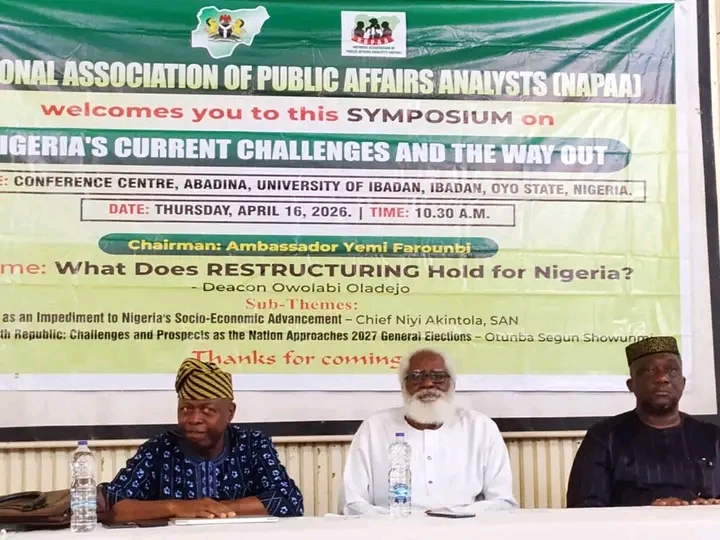
ABUJA — A former ambassador and other policy experts have renewed calls for the restructuring of Nigeria, warning that rising insecurity and weakening institutions are threatening national stability and democratic governance.
The renewed debate reflects growing concern among stakeholders over the country’s security challenges, governance gaps, and long-standing constitutional questions.
Diaspora Digital Media (DDM) reports that the former envoy, alongside security and governance analysts, argued that Nigeria’s current political structure is no longer effective in addressing its complex and evolving national problems.
They maintained that restructuring remains a critical step toward strengthening federalism, improving accountability, and empowering subnational governments to respond more effectively to local challenges.

According to the experts, insecurity across various regions of the country has exposed deep institutional weaknesses, particularly in areas of policing, resource control, and emergency response coordination.
They warned that without meaningful reforms, Nigeria risks continued instability, economic pressure, and declining public trust in democratic institutions.
The discussion comes amid ongoing national debates about governance reforms, with several political and civil society actors pushing for constitutional amendments or a complete overhaul of the federal structure.
The former ambassador emphasized that restructuring should not be viewed as a political slogan but as a practical framework for improving efficiency in governance and ensuring equitable development across regions.
Experts also highlighted the need for stronger institutions capable of enforcing the rule of law, reducing corruption, and enhancing service delivery at all levels of government.
Security challenges, including banditry, terrorism, and communal conflicts, were cited as key indicators of systemic strain within Nigeria’s governance architecture.
Observers note that similar calls for restructuring have emerged periodically over the years, often gaining momentum during periods of heightened insecurity or political tension.
However, progress on constitutional reforms has remained slow, largely due to political disagreements and competing interests among stakeholders.
Despite these challenges, advocates argue that restructuring remains essential for long-term stability and national cohesion.
They further stressed that Nigeria’s demographic growth and economic pressures make institutional reform increasingly urgent.
As discussions continue, attention is expected to shift toward how political leaders and lawmakers respond to renewed calls for change ahead of future constitutional review processes.
The debate underscores a recurring national question about the most effective structure for governance in Africa’s most populous nation, as pressure builds for reforms that match present-day realities.




