


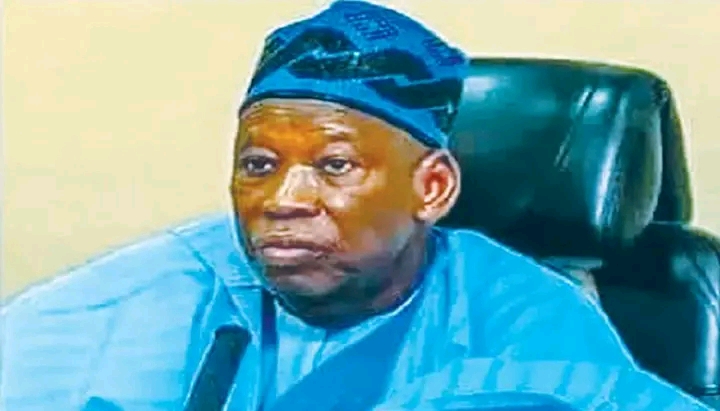
KANO, NIGERIA — Former Kano State Governor Abdullahi Ganduje has stated that the Supreme Court of Nigeria will ultimately determine the outcome of the ongoing Kano emirship tussle.
Ganduje urged all parties involved in the dispute to remain calm and await the court’s final and binding judgment on the matter.
The former governor made the remarks amid continuing tensions surrounding the Kano emirship controversy, which has generated political and traditional divisions within the state.
According to him, the judicial process remains the most legitimate avenue for resolving the conflict and ensuring lasting peace.

He emphasised that respect for the rule of law is essential in handling sensitive traditional and constitutional matters.
The Kano emirship tussle has remained one of the most closely watched traditional institution disputes in Nigeria in recent times.
The controversy intensified following changes to the emirate structure and subsequent legal battles over the legitimacy and control of the Kano Emirate.
Political observers note that the dispute has attracted national attention because of Kano’s historical and political significance.
Traditional institutions in northern Nigeria continue to play influential cultural and social roles, making disputes involving emirates highly sensitive.
Ganduje’s comments are seen as an attempt to encourage restraint and reduce tensions among supporters of the opposing camps.
Legal analysts argue that the Supreme Court’s eventual ruling could set an important precedent regarding the authority of state governments over traditional institutions.
The case has also highlighted the complex relationship between politics, tradition, and governance in Nigeria.
Residents and stakeholders in Kano have expressed mixed reactions, with some calling for reconciliation while others insist the courts must determine the final outcome.
Community leaders and civil society groups have repeatedly appealed for peace to prevent the dispute from escalating into wider unrest.
The former governor reiterated that all parties should respect the eventual judgment of the apex court once delivered.
Observers say the prolonged legal battle has contributed to uncertainty surrounding the leadership and structure of the Kano Emirate.
The Supreme Court’s decision is expected to provide legal clarity on the matter and potentially shape the future of traditional governance in the state.
As the nation awaits the final ruling, attention remains focused on how the judgment could influence political and traditional dynamics in Kano State.




