


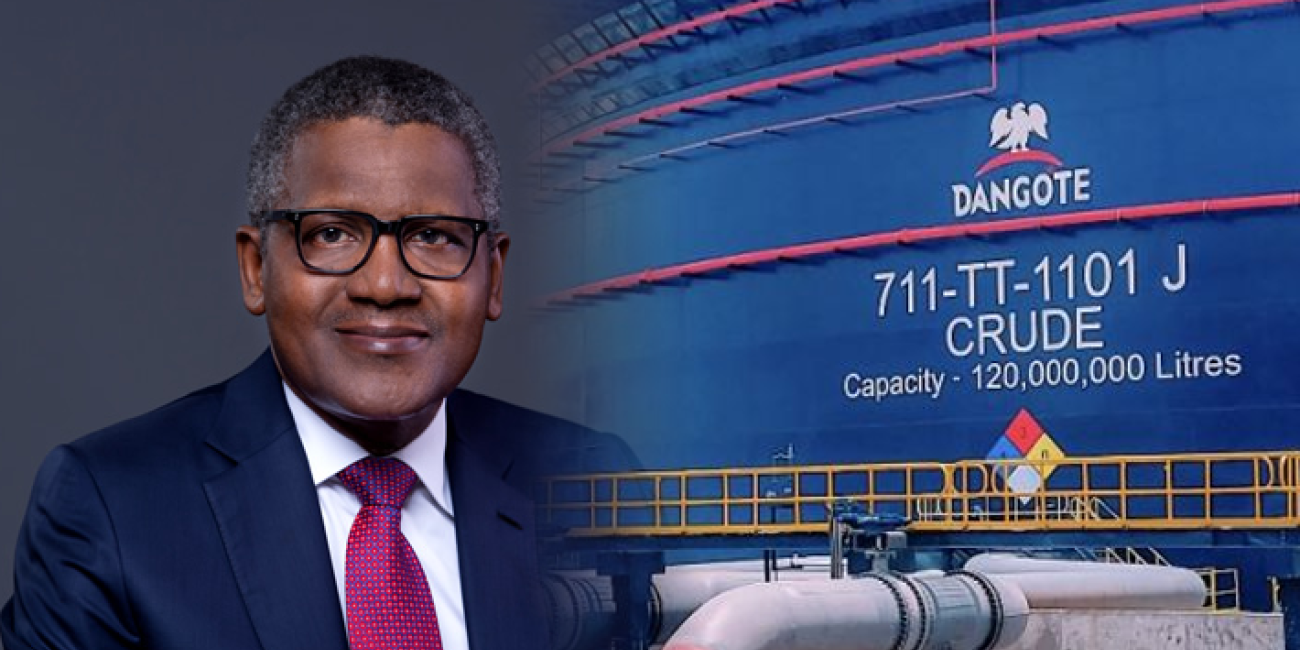
Africa’s richest businessman, Aliko Dangote, has revealed that Kenya is emerging as his preferred destination for a proposed multi billion dollar oil refinery project in East Africa, a move that could significantly reshape the region’s energy landscape and reduce dependence on imported refined petroleum products.
The Nigerian industrialist disclosed that the coastal city of Mombasa currently holds an advantage over Tanzania’s Tanga port as the possible site for the ambitious refinery, which is projected to process 650,000 barrels of crude oil per day once completed.
The project, estimated to cost between $15 billion and $17 billion, is expected to become one of the largest industrial investments ever undertaken in East Africa if negotiations with regional governments progress successfully.

Speaking in an interview with the Financial Times, Dangote explained that Kenya’s stronger economy, higher fuel consumption levels and port infrastructure make Mombasa an attractive option for the planned refinery.
According to him, the Kenyan port possesses deeper and more developed maritime facilities capable of supporting the scale of operations required for a mega refinery project. He also emphasized that Kenya’s domestic fuel demand provides a more commercially sustainable foundation for the investment.
Dangote noted that while discussions remain ongoing, the final direction of the project will largely depend on the position adopted by William Ruto and the Kenyan government.
The billionaire businessman stated that the initiative would require strong governmental backing, including land allocation, regional financial cooperation and policies designed to shield the refinery from unfair competition arising from cheap imported petroleum products.
He stressed that refinery operations globally rely heavily on supportive government frameworks and argued that no major refinery can survive without some level of market protection against subsidized or low cost imports.
According to Dangote, if an agreement is reached with Kenyan authorities, construction could begin before the end of the year.
The proposed investment has already generated regional attention, particularly because earlier reports had indicated that Tanzania’s Tanga port was being considered for the project.
Weeks ago, President Ruto publicly stated that East African leaders were discussing the establishment of a regional refinery in Tanzania inspired by the success and scale of the Dangote Group refinery project in Lagos.
However, the announcement reportedly triggered concern within Tanzania’s leadership after President Samia Suluhu Hassan disclosed that she had not been formally briefed before the project was publicly linked to Tanga.
The Tanzanian leader reportedly questioned why discussions regarding such a major investment were made public before her government had fully reviewed or approved the proposal.
The latest comments from Dangote now appear to indicate that Kenya may have overtaken Tanzania as the preferred destination for the refinery due to strategic and economic considerations.
If completed, the refinery could dramatically transform East Africa’s fuel supply chain.
At present, East African nations depend almost entirely on imported refined petroleum products sourced mainly from the Middle East and Asia. This reliance has exposed regional economies to recurring fuel shortages, supply chain disruptions and fluctuating international prices.
Analysts believe a large scale refinery within East Africa could strengthen energy security, lower import dependence and potentially stabilize fuel prices across the region.
The project would also position East Africa as a more influential player in Africa’s downstream oil and gas industry while generating employment opportunities and industrial expansion across several sectors.
Dangote’s growing interest in expanding refinery operations beyond Nigeria reflects the increasing confidence surrounding the performance of his Lagos based refinery, which has rapidly become one of the most talked about energy projects in the world.
The massive refinery located in Lagos currently processes up to 650,000 barrels of crude oil daily and has already begun altering fuel trade dynamics within West Africa and beyond.
Dangote disclosed that plans are already underway to more than double the refinery’s processing capacity to approximately 1.4 million barrels per day over the next 30 months.
According to him, such an expansion would place the Lagos facility among the largest refining operations globally and position it on the same level as major international refining giants including Reliance Industries owned by Indian billionaire Mukesh Ambani.
Dangote stated that the refinery’s long term objective is not only to satisfy African fuel demand but also to become a major force in determining international fuel pricing and supply patterns.
Recent geopolitical tensions in the Middle East have reportedly further strengthened the profitability outlook for Dangote’s energy business.
According to reports, the conflict involving Iran and disruptions linked to the Strait of Hormuz have significantly increased global energy prices, boosting margins for refined petroleum products and fertilizers.
Dangote acknowledged that global instability within oil markets has positively impacted refining profits, adding that major oil companies around the world have equally benefited from the current situation.
Beyond profitability, however, Dangote emphasized the importance of African investment in African development. He argued that the continent must increasingly rely on local capital and industrial projects to achieve long term economic transformation rather than depending heavily on foreign investors.
His comments come at a time when African governments are intensifying efforts to expand industrialization, strengthen regional trade and reduce vulnerability to global supply shocks.
For Kenya, securing a project of this magnitude would represent a major economic and political victory. It could significantly elevate Mombasa’s importance as a regional energy and logistics hub while strengthening Kenya’s influence within East Africa’s evolving economic structure.
For Tanzania, the possibility of losing the refinery project may increase pressure on policymakers to accelerate infrastructure improvements and maintain competitiveness in attracting large scale foreign investment.
As negotiations continue behind closed doors, regional leaders are expected to closely monitor developments surrounding the project, which could become one of Africa’s defining industrial investments of the decade.
Whether ultimately located in Kenya or Tanzania, the proposed refinery underscores the growing ambition among African business leaders and governments to reshape the continent’s economic future through large scale industrial infrastructure driven by African capital and leadership.




