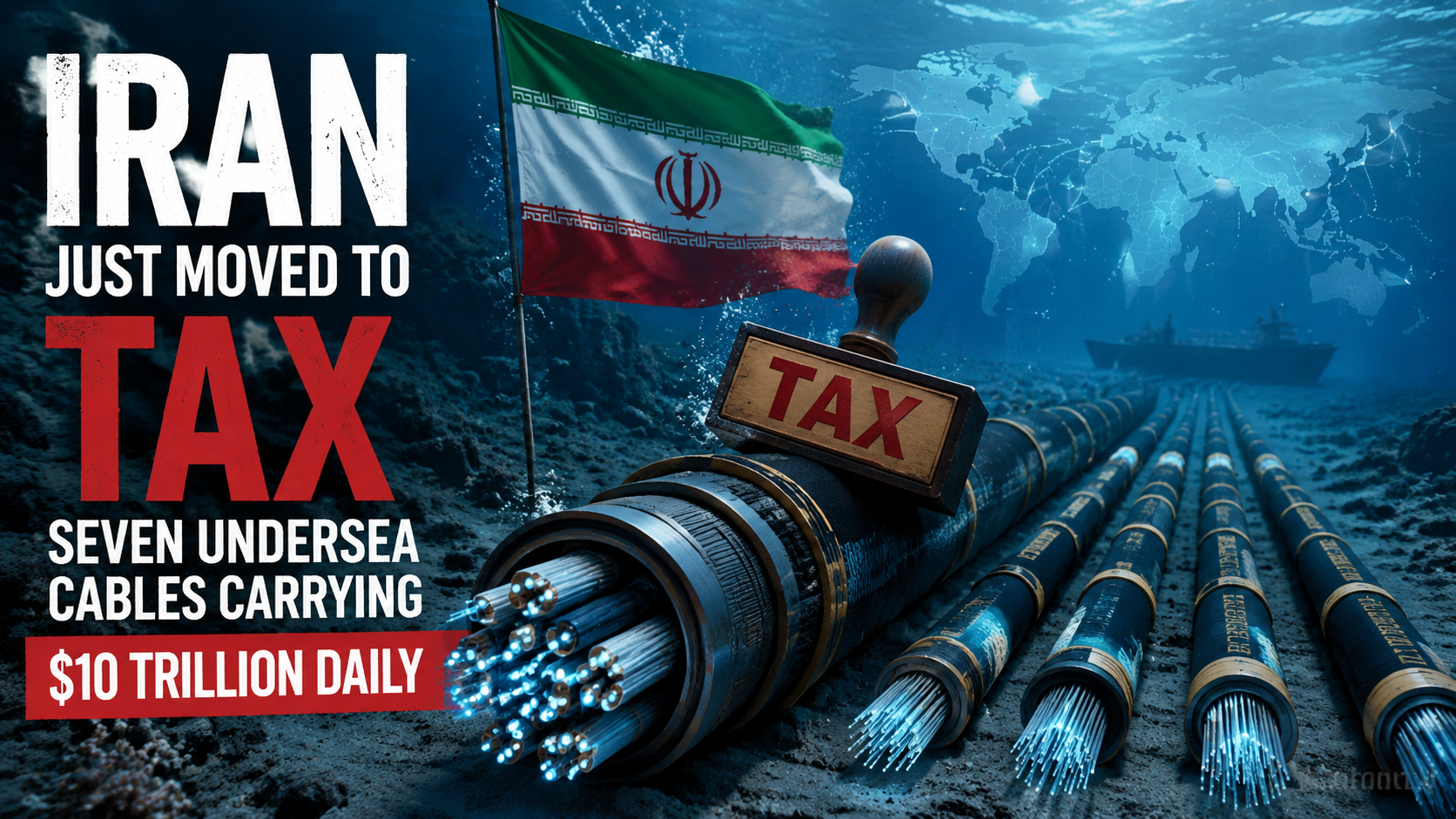
Iran’s bold plan to control seven major undersea internet cables in the Strait of Hormuz threatens global data flows and puts new demands on foreign operators.
Iran is moving to assert control over seven major undersea internet cables running through the Strait of Hormuz. Foreign telecom operators will soon need permits and must pay fees to maintain these vital global connections. The proposed policy forces companies to strictly comply with Iranian domestic laws. Furthermore, international foreign operators must now rely exclusively on local Iranian companies to manage and repair the network.
How the Strait of Hormuz Became a $10 Trillion Digital Chokepoint
The Strait of Hormuz is famously known as a crucially important energy transit route for global oil supplies. However, it currently also serves as a highly vulnerable chokepoint for the broader global digital economy. Currently, over 97 percent of all regional internet traffic runs through fiber-optic networks resting on this specific seabed.
Consequently, these seven cables serve as the vital backbone of data centers across the entire Gulf region. They connect users in Europe, Asia, and the Middle East to critical applications and cloud services. The undersea cables currently carry roughly $10 trillion in daily financial transactions across multiple continents.
To put it plainly, major network systems like AAE-1 and FALCON lie just beneath the ocean surface. The strategic strait is roughly 200 feet deep at its narrowest point. This remarkably shallow depth makes the digital infrastructure extremely accessible and highly vulnerable to physical interference.
Why Foreign Telecom Operators Face Unprecedented Legal and Financial Pressures
Under the newly proposed policy, international tech companies face severe operational constraints in the region. They must actively secure explicit legal permits from the Iranian government to route data through the waterway. In addition, these foreign firms must pay newly established toll fees to maintain continuous network access.
This means that foreign operators are now entirely subject to Iranian domestic legislation and regulatory oversight. They can no longer send their own specialized private ships or repair crews to conduct routine maintenance. Instead, they must hire state-approved Iranian companies to handle all physical repairs and infrastructure management.

“The concentration of many internet cables in a single narrow passage has made the Strait of Hormuz a vulnerable point for the region’s digital economy.”
Official Report, Editorial Board, Tasnim News Agency
Meanwhile, analysts emphasize the massive scale of this unprecedented geopolitical shift. Requiring foreign companies to hire Iranian maintenance crews transfers immense physical control to the state. Ultimately, Iran gains a powerful lever over the ongoing global technology infrastructure boom.
What This Means for Global Markets and Data Security Risks
Prior to this, Iran largely focused its geopolitical pressure tactics exclusively on global crude oil markets. That said, shifting its strategic focus to the digital sphere opens an entirely new operational front. Global banks, stock exchanges, and cloud infrastructure platforms rely heavily on these uninterrupted, high-speed regional data flows.
Because of this, the Islamic Revolutionary Guard Corps has previously issued severe threats against these cables. Any intentional damage or forced routing changes could instantly cripple major banking networks across Asia. Repairing damaged cables in a highly contested, shallow waterway would easily cost millions of dollars.
In summary, global technology giants are now carefully weighing the immense risks of operating in the Gulf. Internet traffic might eventually have to be rerouted through significantly slower, alternative global maritime pathways. The digital arteries connecting the modern world have officially become powerful geopolitical bargaining chips.
Taken together, Iran’s push for control over undersea internet cables transforms a geographical chokepoint into a digital weapon. Telecom operators must now navigate complex new fees, mandatory permits, and severe ongoing security risks. The broader global economy relies entirely on these invisible wires to function smoothly every single day. Global financial markets will watch closely as major tech companies decide whether to comply or abandon the route.