
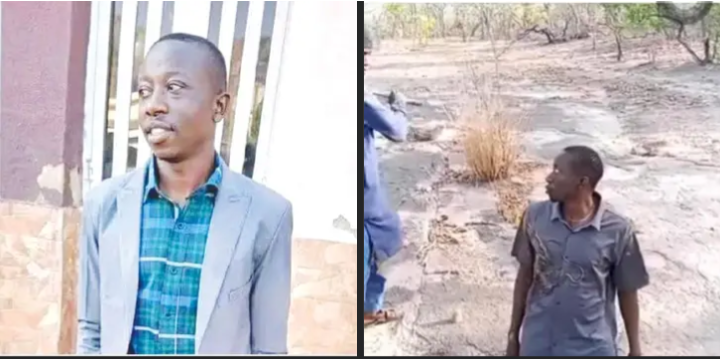
A graduate of the University of Jos, John Arum Azi, has recounted how what appeared to be a legitimate job opportunity turned into a terrifying kidnapping experience that left him in captivity for 11 days in Zamfara State.
The young graduate shared his emotional experience during a testimony at a church in Tudun Wada, Jos North Local Government Area of Plateau State, where he narrated how job scammers disguised as recruiters lured him into travelling for what he believed was a welding employment opportunity.
According to Azi, the ordeal began when he received multiple phone calls from individuals who claimed to be offering him a job. The callers reportedly presented the opportunity in a convincing manner and even sent him transport fare, a tactic that made the offer appear genuine and reduced any initial suspicion.
Trusting the arrangement and motivated by the search for employment, Azi said he travelled from Jos to Zaria in Kaduna State, believing he was heading for a formal job interview. On arrival, however, he was directed to continue his journey to a remote location under the guise of meeting his prospective employers.
He explained that he was instructed to board a motorcycle from Zaria into a rural area, a journey that gradually moved him further away from populated settlements. At that point, he began to sense that something was not right, but it was already too late to turn back.

Shortly after, he was intercepted by armed men who revealed themselves as kidnappers. He said the moment he saw the weapons, he immediately realised that he had fallen into a carefully planned trap. The attackers took control of the situation and moved him deeper into the forest using motorcycles through isolated and dangerous routes.
Azi narrated that the journey into Zamfara State was long, exhausting, and frightening, as he was transported through difficult terrain without any security presence or possibility of escape. He said the kidnappers ensured they avoided main roads, making it impossible for him to identify his exact location.
On arrival at their hideout, he was tied up and stripped of his belongings. The abductors then contacted his family and initially demanded a ransom of ₦30 million for his release. He described the demand as shocking, especially as he had no financial means or control over the situation.
During his captivity, Azi said he was subjected to constant intimidation, physical abuse, and psychological pressure. He explained that the kidnappers frequently assaulted him while interrogating him about his background and family connections, hoping to extract higher ransom payments.
At different points, he was forced to make distress calls to his family under duress while being monitored by his captors. The environment, according to him, was highly volatile, with frequent displays of violence and gunfire from within the camp that heightened the fear among victims.
He further revealed that at some point during the ordeal, he was pressured to deny his religious identity, an experience he described as deeply traumatic. However, he said he eventually broke down during continued harassment and disclosed his faith while under severe emotional distress.

Azi said the kidnappers reacted by assigning him a nickname and continued to subject him to harsh treatment throughout his stay in captivity. He explained that hunger, fear, and uncertainty defined each passing day, as he had no idea whether he would survive or be rescued.
Negotiations between the kidnappers and his family reportedly led to a gradual reduction of the ransom demand from ₦30 million to ₦6 million. However, even after arrangements were made, he said the abductors delayed his release and later requested an additional ₦4 million, further complicating efforts to secure his freedom.
He described the final days of captivity as the most distressing, noting that he lived in constant fear that he might be killed even after ransom payments had been discussed. The uncertainty, he said, made the experience even more psychologically damaging.
Eventually, after sustained negotiation and the involvement of relatives and community contacts, Azi was released after 11 days in captivity. He said his release felt surreal, as he struggled to process the trauma he had endured during the period.
Upon returning home, he was received by family members and sympathisers, but he admitted that the emotional and psychological impact of the experience remains with him. He added that prayer, faith, and mental resilience played a significant role in helping him survive the ordeal.
The incident has once again highlighted the growing danger of fake job scams used by criminal networks to lure unsuspecting young Nigerians into kidnapping traps, particularly in regions where insecurity remains widespread.
Security experts have warned job seekers to verify employment opportunities through official channels and avoid responding to unsolicited job offers, especially those requiring travel to unfamiliar or remote locations without proper documentation.
Civil society organisations have also renewed calls for improved security surveillance, stronger intelligence coordination, and public awareness campaigns to address the increasing use of deception in kidnapping operations across the country.
For Azi, the experience stands as a painful reminder of the risks facing young job seekers in a challenging economic environment where desperation for employment can sometimes lead to dangerous decisions.