


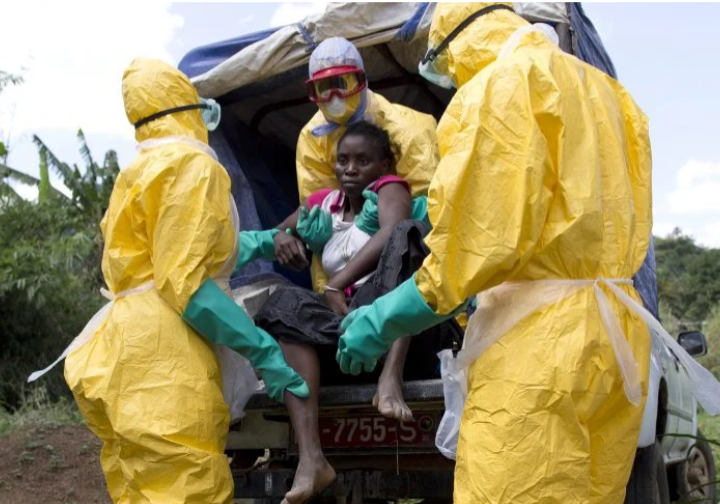
Residents in parts of the Democratic Republic of Congo (DR Congo) initially blamed a wave of mysterious deaths on witchcraft before authorities confirmed an Ebola outbreak, highlighting the deep fear and misinformation surrounding the disease.
The outbreak has claimed more than 130 lives, with over 700 suspected cases recorded so far. The World Health Organisation (WHO) has declared it a global health emergency, while the Africa Centres for Disease Control and Prevention (Africa CDC) has labelled it a continental emergency.
Health officials said the first suspected cases surfaced in mid-April in Mongbwalu, a mining town in the gold-rich Ituri province.
DR Congo’s Health Minister, Samuel Roger Kamba, said fear and confusion slowed early reporting as many residents believed they were battling what he described as a “mystical illness.”

In Rwampara, now considered the epicentre of the outbreak, locals reportedly believed traditional rulers had placed a curse on the community.
A resident, John Vatsosi, told AFP that suspicion deepened after a corpse brought back from Bunia, the provincial capital, became the centre of controversy.
According to him, relatives changed the coffin before burial, while some youths later burned it and traditional leaders sought to perform rituals.
“After that, people kept dying, sometimes three to five people daily,” Vatsosi said. “Many began to believe the traditional leaders had cursed the community.”
As panic spread, some residents turned to traditional healers while others sought prayers from religious leaders instead of visiting hospitals.
Health experts say such beliefs and delayed medical response helped the virus spread quickly, particularly because the outbreak involves a less common Ebola strain that proved difficult to identify early.
Abdou Sebushishe, a Global Health Adviser with the International Medical Corps, warned that misinformation continues to undermine efforts to contain the disease.
“Spreading rumours damages the response and makes controlling the outbreak harder,” he said.
Many victims reportedly died within 24 hours of arriving at health facilities.
In remote communities, some infected persons died at home and were buried by relatives without proper safety measures, increasing the risk of transmission.
Isaac Nyakulinda, a civil society official in the Rwampara health zone, said many residents did not initially realise they were facing an epidemic.
“We regret that government intervention came late,” he said.
Despite lingering doubts among some locals, health officials insist the outbreak is real and dangerous.
Sebushishe noted that weak health infrastructure and limited resources continue to hamper response efforts. Five healthcare workers have already been infected, with four losing their lives.
“Healthcare workers are among the most exposed,” he said, adding that emergency teams are now focusing on training medical personnel to quickly detect infections, isolate patients and protect themselves.
By the time rumours linking the illness to witchcraft began to fade, authorities had already recorded 246 suspected cases and 65 deaths.
Officials say containing the outbreak remains a major challenge as efforts continue to isolate suspected cases and rebuild trust within affected communities.




