


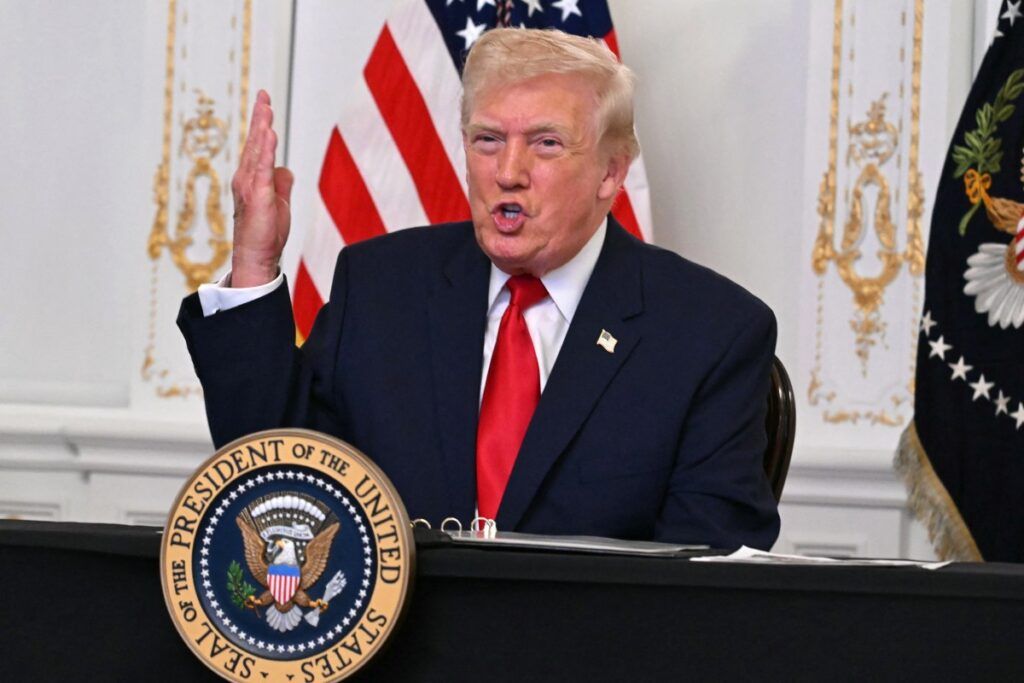
United States President Donald Trump is expected to meet with his Cabinet on Wednesday as negotiations aimed at ending the war with Iran remain uncertain despite growing optimism from the White House.
Trump has repeatedly insisted that Washington and Tehran are close to reaching an agreement that could reopen the Strait of Hormuz and reduce tensions after months of conflict.
The proposed deal is expected to include Iran surrendering its stockpile of highly enriched uranium in exchange for sanctions relief, according to reports citing regional and US officials familiar with the negotiations.
However, several critical issues remain unresolved, including how Iran’s uranium stockpile would be handled and whether any ceasefire agreement would also cover ongoing fighting involving Hezbollah in Lebanon.

Talks became more complicated after US forces launched what the Pentagon described as “defensive” strikes on missile launch sites and mine-laying boats in southern Iran earlier this week.
Tehran condemned the action, accusing Washington of acting in “bad faith” despite the ceasefire efforts.
US Secretary of State Marco Rubio said discussions on extending the ceasefire and reopening the Strait of Hormuz could continue for several more days.
“He’s either going to make a good deal or no deal,” Rubio said while speaking to reporters.
The emerging agreement has also triggered criticism from some Republican lawmakers and Trump supporters who fear the deal may allow Iran’s leadership to recover politically and militarily after the conflict.
Republican senators including Lindsey Graham, Ted Cruz and Roger Wicker have reportedly expressed concern that the proposed terms resemble elements of the nuclear agreement negotiated under former President Barack Obama, which Trump withdrew from during his first term in office.
According to the report, Iran currently possesses about 440.9 kilograms of uranium enriched to 60 per cent purity, a level considered close to weapons-grade material.
Trump recently suggested the uranium could either be handed over to the United States or destroyed under international supervision, a softer position compared to earlier demands that Washington directly control the stockpile.
Another major issue is Israel’s military campaign against Hezbollah in Lebanon.
Israeli Prime Minister Benjamin Netanyahu announced on Tuesday that Israeli operations in Lebanon were being intensified, even as ceasefire discussions continue.
The White House is also pushing for broader regional diplomacy.
Trump reportedly wants countries such as Saudi Arabia, Qatar and Pakistan to join the Abraham Accords as part of a wider Middle East settlement framework.
However, analysts say such ambitions may face resistance, especially from Saudi Arabia, which continues to insist on a clear pathway toward Palestinian statehood before normalising ties with Israel.
Despite the challenges, regional allies of the United States are said to support efforts to end the war, fearing that prolonged instability could worsen tensions across the Middle East and further disrupt global energy markets.




