
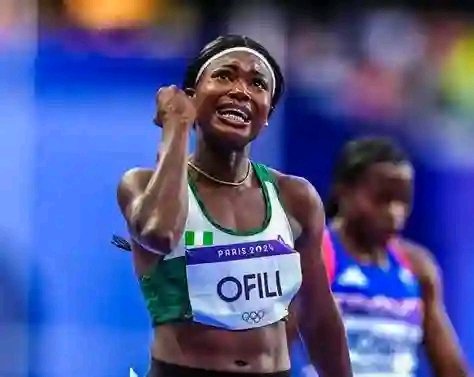
Nigerian sprint sensation Favour Ofili will not participate in the upcoming Commonwealth Games trials after her coach confirmed her withdrawal, citing fitness management and the need to prioritize long term athletic performance. The development represents a significant setback for Team Nigeria’s preparations, as Ofili is widely regarded as one of the country’s brightest prospects in women’s sprinting.
Her absence from the trials immediately reshapes the competitive landscape of Nigeria’s selection process, particularly in the 200 metres event where she has consistently ranked among the nation’s top performers. While no detailed medical explanation was provided, her coaching team emphasized that the decision was precautionary and aimed at ensuring full recovery ahead of future international competitions.
Favour Ofili’s rise in athletics has been one of steady progression built on discipline, talent, and resilience. Born and raised in Nigeria, she began her journey in track and field at a young age, showing early promise in school competitions where her speed and competitive spirit quickly set her apart from her peers. Her development was shaped through Nigeria’s youth athletics system, where she refined her sprinting technique and gained exposure to structured training environments.
Her breakthrough came at junior level competitions, where she established herself as one of Africa’s most promising young sprinters. Ofili gained international recognition after delivering strong performances in the 200 metres, a race that has become her signature event. Her combination of acceleration, curve running ability, and strong finishing speed allowed her to compete effectively against top international athletes.
She later transitioned into senior athletics, where she continued to improve her personal records and compete in major global events. Her performances earned her a place among Nigeria’s leading female sprinters, contributing to the country’s long standing reputation for producing world class sprint talent. Nigeria has historically been a powerhouse in women’s sprinting, with athletes consistently excelling in continental championships and global competitions, and Ofili represents the continuation of that tradition.
However, her career journey has not been without challenges. Like many elite athletes, she has faced interruptions due to injuries, administrative issues, and competition scheduling complexities that have occasionally affected her consistency. Despite these setbacks, she has maintained her position as one of Nigeria’s most promising track athletes, with performances that continue to attract attention from athletics analysts and fans worldwide.
The decision to withdraw from the Commonwealth Games trials is understood to be part of a broader strategy focused on athlete longevity. In modern athletics, especially in sprint events, managing workload and avoiding injury recurrence is critical to sustaining peak performance levels. Coaches increasingly prioritize recovery cycles and carefully selected competition schedules to protect athletes from burnout and long term physical strain.
According to her coaching team, Ofili’s current condition requires rest and controlled training rather than immediate competition exposure. This approach reflects a growing awareness in elite athletics that long term success often depends on strategic planning rather than constant participation in qualifying events.
Her absence will undoubtedly impact Nigeria’s relay and individual sprint prospects. Ofili has been a key contributor in both 100 metres and 200 metres events, and her presence often strengthens Nigeria’s chances in international medal contention. The Commonwealth Games trials are a crucial step in selecting athletes for major competitions, and missing such an event places additional pressure on selectors and emerging sprinters aiming to secure national team positions.
Reactions within Nigeria’s athletics community have been mixed. Some stakeholders support the decision, viewing it as a responsible step toward protecting one of the nation’s most valuable sprint assets. Others express concern that repeated absences from key competitions may disrupt her competitive rhythm and affect long term performance consistency.
Ofili’s journey also reflects broader themes in Nigerian athletics, particularly the balance between talent development and athlete welfare. Nigeria continues to produce world class sprinters, but challenges such as injury management, training infrastructure, and international competition exposure remain key factors influencing athlete performance.
Despite the current setback, expectations remain high for Ofili’s return to competitive action. At her age and stage of development, she is still considered to be in the early phase of her peak athletic years. Many experts believe she has the potential to compete at the highest level for several more seasons if properly managed and supported.
Her long term goals are expected to include major global championships, where she could further establish herself among the elite ranks of women’s sprinting. With consistent training and careful competition planning, Ofili remains a strong candidate to represent Nigeria at the highest levels of international athletics.
For Team Nigeria, the immediate focus will shift to other athletes who will now have the opportunity to compete in the trials and secure places in the national squad. While Ofili’s absence is a setback, it also opens the door for emerging sprinters to showcase their talent and stake a claim for international representation.
As preparations continue, the Nigerian athletics federation is expected to monitor her recovery closely, ensuring she returns to competition under optimal conditions. The priority remains her long term fitness and readiness for future global events rather than short term participation.
Favour Ofili’s withdrawal serves as a reminder of the physical and strategic demands placed on elite athletes. In modern sprinting, success is no longer defined only by speed on the track but also by careful management of health, training, and competition schedules.