


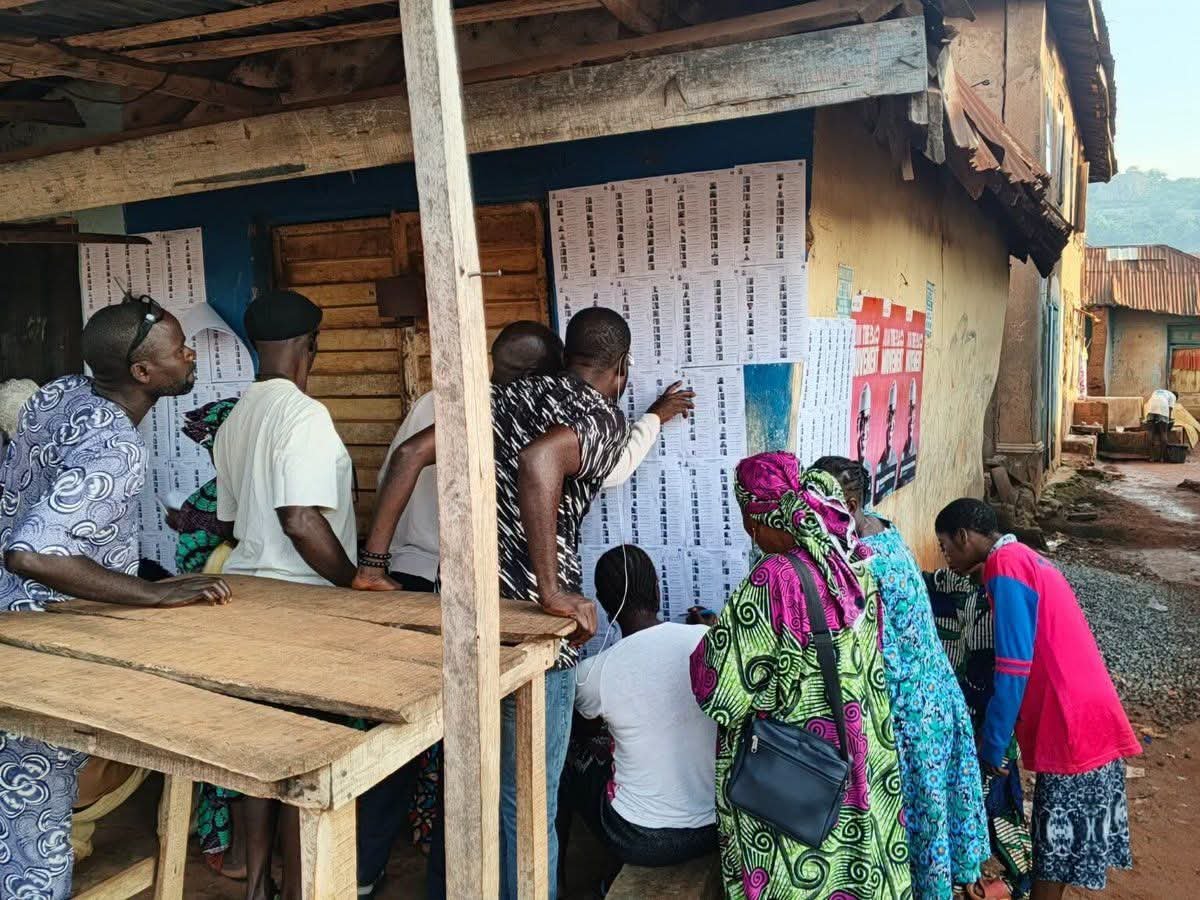
ADO EKITI, Ekiti State — Electoral College Nigeria (ECN) has stated that the most significant takeaway from the Ekiti governorship election and concurrent by-elections held on June 20 is not the margin of victory recorded by the winning candidate but the “persistently” low voter turnout, which the organisation described as a “democratic emergency.”
In a statement signed by Kunle Lawal, its executive director, the organisation said while the elections were largely peaceful and orderly, the low level of participation by eligible voters should worry stakeholders ahead of the 2027 general election. ECN commended the Independent National Electoral Commission (INEC) for improvements in logistics and election-day management but said broader democratic indicators must be considered when assessing the success of an election.
“The most important statistic from the election may not be the margin of victory but the number of citizens who chose not to participate,” the statement reads. “This should concern every stakeholder in Nigeria’s democratic project.” The organisation argued that low turnout reflects deeper concerns about public trust, civic culture, and confidence in political institutions.
“Low turnout should therefore not be viewed as an administrative statistic. It should be viewed as a measure of democratic health,” the statement reads. “When large numbers of eligible citizens stay away from the polls, the nation must ask difficult questions about political trust, voter education, civic culture and public confidence in institutions.”

ECN said there is a growing contradiction between the ability of political parties to mobilise supporters for rallies and their inability to translate that mobilisation into votes on election day. “Political parties routinely showcase impressive membership figures. During ward congresses, local government meetings, party primaries and campaign rallies, parties often demonstrate the ability to mobilise thousands of supporters,” the statement said. “Yet election after election, we continue to witness a significant gap between political mobilisation and electoral participation.”
According to the organisation, “too much political participation in Nigeria is performative rather than civic.” “Citizens engage with politics as spectators, supporters and commentators but not always as voters,” the statement added.
The organisation also acknowledged the continued challenge of vote buying. “One of the most disturbing features of the election remains the continued prevalence of financial inducement,” the statement reads. “For several election cycles, Nigeria has witnessed a gradual shift from the politics of persuasion to the politics of transaction.”
“When votes become commodities, citizens cease to be participants in governance and become consumers in a political marketplace,” the statement said. “The normalisation of vote buying poses a long-term threat to democratic accountability because elected officials who purchase votes are often less likely to feel accountable to the electorate after assuming office.”
ECN urged political parties to invest more in voter education and grassroots civic engagement, insisting that their role extends beyond winning elections. “A political party is not merely an election machine. It is also a civic institution responsible for deepening democratic participation,” the statement said.
As attention gradually shifts to the 2027 general election, the organisation said efforts should focus on rebuilding public trust and increasing participation. “The task before us is not simply to conduct elections. It is to cultivate citizens who understand why elections matter,” Lawal said. “The Ekiti election and by-elections have once again reminded us that while Nigeria continues to make progress in electoral administration, significant work remains in strengthening electoral participation.”




