


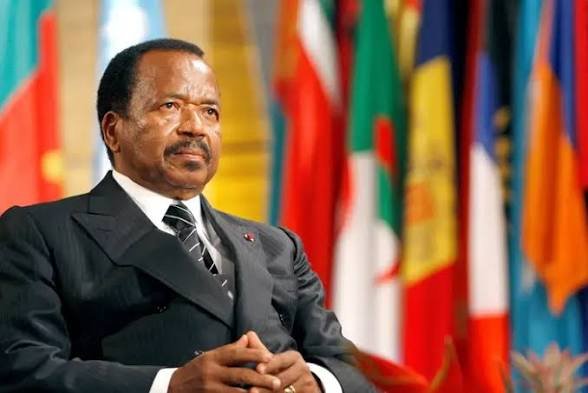
Cameroon is witnessing renewed political uncertainty as President Paul Biya’s prolonged stay in Switzerland continues to dominate national discourse, with opposition figures and political analysts raising concerns about governance, succession, and the country’s constitutional stability.
Biya, who at 93 is the world’s oldest serving head of state, left Cameroon on June 7 alongside First Lady Chantal Biya for what government officials described as a brief private visit to Europe. Nearly seven weeks later, the veteran leader has yet to return home, triggering widespread speculation about his health and reigniting debate over who is effectively managing the affairs of the Central African nation.
The extended absence has become one of the longest overseas stays of Biya’s presidency and has drawn increasing attention both within Cameroon and across Africa. Although officials insist the president remains fully engaged in government business, critics argue that the lack of public appearances and limited official communication have fueled uncertainty at a crucial political moment.

The presidency has consistently dismissed reports suggesting that Biya is receiving medical treatment in Geneva. Communication Minister Rene Emmanuel Sadi previously described such claims as false, maintaining that the president remains in good health and continues to discharge his constitutional responsibilities while abroad.
Government officials have also rejected suggestions that Cameroon is facing a leadership crisis. Higher Education Minister Jacques Fame Ndongo insisted that President Biya continues to review government files, approve key decisions, and communicate regularly with senior officials despite being outside the country.
According to the minister, the country’s institutions remain fully operational, adding that the president’s temporary stay abroad has not affected the normal functioning of government.
Despite these assurances, opposition parties believe the situation exposes deeper structural concerns within Cameroon’s political system.
Mamadou Mota, Vice President of the Cameroon Renaissance Movement, warned that the prolonged absence has created what he described as an institutional vacuum. He argued that citizens deserve greater transparency regarding the president’s condition and the administration of government during his stay outside the country.
The opposition Social Democratic Front echoed similar concerns, saying the nation appears to be operating without visible leadership. Party officials accused authorities of withholding important information from the public while uncertainty continues to grow over the country’s political direction.
The debate has also revived calls for constitutional reforms that would provide clearer procedures for handling situations in which a sitting president is unable to carry out official duties for an extended period.
Patricia Tomaino Ndam Njoya, leader of the Cameroon Democratic Union, has called for the establishment of an independent constitutional mechanism to determine presidential incapacity whenever necessary. She believes such reforms would strengthen democratic institutions and ensure continuity of governance during periods of uncertainty.
Political observers note that the discussion extends beyond the president’s current trip. It reflects broader questions surrounding succession planning in a country that has been governed by the same leader for more than four decades.
Paul Biya assumed office in November 1982 following the resignation of Cameroon’s first president, Ahmadou Ahidjo. Since then, he has become one of Africa’s longest serving leaders, winning multiple elections and maintaining a firm grip on the country’s political landscape.
Supporters credit his administration with preserving national unity and maintaining stability in a nation marked by ethnic and linguistic diversity. However, critics argue that his lengthy tenure has slowed democratic reforms and concentrated political authority within a narrow political establishment.
The latest controversy has also renewed focus on Cameroon’s constitutional succession framework. Although recent constitutional reforms reintroduced the office of vice president, no appointment has been made, leaving uncertainty over who would immediately assume executive responsibilities should the presidency become vacant or the president become incapacitated.
Analysts believe the absence of a clearly designated deputy has heightened public interest in Biya’s prolonged stay abroad, especially given his advanced age.
This is not the first time the Cameroonian leader’s extended visits to Switzerland have generated public concern. Previous lengthy stays overseas have similarly prompted speculation about his health before government officials dismissed the reports and insisted he remained fully capable of governing.
The current episode comes as Cameroon awaits several important political decisions, including the formation of a new government that President Biya had earlier promised following his latest electoral victory. Months after that commitment, a cabinet reshuffle has yet to be announced, while legislative and municipal elections have also faced delays.
Observers say these unresolved political issues have amplified concerns surrounding the president’s continued absence and increased calls for greater transparency from the government.
As the number of days spent outside Cameroon continues to rise, attention remains fixed on whether President Biya will soon return home or whether officials will provide further clarification about his condition and future plans.
For now, the uncertainty has become one of the most closely watched political developments in Central Africa, with many citizens and international observers eager to see how the government addresses growing questions about leadership, succession, and the country’s political future.




