


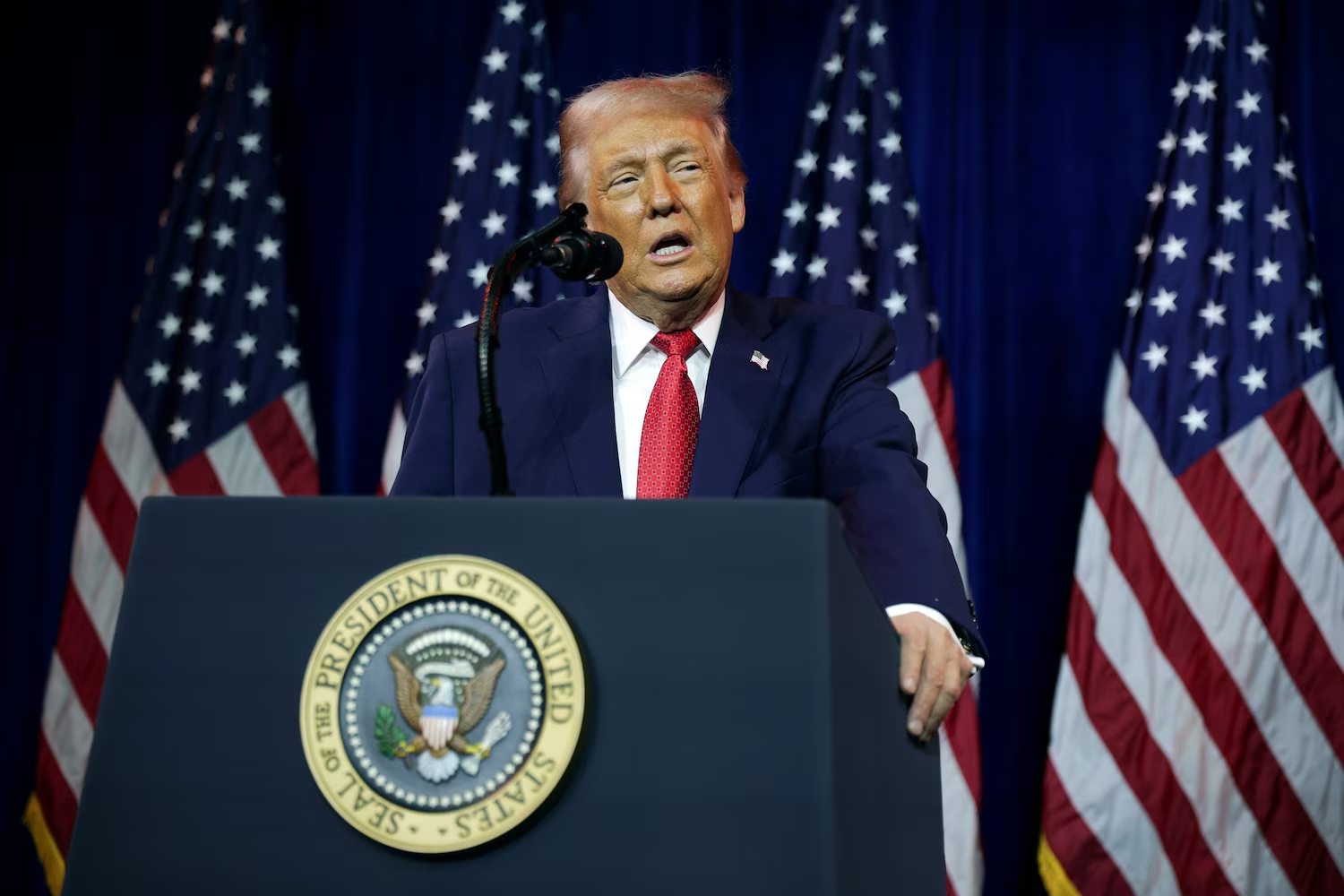
The White House is asking Congress to approve more than $1.4 billion in emergency funding to combat the rapidly expanding Ebola outbreak in Central Africa, including plans for a quarantine facility in Kenya and measures aimed at preventing the virus from reaching the United States.
The request, submitted Wednesday as part of a broader supplemental spending package, comes as health officials warn that the current outbreak could become one of the most severe in recent history.
According to a Trump administration official, the funding proposal includes $800 million for humanitarian and emergency response efforts.
The money would help establish a quarantine center in Kenya for Americans exposed to the virus, while also supporting medical supplies, treatment programs, contact tracing operations, infection-control measures, and a regional logistics network.

An additional $500 million would be dedicated to global health security initiatives designed to stop the virus from spreading internationally.
Those efforts would include expanding disease surveillance systems, strengthening laboratory capacity, improving cross-border coordination, and supporting partnerships with international organizations and private-sector groups.
The administration is also seeking $90 million for diplomatic and emergency evacuation efforts, including transporting infected U.S. citizens to specialized treatment facilities.
The funding request could face resistance on Capitol Hill. Several lawmakers, including some Republicans, have criticized the administration for withholding previously approved foreign aid funds, particularly for healthcare and humanitarian programs overseas.
The United States has also faced scrutiny for cuts to the U.S. Agency for International Development (USAID) and public health programs across Africa before the outbreak began, moves that critics argue weakened early response efforts.
The outbreak, centered in the Democratic Republic of Congo, involves the rare Bundibugyo strain of Ebola.
According to the World Health Organization, more than 1,000 people have been infected and at least 267 have died, making it the largest number of confirmed Ebola cases recorded within the first month of an outbreak.
Health experts say the scale and speed of the spread demand an aggressive response.
“This is a very serious outbreak, and a very serious response is needed now,” said Josh Michaud, a global health policy analyst with KFF.
Michaud said the administration’s $1.4 billion request appears broadly consistent with the resources required to contain the crisis.
For comparison, the United States spent roughly $266 million responding to Congo’s smaller Ebola outbreak between 2018 and 2020.
Still, he noted that some elements of the proposal, particularly the planned quarantine center in Kenya, could spark debate because of its focus on preventing Ebola cases from reaching American soil.
U.S. has already committed hundreds of millions of dollars to the international response.
Last week, the U.S. Centers for Disease Control and Prevention announced $107 million in emergency funding to strengthen domestic and overseas preparedness efforts. The agency also warned that the current outbreak has the potential to become the worst Ebola crisis on record.
The United States has additionally provided doses of an experimental antibody treatment for clinical trials in affected regions, marking a shift from earlier policies that limited access primarily to American citizens.
Meanwhile, concern over international spread has intensified after France confirmed its first Ebola case linked to the outbreak.
The patient, a doctor who recently returned from a humanitarian mission in Congo, tested positive earlier this week.
Despite those developments, World Health Organization Director-General Tedros Adhanom Ghebreyesus said Wednesday that the risk of broader international transmission remains low.
Congress is expected to review the emergency funding request in the coming weeks as health officials continue efforts to contain the outbreak before it spreads further beyond Central Africa.




