


United States President Donald Trump has intensified his push to make election security a defining issue in November’s midterm elections, reviving claims that China interfered in the 2020 presidential race despite longstanding U.S. intelligence findings that found no evidence foreign actors altered the outcome.
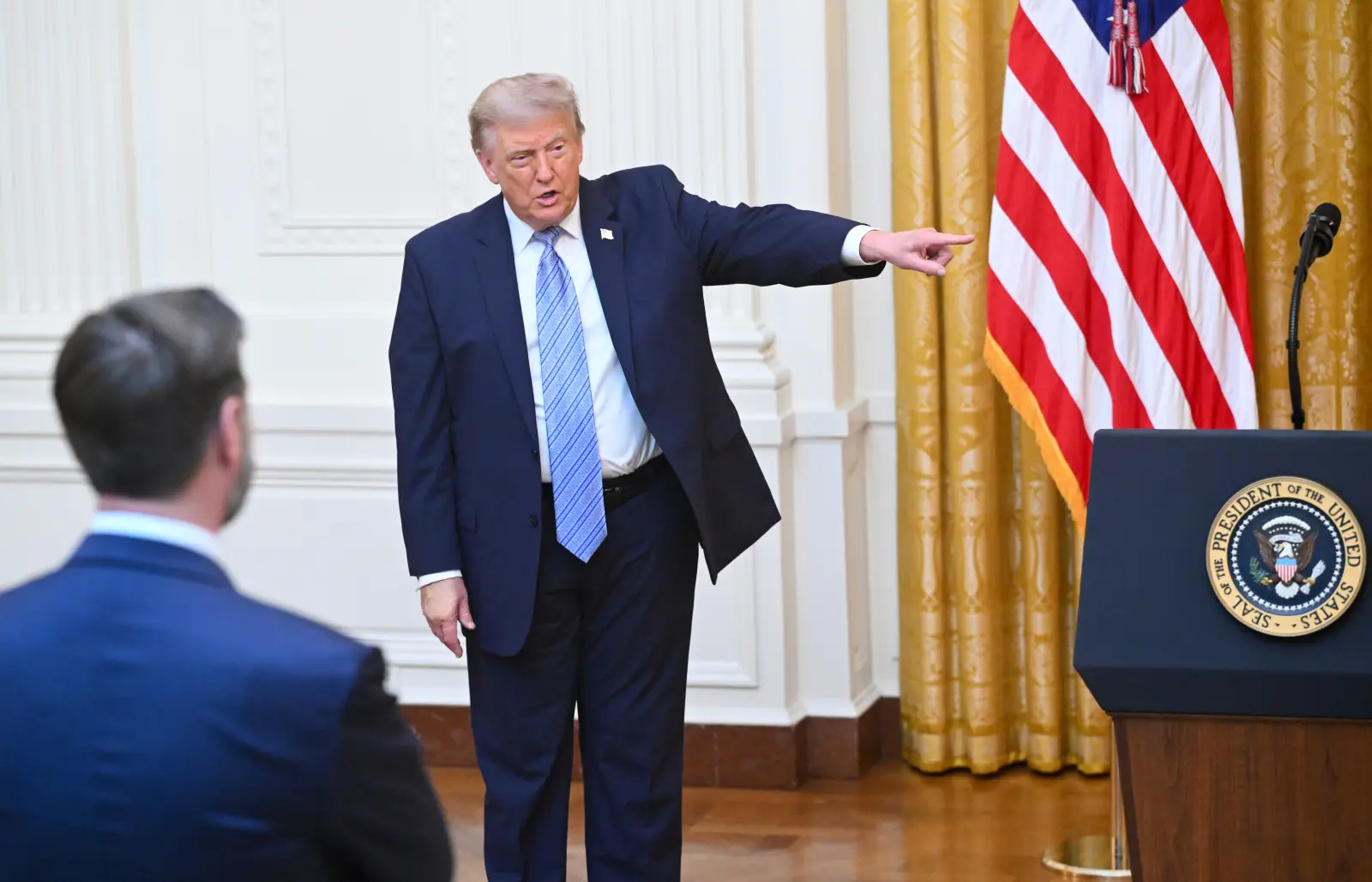
In a nearly 30-minute primetime address from the White House on Thursday, Trump repeated many of his longstanding concerns about the integrity of U.S. elections, saying newly declassified documents exposed what he described as “shocking vulnerabilities” in the electoral system.
However, the documents released by the administration did not appear to support many of the president’s claims. While Trump argued that the election system remains vulnerable, he presented no evidence that votes cast in the 2020 election were changed, manipulated or improperly counted.
China swiftly rejected the allegations.

Speaking in Beijing on Friday, Chinese Foreign Ministry spokesperson Lin Jian described Trump’s accusations as “totally fabricated” and “a malicious smear,” insisting that China has never interfered in U.S. elections.
“China has always adhered to the principle of non-interference in internal affairs,” Lin said. He urged Washington to stop using China as a political issue during election campaigns and instead focus on improving bilateral relations.
Trump renews push for voting reforms
Trump used the address to once again urge congressional Republicans to pass the SAVE America Act, legislation that would introduce stricter voter identification and citizenship verification requirements.
The bill has stalled in the Senate amid strong opposition from Democrats, who argue the proposed measures would make voting more difficult without addressing a widespread problem. Numerous studies and election officials have consistently found that voter fraud in the United States is rare.
The president’s speech comes as Republicans face a challenging political landscape ahead of November’s elections. High energy prices and public dissatisfaction over the ongoing conflict with Iran have weighed on Trump’s approval ratings, raising concerns within the party about retaining control of Congress.
Some Republican strategists have privately urged Trump to focus more on economic issues, inflation and the cost of living rather than revisiting the 2020 election.
Although Trump briefly highlighted his administration’s tax cuts, immigration policies and military operations, much of his speech centered on election security.
Claims conflict with intelligence findings
Trump said his administration had declassified information showing that China obtained personal data belonging to about 220 million American voters, including names and addresses. He also accused members of the U.S. intelligence community of downplaying Beijing’s activities.
But a declassified U.S. intelligence assessment released in 2021 concluded that no foreign government attempted to alter any technical aspect of the 2020 election, including voter registration systems, ballots, vote tabulation or the final results.
That assessment was completed under then-Director of National Intelligence John Ratcliffe, who now serves as CIA director.
The report found that China had collected publicly available information on American voters, political candidates and public opinion dating back to at least 2008, primarily to better understand and predict election outcomes rather than interfere with the voting process.
Two people familiar with the matter told Reuters that the voter information obtained by China was not classified or confidential, noting that similar voter databases are routinely purchased and used by political campaigns and consulting firms.
Renewed focus on election claims
Trump has repeatedly challenged the legitimacy of the 2020 election, maintaining without evidence that widespread fraud cost him victory against Democrat Joe Biden. He has also continued to question the security of mail-in voting, voting machines and non-citizen voting.
Those claims have been rejected by numerous courts, state election officials and multiple recounts, all of which found no evidence of widespread fraud capable of changing the election outcome.
A Reuters/Ipsos poll conducted in April found that 63% of Republican voters believe Trump’s claim that the 2020 election was stolen.
During Thursday’s address, Trump also said his administration had identified more than 275,000 non-citizens registered to vote across four states, though he did not provide evidence that any had cast ballots.
Previous reviews have shown that citizenship verification systems can sometimes mistakenly flag naturalized U.S. citizens as non-citizens, while academic studies have found instances of non-citizens voting to be extremely rare.
Some of the newly released intelligence documents also appeared to contradict the president’s assertions. One focused on Venezuela’s election system rather than the United States, another concluded that American vote tabulation systems would be difficult to manipulate on a scale large enough to affect election results, while a third said China did not intend to covertly influence the outcome of the 2020 U.S. election.
Responding to Trump’s remarks, Democratic Senator Mark Warner, vice chairman of the Senate Intelligence Committee, said the intelligence community had consistently concluded that China did not alter a single vote in the 2020 presidential election.




