


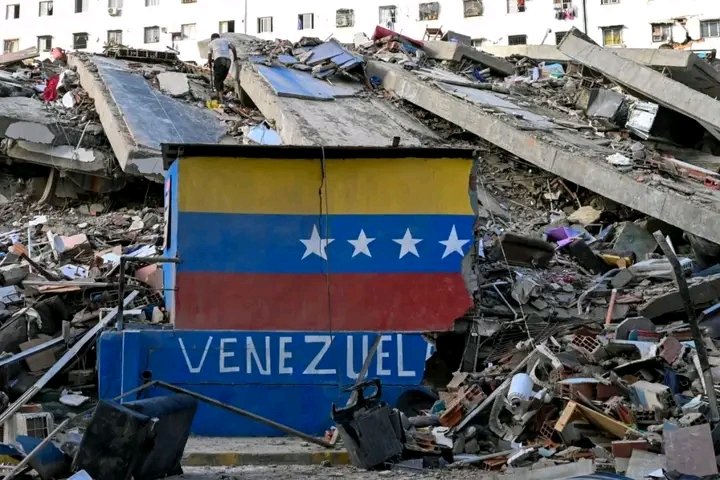
CARACAS, Venezuela — The death toll from the twin earthquakes that struck northern Venezuela on June 24 has surpassed 5,000, with 5,069 lives lost, 16,740 people injured, and over 17,900 left homeless, according to the latest official figures released by National Assembly President Jorge Rodriguez.
The two powerful tremors, measuring magnitudes 7.2 and 7.5, struck just 39 seconds apart in the country’s northwest, making it the most powerful earthquake recorded in Venezuela in over a century. Their epicenters were located about 10 kilometres apart in Yaracuy state.
The hardest-hit area is La Guaira state on the central coast, where numerous buildings collapsed and virtually all state officials were killed. Significant damage was also reported in Caracas and other northern states.
According to the official report, the disaster has resulted in 190 buildings being completely destroyed and 856 others sustaining significant damage. A total of 6,462 people have been rescued from the rubble, while 36,951 individuals have received treatment in hospitals and medical facilities. Authorities have provided assistance to 128,324 affected families, with 21,235 people currently accommodated across 107 temporary camps.

The response effort has shifted from search and rescue to early recovery, with the International Organization for Migration (IOM) warning of further risks. The UN agency has expressed concern that a potential strong El Niño climate pattern could worsen the situation for displaced families. The UN has issued an emergency appeal for nearly $300 million to assist 1.3 million people in urgent need of aid.
The United Nations Development Programme (UNDP) has estimated the direct physical damage to housing and infrastructure at approximately $6.7 billion, equivalent to around six percent of the country’s GDP. The true scale of the disaster, however, remains uncertain, with international organisations and media outlets warning that the official figures could be considerably higher, given that tens of thousands of people are still listed as missing.
Efforts to verify the full impact have been hampered by information restrictions, with numerous websites remaining blocked in the country. The UN has urged authorities to fully restore access to media and social networks.




