


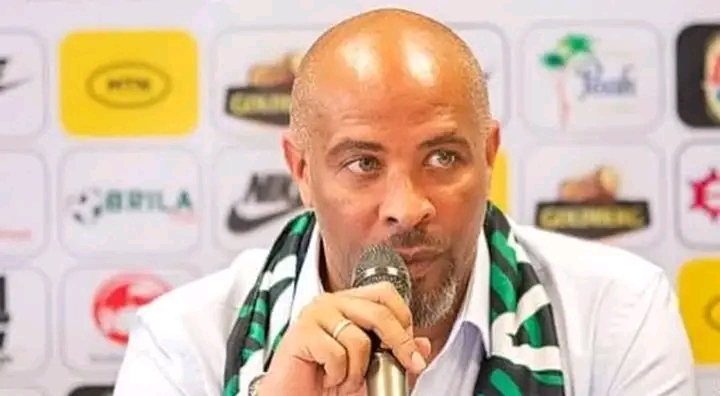
The announcement of an improved contract for Super Eagles head coach Eric Chelle has reignited a long running debate in Nigerian football, with administrators, former coaches and football stakeholders calling on the Nigeria Football Federation to ensure indigenous coaches receive equal financial treatment whenever they are entrusted with leading the country’s national teams.
The discussions followed confirmation that Chelle’s contract has been upgraded to a reported monthly salary of $100,000, making him one of the highest paid coaches in the history of Nigerian football. Beyond his responsibilities with the Super Eagles, the Franco Malian tactician has also been assigned to oversee the national Under 23 team as preparations begin for qualification for the 2028 Olympic Games in Los Angeles.
While many observers believe the improved remuneration reflects the growing demands of managing one of Africa’s biggest football nations, others argue that Nigerian coaches have consistently been undervalued despite producing impressive results over the years.

The latest development has once again brought into focus the long standing disparity between the salaries earned by foreign coaches and those paid to indigenous tacticians, with several respected football personalities insisting that nationality should never determine a coach’s worth.
Former Nigeria Football Federation board member and Rivers State Commissioner for Sports, Barrister Christopher Green, is among those advocating for equal treatment. According to him, football coaching should be measured by competence, professionalism and results rather than where a coach comes from.
Green maintained that if the federation considers a foreign coach worthy of earning $100,000 every month, then a Nigerian coach performing exactly the same role should receive an identical salary package.
He argued that the responsibilities of managing the Super Eagles remain the same regardless of the coach’s nationality. Team selection, tactical preparation, player management, match analysis and achieving positive results are identical expectations for both foreign and local coaches.
According to him, introducing different salary structures based solely on nationality sends the wrong message and discourages local coaches who have dedicated decades to developing Nigerian football.
The veteran administrator also questioned the timing of the salary increase, pointing out that Nigeria failed to qualify for the 2026 FIFA World Cup despite possessing one of the strongest squads on the African continent.
He believes that substantial financial rewards should be closely tied to measurable achievements, insisting that supporters naturally expect improved performances before celebrating higher coaching salaries.
The conversation has also attracted the attention of experienced Nigerian tacticians.
Former Super Eagles assistant coach and one of the Nigeria Premier Football League’s most respected managers, Gbenga Ogunbote, believes indigenous coaches deserve greater recognition from football authorities.
According to Ogunbote, Nigerian coaches have repeatedly demonstrated their technical competence both at club level and with the various national teams. He stressed that equal opportunities and equal remuneration would encourage more young coaches to invest in their education and professional development.
He explained that rewarding home based coaches fairly would strengthen confidence within the domestic coaching profession while reducing the widespread perception that foreign coaches are automatically more qualified than their Nigerian counterparts.
Ogunbote added that local coaches possess a deeper understanding of Nigeria’s football culture, player mentality and grassroots development system, qualities that can become valuable assets when managing the national team.
However, not every stakeholder shares the view that Chelle’s improved contract is excessive.
Former Super Falcons assistant coach Mansur Abdullahi defended the Nigeria Football Federation’s decision, arguing that modern football coaching extends far beyond standing on the touchline during matches.
According to Abdullahi, managing the Super Eagles involves monitoring hundreds of Nigerian players scattered across leagues in Europe, Africa, Asia and the Middle East. Coaches must constantly travel to observe players, analyse performances, monitor fitness levels and maintain communication with clubs throughout the season.
He explained that the workload attached to leading Nigeria’s senior national team justifies a competitive salary capable of attracting and retaining experienced professionals.
Nevertheless, Abdullahi expressed reservations about the federation assigning Chelle additional responsibility for the Under 23 national team.
He warned that combining two demanding coaching positions could place unnecessary pressure on one individual, especially with international tournaments, qualification campaigns and friendly matches scheduled throughout the football calendar.
Chelle arrived in Nigeria with an impressive coaching reputation after guiding Mali to one of their strongest performances in recent years. His disciplined tactical philosophy, defensive organisation and emphasis on structured attacking football convinced the Nigeria Football Federation that he was the right man to rebuild the Super Eagles.
Although the team fell short of qualifying for the 2026 FIFA World Cup, football authorities have continued to express confidence in his long term project.
Officials believe constant changes in the coaching department have contributed to instability over the years and that sustained progress requires patience, continuity and proper financial support.
The debate surrounding coaching salaries has once again revived memories of several indigenous coaches who achieved remarkable success despite earning significantly less than many foreign managers.
The late Stephen Keshi remains one of the greatest examples. He guided Nigeria to victory at the 2013 Africa Cup of Nations, becoming only the second African to win the tournament both as a player and as a coach.
Other respected Nigerian coaches, including Augustine Eguavoen, Samson Siasia, Shaibu Amodu and Salisu Yusuf, have all contributed significantly to the growth of the national teams at different periods, often working under financial conditions far below those enjoyed by expatriate coaches.
Supporters of equal pay argue that these achievements demonstrate that coaching excellence is determined by knowledge, preparation and leadership rather than nationality.
Many football analysts believe the Nigeria Football Federation should establish a transparent salary structure based on coaching qualifications, experience, responsibilities and performance targets instead of whether a coach is Nigerian or foreign.
Such a policy, they argue, would eliminate recurring controversies whenever a new coach is appointed while boosting confidence in the country’s coaching profession.
As discussions continue across Nigeria’s football community, one message remains consistent. Most stakeholders support competitive salaries for national team coaches but insist that fairness, merit and equality should guide every appointment.
For many observers, the controversy surrounding Eric Chelle’s improved contract is about more than money. It represents another opportunity for Nigerian football to redefine how it values its own coaching talent while maintaining the highest standards needed to compete successfully on the international stage.




