



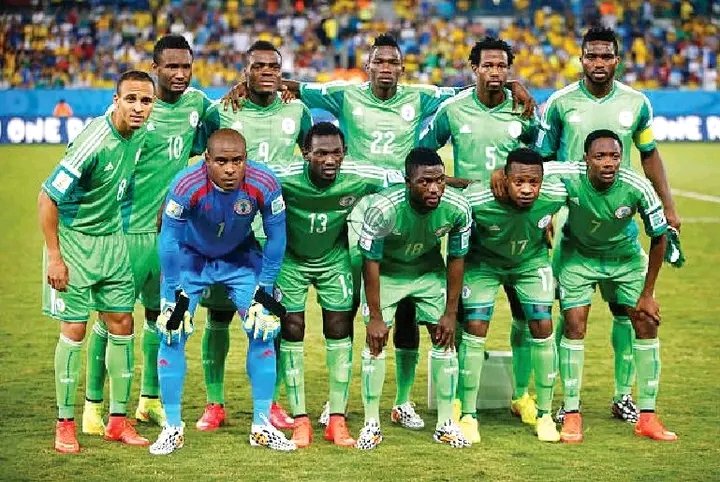
The 2026 FIFA World Cup has been widely celebrated as a defining moment for African football. With the tournament expanded to 48 teams for the first time, the continent produced its strongest collective performance on the global stage, as several African nations advanced deep into the competition and challenged some of the world’s biggest football powers.
While Morocco, Ghana, Egypt, Senegal and other African representatives earned praise for their impressive displays, Nigeria’s Super Eagles also found themselves making headlines despite failing to qualify for the tournament. Although they watched the competition from home, many of the team’s historic World Cup achievements remained untouched, reinforcing the country’s enduring influence in African football.
For many Nigerian supporters, the tournament has been one of mixed emotions. There has been admiration for the progress made by fellow African nations, but also disappointment over Nigeria’s absence from a competition where the Super Eagles have traditionally been among the continent’s leading representatives.
Despite not featuring in the United States, Canada and Mexico, Nigeria continues to hold several important records that underline the team’s remarkable contribution to African football on the world stage.
One of the most significant milestones is Nigeria’s position as the West African nation with the highest number of FIFA World Cup appearances. Since making a memorable debut at the 1994 World Cup in the United States, the Super Eagles have qualified for six editions of the tournament.
Nigeria featured in the 1994, 1998, 2002, 2010, 2014 and 2018 World Cups, building a reputation for exciting football and fearless performances against some of the sport’s biggest nations. Although the team failed to qualify for both the 2022 and 2026 editions, no other West African country has surpassed that achievement.
The Super Eagles also remain one of Africa’s most successful teams in terms of reaching the knockout rounds. Nigeria has progressed to the Round of 16 on three occasions, achieving the feat in 1994, 1998 and 2014.
The team’s debut campaign in 1994 remains one of the greatest by any African nation. Under Dutch coach Clemens Westerhof, the Super Eagles topped a difficult group that included Argentina, Bulgaria and Greece before narrowly losing 2 to 1 to Italy after extra time in the Round of 16. That tournament introduced Nigerian football to the global audience and established the country as a major force in international football.
Four years later in France, Nigeria once again captured worldwide attention by defeating Spain 3 to 2 in one of the greatest upsets in World Cup history. The thrilling comeback victory remains one of the defining moments in African football and demonstrated the courage and attacking flair that became synonymous with the Super Eagles.
Many of the players from that golden generation remain household names across the continent. Rashidi Yekini, Austin Jay Jay Okocha, Daniel Amokachi, Sunday Oliseh, Nwankwo Kanu, Taribo West, Emmanuel Amunike and the late Stephen Keshi all played significant roles in shaping Nigeria’s World Cup legacy.
Although Africa celebrated several new milestones during the 2026 tournament, some of Nigeria’s long standing achievements proved difficult to surpass.
Morocco continued its extraordinary rise by strengthening its position as Africa’s most successful team in recent World Cup history. Building on its historic semi final appearance in Qatar four years earlier, the Atlas Lions once again reached the latter stages of the competition while also becoming the continent’s highest earning nation from FIFA World Cup prize money.
Ghana also enjoyed an encouraging campaign, adding more victories to its World Cup record and moving closer to Nigeria’s historical achievements.
Despite those accomplishments, the Super Eagles remain one of the continent’s most respected football brands. Their entertaining style of play, passionate supporters and consistent presence at major tournaments over the past three decades have helped shape Africa’s growing reputation in world football.
Former internationals have repeatedly stated that Nigeria’s absence from consecutive World Cups should serve as a wake up call rather than a reason for despair. They believe the country’s vast football talent, combined with better administration and long term planning, can restore the Super Eagles to the global stage.
Fortunately for Nigerian football, the future remains promising.
The current generation includes several players competing at the highest level of European football. Victor Osimhen has established himself as one of the world’s leading strikers, while Ademola Lookman continues to impress with his pace and creativity. Victor Boniface, Raphael Onyedika, Calvin Bassey, Ola Aina, Samuel Chukwueze and Wilfred Ndidi also provide a strong foundation for future qualification campaigns.
Football analysts believe that with improved organisation, consistency in coaching and stronger grassroots development, Nigeria possesses enough quality to return to the World Cup and challenge the continent’s best once again.
The success of African teams at the 2026 tournament has also demonstrated that the gap between the continent and traditional football powers continues to narrow. Better infrastructure, investment in youth development and increased exposure for African players in Europe’s elite leagues have contributed significantly to this progress.
For Nigeria, the challenge now is to ensure the Super Eagles are part of that upward trajectory rather than watching from the sidelines.
The team’s history proves that Nigeria has the pedigree, talent and experience to compete at the highest level. From memorable victories over Spain, Bulgaria and Greece to producing some of Africa’s greatest football icons, the Super Eagles have consistently inspired millions of supporters across the continent.
As the football world looks ahead to future international competitions, Nigerian fans will hope the lessons from the missed 2026 World Cup campaign lead to meaningful reforms. While other African nations celebrated remarkable achievements this year, the Super Eagles can still take pride in the records that remain part of their rich history.
The next objective will be to return to the world’s biggest stage, reclaim lost ground and create a new generation of unforgettable World Cup memories that will once again place Nigeria among the giants of African football.




