


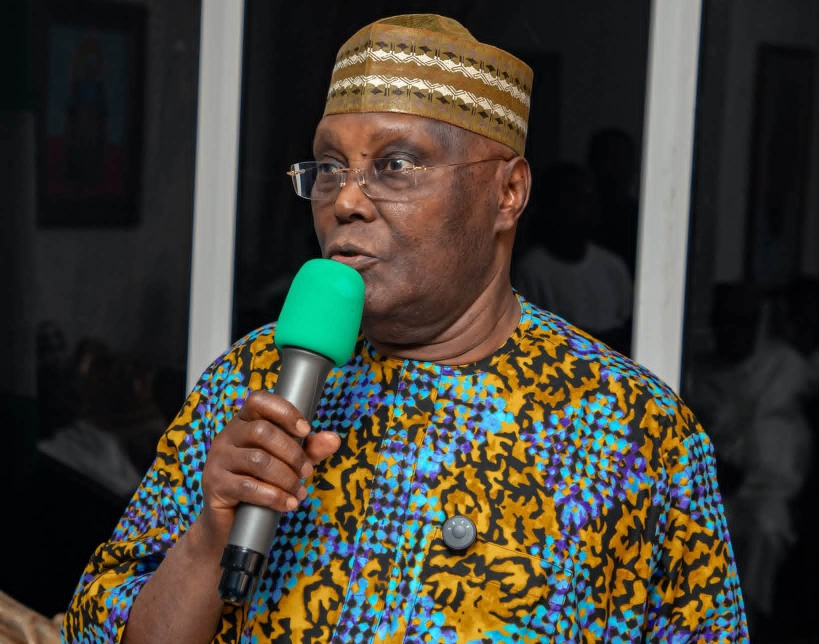
Nigeria’s former Vice President, Alhaji Atiku Abubakar has challenged President Bola Tinubu to explain how the savings from fuel subsidy removal are being spent, amid renewed threats of industrial action by the Academic Staff Union of Universities, ASUU.
Atiku said Nigerians had endured higher fuel prices, transport fares, food costs, energy bills and school fees following the removal of subsidy, yet public universities remained underfunded and lecturers were still raising concerns over unpaid entitlements and unresolved agreements.
He asked the Federal Government to account for the resources it said would be freed by the subsidy removal and deployed to education, healthcare, infrastructure and other essential services.
“If the subsidy is gone and Nigerians have paid for that decision through unprecedented hardship, then President Tinubu owes the country a simple answer: where is the money?” Mr Atiku asked.

He spoke in a statement issued by his spokesman, Mr. Phrank Shaibu.
He accused the Mr Tinubu administration of using the promise of subsidy savings to justify a policy that had imposed severe economic hardship on Nigerians without delivering corresponding improvements in public services.
“The house of cards of falsehoods erected by the Tinubu administration to justify the suffering of Nigerians is collapsing before our eyes,” he said.
According to him, the government had removed what he described as a major economic cushion without providing adequate social protection for households affected by the policy.
“A government that strips citizens of relief, denies them meaningful social protection and fails to deliver the basic improvements it promised has forfeited the moral credibility to continue preaching sacrifice,” he said.
Mr Atiku said the renewed ASUU crisis had exposed what he described as a contradiction in the government’s justification for subsidy removal.
He said lecturers were still demanding the settlement of outstanding obligations while students faced the prospect of another disruption to the academic calendar.
“Government removed the cushion, collected the supposed savings and imposed the hardship, but Nigerians cannot see the corresponding improvement in their schools, hospitals or everyday lives,” he said.
Mr Atiku also questioned claims by government officials that subsidy savings had contributed to increased allocations to state governments.
“Government officials repeatedly tell Nigerians that subsidy savings have translated into larger allocations to states. But if substantially more money is supposedly flowing to the states, why has the condition of public education not improved accordingly?” he asked.
He said the crisis extended beyond federal universities, noting that some state-owned universities had also experienced industrial disputes and disruptions.
According to him, the situation points to a wider problem in the management of public education despite what he described as increased government revenues.
“You cannot boast about record allocations while students sit at home because lecturers are on strike. You cannot celebrate higher revenues when classrooms, laboratories, hostels and teaching facilities remain inadequate,” Mr Atiku said.
He argued that Nigerians were entitled to demand accountability over how increased revenues were being spent.
“If more money is reaching both the Federal Government and the states, Nigerians are entitled to ask why the quality and capacity of public education remain so painfully deficient,” he said.
Mr Atiku also criticised the government’s student loan scheme, saying it had failed to address the underlying factors making university education increasingly unaffordable.
He said the removal of subsidy had increased the cost of living at a time when families were already struggling to meet education expenses.
“This government removed subsidy, increased the cost of transportation, food and virtually every other necessity, and watched the cost of university education rise beyond the reach of many families,” he said.
Mr Atiku said the establishment of the Nigerian Education Loan Fund, NELFUND, had effectively shifted part of the burden of rising education costs to students.
“What kind of reform first empties a family’s pocket and then offers the child a loan to survive the hardship government helped create?” he asked.
“That is not progress. It is a vicious circle of government-manufactured poverty.”
The former vice president also raised concerns about the capacity of Nigeria’s tertiary education system to accommodate its growing youth population.
He questioned the pace of expansion of university infrastructure and admission capacity.
“Where are the new classrooms? Where are the laboratories? Where are the hostels? Where are the additional teaching facilities and expanded admission spaces required for Nigeria’s growing youth population?” he asked.
Mr Atiku said the government could not claim to be reforming education while allegedly failing to expand infrastructure, settle lecturers’ outstanding claims and make university education more affordable.
“That is not education reform. It is organised hardship financed with debt,” he said.
He further accused the administration of applying different standards when dealing with ordinary Nigerians and powerful interests.
“The poor are told there is no money for subsidy. Students are told to borrow. Lecturers are told to wait. Parents are told to endure,” he said.
“But when powerful and well-connected interests come knocking, government always appears capable of finding concessions, waivers and privileges.”
Mr Atiku, therefore, called for accountability over the resources he said were expected to be released by the removal of subsidy.
“The promise was straightforward: remove subsidy, free enormous resources and invest them in education, healthcare, infrastructure and social welfare,” he said.
“But today, ASUU is again raising the prospect of a nationwide strike over unpaid entitlements and outstanding agreements. State universities have also experienced industrial disruptions. Students are borrowing to fund increasingly expensive education, while university infrastructure remains grossly inadequate.”
He said Nigerians had made the sacrifice demanded by the government but were yet to receive the promised benefits.
“The sacrifice has been collected from Nigerians in full. The promised benefits have not been delivered in full,” he said.
Mr Atiku consequently challenged Tinubu to explain how the resources saved through subsidy removal had been utilised.
“So President Tinubu must answer the question that will not go away: WHERE IS THE MONEY?” he asked.
“Nigerians cannot continue making endless sacrifices for a government whose promises exist mainly in speeches, press releases and statistical announcements.
“A government cannot keep taking from the people, returning excuses and loans, and calling that reform.”
He added that the subsidy removal had not eliminated the recurrent crisis in the university system.
“Tinubu removed subsidy from the people, but he has not removed the threat of ASUU strikes. He has not resolved the crisis of unpaid obligations. He has not sufficiently expanded our universities. He has not made education more affordable. And he certainly has not removed the hardship confronting Nigerian families.
“That is the tragedy and the fraud of the Tinubu economy.”




