


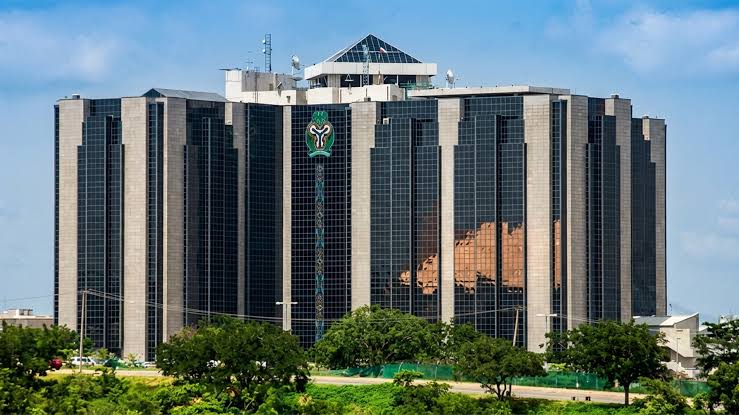
Nigerian banks increased their deposits with the Central Bank of Nigeria (CBN) to a seven-month high of N7.33 trillion, signalling a sharp rise in liquidity across the financial system following the latest adjustment to the country’s benchmark interest rate.
Data from the CBN showed that deposits under the Standing Deposit Facility (SDF) jumped by 62.75 percent in a single trading day, rising from N4.51 trillion on Tuesday to N7.33 trillion on Wednesday.
The latest figure represents the highest level recorded since March 30, 2026, when banks placed N7.09 trillion with the apex bank.
The surge came shortly after the CBN Monetary Policy Committee cut the Monetary Policy Rate (MPR) by 350 basis points, reducing it from 26.5 percent to 23 percent.

The significant adjustment followed a period in which money-market rates had already fallen below the previous policy rate, reducing the effectiveness of the 26.5 percent MPR as a guide for market interest rates.
According to Ayokunle Olubunmi, head of Financial Institutions Ratings at Agusto & Co., the increase in SDF deposits reflects the high level of liquidity currently available within the financial market.
Banks use the CBN’s Standing Deposit Facility to place excess funds with the apex bank, making movements in SDF balances an important indicator of liquidity conditions in the banking system.
The latest increase therefore suggests that banks were holding substantial excess naira liquidity even as the CBN moved to reset its policy rate.
Analysts at Coronation Merchant Bank said much of the recent interest-rate adjustment had already been reflected in the short end of Nigeria’s fixed-income market before the CBN’s decision.
The 364-day Nigerian Treasury Bill stop rate, for instance, declined by 97 basis points across the three auctions preceding the rate decision, falling from 17.59 percent on August 26 to 16.62 percent on September 9.
Coronation expects Treasury bill yields to decline further by about 100 to 150 basis points over the next one or two auctions, potentially bringing the one-year bill rate to between 15 percent and 15.5 percent.
However, the analysts expect the decline to eventually slow as the market adjusts to the new interest-rate environment.
At the current 16.62 percent rate, the one-year Treasury bill already offers a significantly lower return than prevailing overnight market rates, creating what Coronation described as structurally negative carry for banks.
Instead, demand for Treasury bills has increasingly been supported by pension fund administrators and asset managers with substantial naira liquidity.
The combination of high banking-system liquidity, falling short-term yields and the CBN’s lower policy rate could therefore shape the direction of Nigeria’s fixed-income market in the coming weeks.
For banks, the development also highlights the challenge of managing excess liquidity in an environment where policy rates and market yields are adjusting at different speeds.
The sharp rise in SDF deposits shows that while the CBN has lowered its benchmark rate, liquidity conditions remain a major factor influencing how quickly the change is transmitted across Nigeria’s financial markets.




