


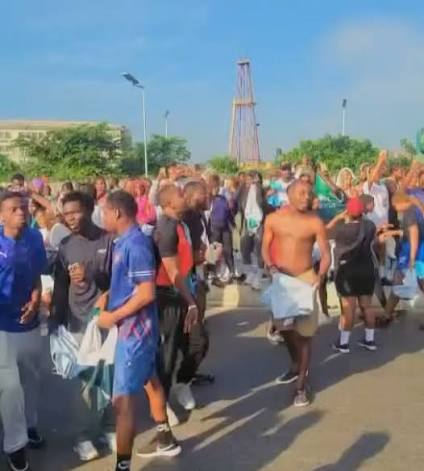
Drama reportedly broke out at the PTI Junction in Delta State during a 5km Independence Day run after some youths were allegedly handed T-shirts bearing the image of President Bola Tinubu.
According to footage and reports circulating online, some participants appeared surprised when the shirts, branded “Soft Nigeria,” were distributed ahead of the event.
The development reportedly triggered an angry reaction from some of the youths, with footage showing participants tearing the shirts rather than wearing them.
Others were reportedly heard threatening to boycott the run, while chants of “Obi! Obi! Obi!” could also be heard from the crowd in the circulating footage.

The incident has generated reactions online, particularly because the event was organised as part of activities marking Nigeria’s 66th Independence Day.
The shirts reportedly carried Tinubu’s image alongside the “Soft Nigeria” branding. “Soft Nigeria” has previously been associated with political mobilisation in Delta State; in June 2026, the Delta State Sports Commission chairman was reported to have donated buses to the group as part of grassroots mobilisation efforts supporting Tinubu and Delta State Governor Sheriff Oborevwori.
However, it is unclear from the available footage whether all participants were aware beforehand that the shirts would carry political imagery or whether the organisers had presented them as official event merchandise.
The reaction comes amid heightened political activity in Nigeria ahead of the 2027 general elections, with political groups increasingly organising grassroots events and mobilisation activities.
President Tinubu, meanwhile, marked Nigeria’s 66th Independence anniversary on October 1, 2026, delivering a national address in which he called on Nigerians to move forward together and said the country had entered a new phase focused on prosperity.
The video of the youths tearing the shirts and chanting in support of Peter Obi has continued to attract attention online, although the full circumstances surrounding the incident and the identity of the event organisers could not be independently established from the footage alone.
The reactions seen in the video reflect the political sensitivities that can arise when sporting or community events intersect with political branding, particularly during a period of increased political mobilisation.




