


ABUJA, Nigeria — Nigerian commuters are still waiting for widespread transport fare reductions as the Federal Government intensifies efforts to ensure that savings from Compressed Natural Gas (CNG) reach passengers.
The Presidential Initiative on Compressed Natural Gas and Electric Vehicles (Pi-CNG & EV) said the programme had attracted more than $2.5bn in private-sector investment to expand refuelling infrastructure, vehicle conversion centres, vehicle assembly and other parts of the CNG value chain.
However, a nationwide assessment published by The PUNCH on Tuesday showed that implementation remains uneven, with passengers in several states continuing to pay existing or higher fares despite the government’s push for cheaper alternative-energy transportation. <Cite refs={[“turn411740search0”]}/>
The Federal Government is now engaging state governors, transport unions and commercial fleet operators to develop fare-reduction arrangements and improve compliance on routes served by CNG-powered vehicles.

Government Plans Approved Fare Stickers
The Head of Brand and Communications at Pi-CNG & EV, Onyekachi Eke, said the initiative had begun meeting state governors to identify transport routes and agree on implementation measures.
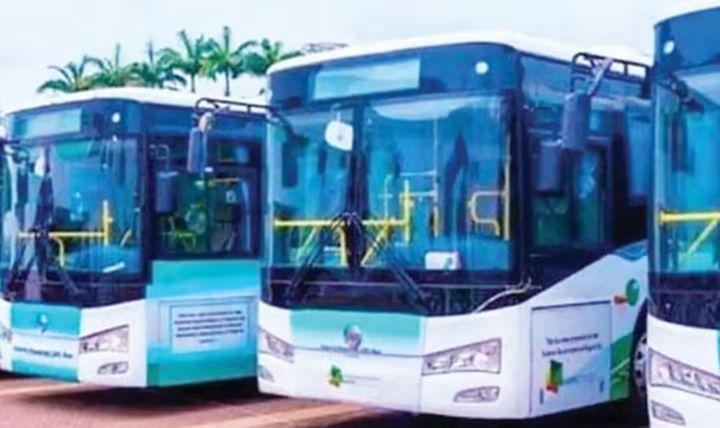
She explained that buses deployed under the programme would carry stickers displaying their designated routes and approved fares.
The measure is intended to help passengers know how much they should pay and make it easier to identify vehicles operating under the initiative.
Eke said the programme was also working with transport unions and fleet operators to ensure that lower operating costs resulted in cheaper journeys for commuters.
She acknowledged that some drivers using CNG continued to charge the same fares as operators running petrol-powered vehicles, despite benefiting from cheaper fuel.
The initiative has not yet disclosed specific penalties for operators who fail to comply or a nationwide timetable for implementing the proposed fare reductions.
Tinubu Targets Lower Transport Costs
President Bola Tinubu had announced an agreement with state governors to pursue measurable reductions in transport costs from October 1, 2026.
The plan followed discussions with the governors on August 27 and the subsequent establishment of an implementation committee under the Nigeria Governors’ Forum, chaired by Kwara State Governor AbdulRahman AbdulRazaq.
In a September 19 update, Tinubu urged state governments to work with transport unions and commercial operators to expand CNG and electric-vehicle services and ensure that savings reached passengers. <Cite refs={[“turn411740search1”]}/>
The President cited examples of lower fares on selected routes, including CNG-powered and electric public transport services in Borno, Kaduna, Enugu, Oyo and other states.
According to the government, more than 120,000 vehicles had been converted to CNG, while more than 400 certified conversion centres and over 90 refuelling stations were operating nationwide.
Tinubu also announced plans to expand the refuelling network, with a target of 1,000 stations through successive rollout plans.
Investment Has Not Guaranteed Cheaper Fares
Despite the reported investment and expansion of the CNG network, commuters in several locations have yet to experience the reductions promised by the government.
In Jigawa State, for example, transport operators said approximately 100 vehicles had been converted to CNG, but passengers were still paying existing fares because too few vehicles were available and refuelling infrastructure remained inadequate.
The state reportedly had only one CNG filling station, located in Dutse.
In Bayelsa, the state government earmarked ₦25bn in its 2026 budget for CNG buses and refuelling stations, but the newspaper’s checks did not confirm CNG-powered buses operating on major intra-city routes in Yenagoa.
In Imo State, drivers also reported that fares remained high, citing the absence of readily available CNG buses and continuing fuel costs.
Similar implementation challenges were reported in parts of Sokoto, Kebbi and other states.
These findings indicate that investment commitments and vehicle conversions do not automatically produce cheaper transport. The number of operational buses, availability of refuelling stations, maintenance expenses and access to the vehicles all affect whether passengers benefit.
Some States Report Fare Reductions
The government says the programme has already delivered savings on selected routes.
In Kaduna, the state operates 100 CNG-powered buses and has reported substantial savings for commuters using its services.
In Enugu, the Federal Government cited reduced fares on the Enugu–Nsukka route following the deployment of CNG buses. In Abuja, some commercial vehicles converted to CNG reportedly offer passengers a 40 per cent reduction on designated routes.
Other states have also used electric buses or subsidised public transport to reduce commuting costs.
However, these benefits remain dependent on location and access to participating services. Passengers who rely on conventional commercial buses may continue to face higher fares where alternative-energy vehicles have not been deployed.
University And Civil Service Transport Plans
The CNG initiative is also pursuing measures to support other groups facing high commuting expenses.
Eke said Project Sprout would provide buses to 20 universities in its first phase to help reduce transportation costs for students.
Separately, the Federal Government announced an initial deployment of 10 mass transit buses for civil servants. The pilot programme was designed to test operational arrangements before any wider rollout.
The initiatives reflect efforts to expand affordable transportation beyond selected public routes, although their eventual reach will depend on implementation and the availability of additional vehicles.
Commuters Await Measurable Relief
The central challenge for the CNG programme is turning investment and cheaper fuel into consistent savings for passengers.
The Federal Government has pledged to work with state authorities and transport operators to expand vehicle deployment, improve infrastructure and enforce lower fares on designated routes.
For commuters facing high daily transportation expenses, the practical measure of success will be the amount they actually pay, rather than the number of vehicles converted or the investment attracted.
Until affordable CNG-powered services become accessible across more routes, many Nigerians may continue to wait for the promised relief.




