



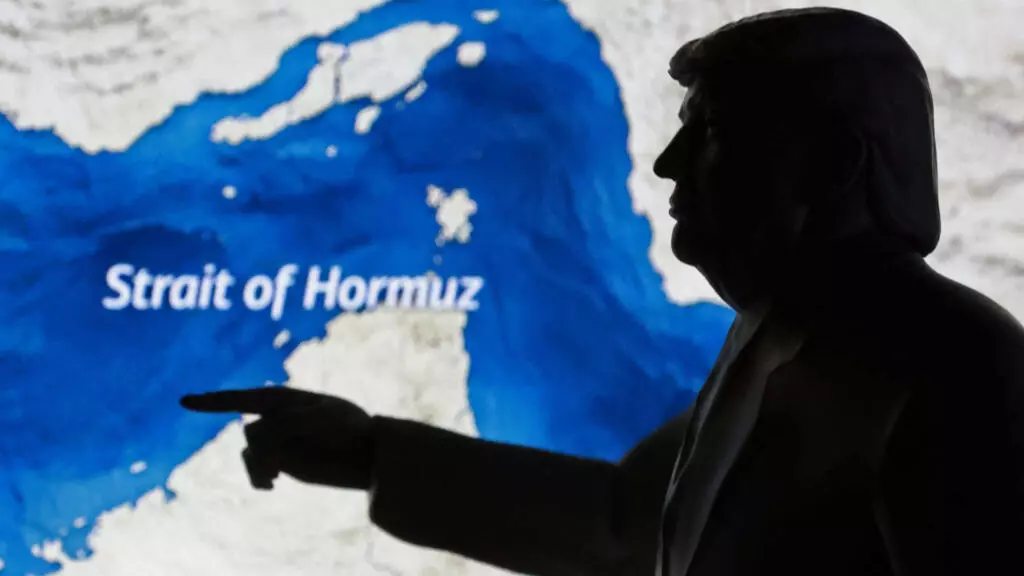
The United States on Tuesday carried out fresh military strikes against Iran and reinstated sanctions on Iranian oil exports in response to recent attacks on commercial vessels near the Strait of Hormuz.
The escalation comes as US President Donald Trump meets world leaders at the NATO summit in Ankara, Turkey, where security around the vital shipping route is expected to dominate discussions.
A US official described the military action as a punitive response, saying the operation would not end quickly.
US Central Command (CENTCOM) confirmed that its forces had begun what it called a series of “powerful strikes” aimed at imposing heavy costs on Iran for attacking commercial vessels and threatening civilian shipping in international waters.

Shortly after the operation began, Iranian state media reported explosions in the southern port cities of Bandar Abbas and Sirik, as well as on Qeshm Island.
The Trump administration also reimposed sanctions targeting Iranian oil sales, reversing one of the key concessions granted under last month’s Memorandum of Understanding between Washington and Tehran.
The move followed reports that Iranian forces attacked three commercial ships in Oman’s territorial waters near the Strait of Hormuz.
The sanctions announcement sent global oil markets higher, with Brent crude futures rising more than five per cent.
Iran condemned Washington’s actions, accusing the United States of violating the agreement reached between both countries.
In a statement, Iran’s Foreign Ministry said the US would bear responsibility for the consequences of what it described as a breach of its commitments.
The ministry also alleged that Washington and Israel had committed several violations of the agreement over the past 20 days, warning that Tehran would take whatever steps it considered necessary to protect its national security.
Meanwhile, developments in the Middle East have overshadowed parts of the NATO summit in Ankara.
Trump told reporters he would soon decide whether to approve the sale of F-35 fighter jets to Turkey despite an existing congressional ban.
The proposal has drawn criticism from Israeli Prime Minister Benjamin Netanyahu, who argued that Turkey under President Recep Tayyip Erdoğan should not be trusted with America’s most advanced fighter aircraft.
Speaking to CNN, Netanyahu described Turkey as “not exactly a model ally” and accused its leadership of maintaining hostile positions toward Israel and the United States.
Despite recent tensions with Trump, Italian Prime Minister Giorgia Meloni said her relationship with the US president remained cordial after the two exchanged public criticisms in recent weeks.
The summit has also focused heavily on defence spending. NATO Secretary General Mark Rutte announced that alliance members had unveiled defence projects worth billions of dollars, including investments in counter-drone systems, surveillance aircraft and expanded drone training programmes.
Rutte said the new investments would strengthen NATO’s readiness while creating hundreds of thousands of jobs across member states, adding that Europe had significantly increased defence spending since Russia’s invasion of Ukraine.
He noted that all NATO members now meet the alliance’s minimum defence spending target, with further increases planned before 2035.




