


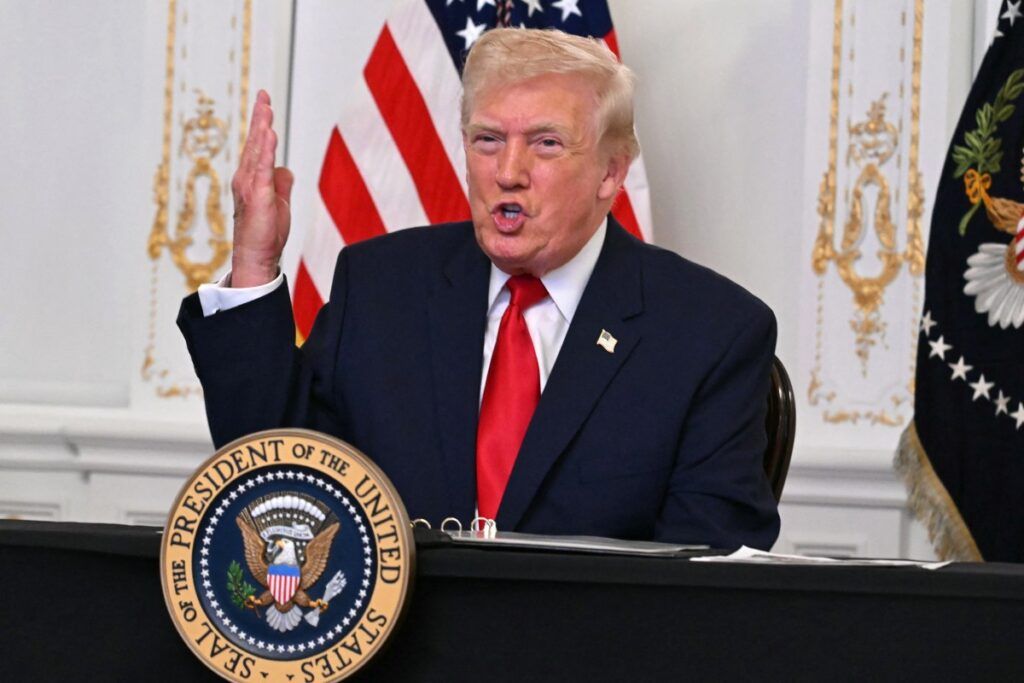
The Christian Association of Nigeria (CAN) in the 19 Northern states and the Federal Capital Territory, alongside the Ecumenical Synods of Bishops, Archbishops, Apostles and Senior Clergy, have rejected United States President Donald Trump’s claim that American military action ended the killing of Christians in Nigeria.
The church leaders described the statement as inaccurate and disconnected from the realities facing many communities across the country. They argued that insecurity remains widespread, with killings, kidnappings and violent attacks continuing in several parts of Nigeria.
Speaking at an event in Washington on Friday, Trump claimed that recent US military action in Nigeria helped stop attacks on Christian communities, particularly in areas affected by insurgency and extremist violence.
“As you know, we recently struck Nigeria and largely ended the slaughter of great Christian populations,” Trump said.

He further claimed that thousands of Christians, including women, children and elderly people, had been brutally killed before the intervention.
According to him, the operation dealt a heavy blow to those responsible for the attacks, including the elimination of key leaders.
Reacting to the remarks, Chairman of Northern CAN, Rev. Joseph Hayab, said the situation on the ground did not support Trump’s claims.
Hayab maintained that insecurity remains a major challenge and affects Nigerians regardless of religion.
“The people who can truly say whether there has been any improvement are the victims themselves, not President Trump,” he said.
He argued that many communities across the North and other parts of the country continue to suffer attacks from bandits, terrorists and other criminal groups.
While acknowledging reports of US operations targeting terrorist elements, Hayab said such actions had not translated into an end to the violence.
“People are still being killed. People are still being abducted. Communities are still living in fear. That is the reality,” he said.
He urged the US government to focus on meaningful support rather than what he described as political rhetoric.
“If America wants to help Nigeria overcome insecurity, that assistance should be practical and measurable. It should not be reduced to political statements that do not reflect the situation on the ground,” he added.
Also speaking, the International Secretary of the Ecumenical Synods of Bishops, Archbishops, Apostles and Senior Clergy, Archbishop Osazee William, said there was no clear evidence that any intervention had ended attacks on Christians or other Nigerians.
William noted that expectations were higher, particularly given the scale of the security crisis facing the country.
“I have not seen anything that suggests the problem has been solved. If there was an intervention, the results are not visible enough for anyone to conclude that the killings have ended,” he said.
The cleric said what Nigerians need are sustained efforts capable of addressing the root causes of insecurity rather than isolated actions.
He also expressed concern over reports of behind-the-scenes diplomatic engagements that may have influenced public statements on Nigeria’s security situation.
According to him, while Trump may have intended to send a message through the reported intervention, the reality remains that communities across the country continue to face security threats.
Both CAN and the bishops called for stronger local and international collaboration to tackle terrorism, banditry and other forms of violence, insisting that the protection of lives and property must remain the priority.




