


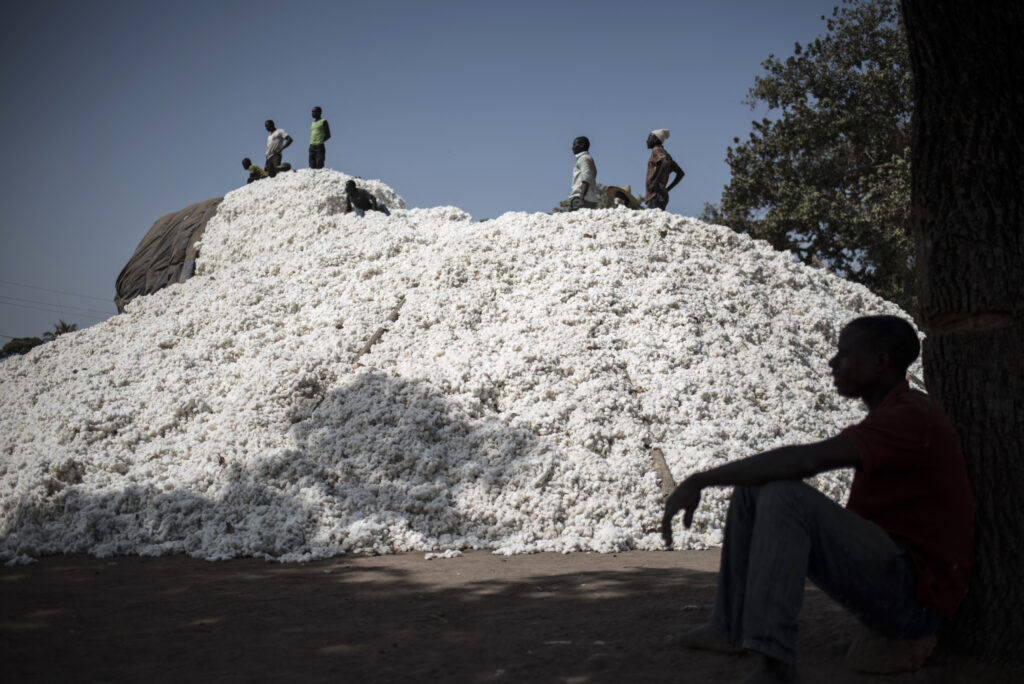
Cotton could become one of Africa’s strongest pathways to industrialisation if countries across the continent can move beyond exporting raw cotton and build industries that turn the crop into textiles, clothing and other finished products.
The opportunity is significant because cotton has historically played an important role in industrial development around the world.
The cotton, textile and apparel industry was closely connected to the Industrial Revolution in Britain and the United States during the 18th and 19th centuries, while the sector later contributed to the rapid transformation of several Asian economies.
Africa now has an opportunity to pursue a similar path.

The continent produces large quantities of cotton, but much of its potential value is lost when the raw material leaves Africa before it is processed into higher-value products.
For African countries, the challenge is therefore not simply to grow more cotton.
The bigger question is how to build an entire industrial chain around the crop.
That chain could begin with farmers growing cotton and continue through ginning, spinning, weaving, dyeing, textile manufacturing, garment production, packaging and retail.
Each stage could create businesses, jobs, skills and additional income within African economies.
DDM News reports that the push towards greater value addition is already beginning to take shape in some parts of the continent.
Benin, Africa’s leading cotton producer, is increasingly seeking to process its cotton domestically rather than exporting most of the raw material.
The country has developed the Glo-Djigbé Industrial Zone, where locally produced cotton is processed into garments for both domestic and international markets.
The industrial zone currently processes about 40,000 tonnes of Beninese cotton and produces between seven million and 10 million garments annually.
Major international clothing brands, including U.S. Polo Assn. and Kiabi, have been represented in the garment production facilities there.
The development provides an example of what could happen when African countries connect agricultural production with manufacturing.
Instead of earning mainly from the sale of raw cotton, a country can potentially earn more from the finished products made from that cotton.
This difference is crucial for Africa’s industrialisation ambitions.
Raw materials generally generate less value than processed and finished goods.
A bale of cotton exported from Africa may generate income for farmers, traders and exporters, but a finished shirt made from that same cotton can create additional value through manufacturing, design, branding, transportation, marketing and retail.
The more stages that take place within Africa, the greater the potential economic benefit.
The impact would also extend beyond businesses.
A stronger cotton-to-clothing industry could create employment opportunities for farmers, factory workers, designers, engineers, logistics operators, marketers and other professionals.
It could also encourage investment in machinery, electricity, transportation and industrial infrastructure.
In Benin, the cotton sector already supports a large rural population.
The country’s national association of cotton producers says more than 183,000 farmers are organised through thousands of village cooperatives, while the wider cotton sector directly or indirectly supports the livelihoods of more than two million people in rural areas.
This demonstrates why cotton can be more than an agricultural commodity.
It can become the foundation for a wider industrial ecosystem.
However, Africa cannot industrialise through cotton simply by increasing production.
One of the biggest challenges is access to reliable and affordable electricity.
Textile factories require consistent power to operate machinery, while interruptions can increase production costs and make African manufacturers less competitive.
Transportation is another major challenge.
Cotton grown in rural communities needs to reach processing centres efficiently, while finished clothing must be transported to consumers and export markets.
Poor roads, expensive logistics and delays at ports can make locally manufactured products more expensive than imported alternatives.
Financing is also critical.
Building textile mills, spinning factories, garment factories and other manufacturing facilities requires significant capital.
Small businesses may struggle to obtain affordable loans, while larger investors may be reluctant to commit funds when infrastructure and market conditions remain uncertain.
DDM News understands that solving these challenges will require cooperation between governments, private investors, farmers and manufacturers.
Governments can support the sector through industrial policies, infrastructure development, access to finance and incentives that encourage local manufacturing.
Businesses, meanwhile, need to invest in modern machinery, skills and efficient production systems.
Farmers also need access to better seeds, farming equipment, training and stable markets.
Another major issue is market access.
African manufacturers need consumers large enough to sustain production.
This is where the African Continental Free Trade Area, or AfCFTA, could become particularly important.
A more integrated African market could allow manufacturers to sell their products across national borders without facing the same level of restrictions that exist when countries trade separately.
For textile and clothing manufacturers, access to a continental market could provide the scale needed to compete with producers from Asia and other parts of the world.
Africa’s textile sector already has a sizeable market opportunity.
The International Trade Centre estimates that Africa exports textile products worth about $15.5 billion annually, while the continent imports textiles, apparel and footwear worth about $23.1 billion.
The gap shows both the challenge and the opportunity.
Africa is spending billions of dollars importing textile and clothing products while producing cotton and other raw materials that could support local manufacturing.
If more of that demand could be met by African manufacturers, the economic impact could be substantial.
Countries would retain more foreign exchange, manufacturers would expand, and millions of potential jobs could be created across the value chain.
There is also a growing opportunity in African fashion.
Designers across the continent are increasingly combining traditional African fabrics and styles with modern fashion, creating products that can appeal to both African and international consumers.
This could allow Africa to compete not only through low-cost manufacturing but also through design, culture and brand identity.
However, African manufacturers will need to focus on quality.
Consumers cannot be expected to buy locally made products simply because they are produced in Africa.
The products must be affordable, durable, attractive and competitive with imported alternatives.
Manufacturers will also need to adopt modern technology and sustainable production methods as global consumers become more concerned about environmental issues.
The opportunity therefore goes beyond cotton farming.
It is about building a complete industrial ecosystem around a crop that millions of African farmers already produce.
From the farmer planting cotton seeds to the factory worker operating textile machinery and the designer creating a finished garment, every stage can contribute to economic growth.
For countries that successfully build this system, cotton could become a foundation for broader industrial development.
The experience of countries such as China, India and Bangladesh shows that textile manufacturing can create large employment opportunities and help economies move from agricultural production towards industrial production.
Africa does not have to copy these countries exactly.
Instead, it can develop its own model by combining local raw materials, regional markets, African creativity and modern manufacturing.
The key will be ensuring that African cotton does not continue to leave the continent mainly as a raw commodity and return as expensive finished clothing.
The continent needs to capture more of the value between the farm and the final consumer.
That means investing in processing facilities, textile factories, garment production, skills development, logistics and strong African brands.
It also means creating markets large enough for manufacturers to grow.
If these pieces come together, cotton could become much more than a cash crop.
It could support manufacturing, create jobs, strengthen exports, reduce dependence on imported clothing and help African economies move further up global value chains.
The question, therefore, is no longer whether Africa has enough cotton to support industrialisation.
The bigger question is whether African countries can build the industries, infrastructure and markets needed to turn that cotton into lasting economic value.
With the right investment and policies, the answer could determine whether cotton becomes another raw material exported from Africa or one of the crops that helps power the continent’s next industrial revolution.




