


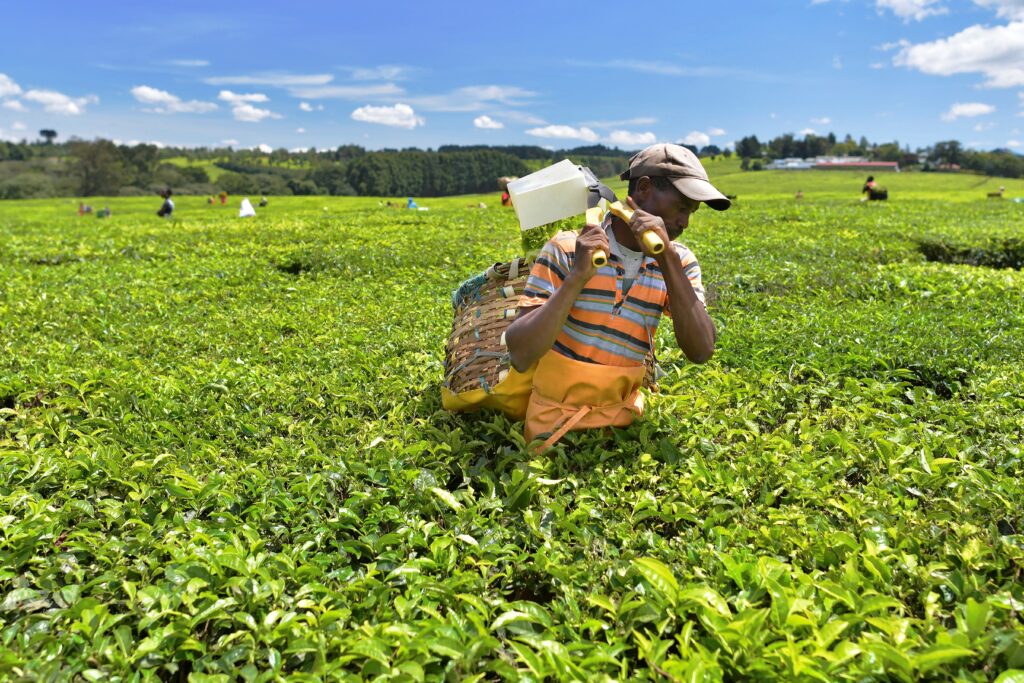
Agriculture is one of Africa’s biggest economic opportunities, yet one of its most persistent financing problems remains remarkably difficult to solve: where is the institution capable of putting agriculture at the centre of Africa’s long-term economic transformation?
The question becomes even more striking when China’s financial system is considered.
China has a dedicated Agricultural Development Bank of China, a policy bank established in 1994 to provide financing for agricultural and rural development.
Its mandate goes beyond ordinary commercial lending, supporting areas such as agricultural infrastructure, food security and rural economic development.

Africa, by contrast, has no single continent-wide institution that performs exactly the same role.
That does not mean Africa has no agricultural banks, funds or financing programmes.
Individual countries have established specialised institutions, while the African Development Bank and other development-finance organisations support agricultural projects across the continent.
But the scale, coordination and long-term financing architecture remain fragmented at a time when Africa needs more capital flowing into farms, processing facilities, storage, irrigation, transport and agricultural technology.
The question, therefore, is not simply why Africa does not copy China.
It is whether Africa has built the kind of financial institution capable of turning its enormous agricultural potential into a continent-wide industrial strategy.
Agriculture remains central to African economies and livelihoods, but farmers and agribusinesses frequently struggle to access affordable long-term financing.
The African Development Bank has highlighted an estimated annual agriculture financing gap running into tens of billions of dollars, underscoring the difficulty of providing sufficient capital to smallholder farmers and agricultural businesses.
This financing gap has consequences far beyond the farm.
When farmers cannot obtain affordable credit, they struggle to purchase machinery, irrigation equipment, improved seeds, fertiliser and other inputs.
When processors cannot secure long-term financing, agricultural products are exported or sold with little value added.
When storage facilities are inadequate, farmers can be forced to sell immediately after harvest, often when prices are lowest.
The result is an agricultural economy that produces enormous quantities of raw commodities without capturing enough value from them.
China’s approach demonstrates why specialised development finance can matter. Its Agricultural Development Bank is a policy institution rather than simply another commercial bank.
Its purpose is linked to national agricultural and rural-development objectives, allowing the government to direct financial resources towards areas considered strategically important.
More recently, Beijing has announced plans to expand funding for rural revitalisation and food security by combining government spending, bank credit, insurance, bonds and private capital.
That broader financing ecosystem is perhaps more important than the existence of the bank itself.
China is not relying on farmers to solve the financing problem alone.
Government policy, financial institutions, insurance providers and private investors are being brought into the same development framework.
Africa faces a different institutional reality.
The continent is made up of more than 50 countries, each with different currencies, fiscal policies, banking regulations, agricultural systems and political priorities.
Establishing a single continental agricultural development bank would therefore be considerably more complicated than creating a national institution.
There would also be questions over who would provide the capital, which countries would control the institution, how loans would be allocated and how governments would prevent political interference from undermining lending decisions.
But these difficulties do not eliminate the need for a better solution.
DDM News observes that Africa’s agricultural challenge is increasingly becoming a financing challenge rather than simply a production challenge.
The continent has millions of farmers and vast amounts of arable land, but land and labour alone cannot transform agriculture into a modern commercial sector. Farmers need roads, electricity, irrigation, storage, logistics, digital technology, insurance and reliable access to markets.
All of those requirements demand capital.
A continent-wide agricultural financing institution could potentially provide a mechanism for mobilising long-term funds while reducing some of the risks that discourage conventional banks from lending to agriculture.
Commercial banks often view agriculture as risky because of unpredictable weather, fluctuating commodity prices, inadequate collateral and the informal nature of many farming operations.
A specialised development bank could address some of those problems through guarantees, concessional lending, agricultural insurance partnerships and financing structures designed around the agricultural production cycle.
That does not mean every African farmer should receive cheap government money.
Instead, the objective would be to create a financial system in which productive agricultural businesses can obtain capital on terms that recognise the unique characteristics of farming.
The need is becoming more urgent as Africa confronts rising food demand, population growth, climate pressures and increasing dependence on food imports.
Nigeria provides a useful example of the dilemma.
The country has enormous agricultural potential and an established agricultural finance ecosystem, including the Bank of Agriculture and programmes supported by the Central Bank of Nigeria and other institutions.
Yet access to affordable capital remains a major constraint for many farmers and agribusinesses.
Across the continent, similar problems appear in different forms.
Farmers may have land but lack financing. Processors may have markets but lack machinery.
Manufacturers may have demand for agricultural raw materials but cannot secure consistent supply.
Exporters may have international buyers but lack the infrastructure required to meet volume and quality requirements.
The missing link is often finance.
This is where the Chinese experience becomes particularly relevant. China did not simply treat agriculture as an activity carried out by farmers.
It increasingly treated agriculture, food security and rural development as strategic components of national economic planning.
Its financial institutions were then used to support those priorities.
China’s model is not without challenges.
Its state-directed banking system operates within a political and economic structure that cannot simply be transplanted to Africa.
In fact, China’s major state banks themselves remain under pressure, with Beijing recently announcing a roughly $54 billion capital injection into major banks and insurers to strengthen their balance sheets and support economic activity.
That makes the lesson more nuanced.
Africa does not necessarily need to reproduce China’s institutions exactly.
What Africa needs is the principle behind them: long-term development goals require long-term financial institutions.
A continental agricultural development bank could potentially become a vehicle for mobilising pension funds, sovereign wealth, development finance, climate finance and private investment into agricultural infrastructure and value chains.
It could finance irrigation projects in one country, storage facilities in another, agricultural-processing zones elsewhere and cross-border food logistics linking producers to consumers.
It could also help turn agriculture from a subsistence activity into a larger industrial ecosystem.
Such an institution would have to be professionally managed, independently governed and protected from the political lending practices that have damaged development-finance institutions in different parts of the world.
It would also need to work alongside existing institutions rather than duplicate them.
DDM News believes the bigger question facing Africa is therefore not whether the continent should copy China’s Agricultural Development Bank, but whether African governments are prepared to build a financial architecture that treats agriculture as seriously as infrastructure, energy and manufacturing.
Africa cannot industrialise sustainably while leaving its agricultural sector chronically underfunded.
The continent has the land, labour, markets and growing consumer population to build a powerful agricultural economy.
What remains uncertain is whether it can mobilise the financial resources required to connect those advantages.
China’s experience offers one possible lesson: when a country decides that agriculture is strategically important, it can build financial institutions specifically designed to support that objective.
For Africa, the opportunity may now be to develop its own model one that reflects the continent’s different economies but provides farmers and agribusinesses with access to the patient, affordable and large-scale capital they have struggled to obtain.
The question is no longer simply why doesn’t Africa have an agricultural development bank?
The more important question is how much longer can Africa afford not to build one?




