


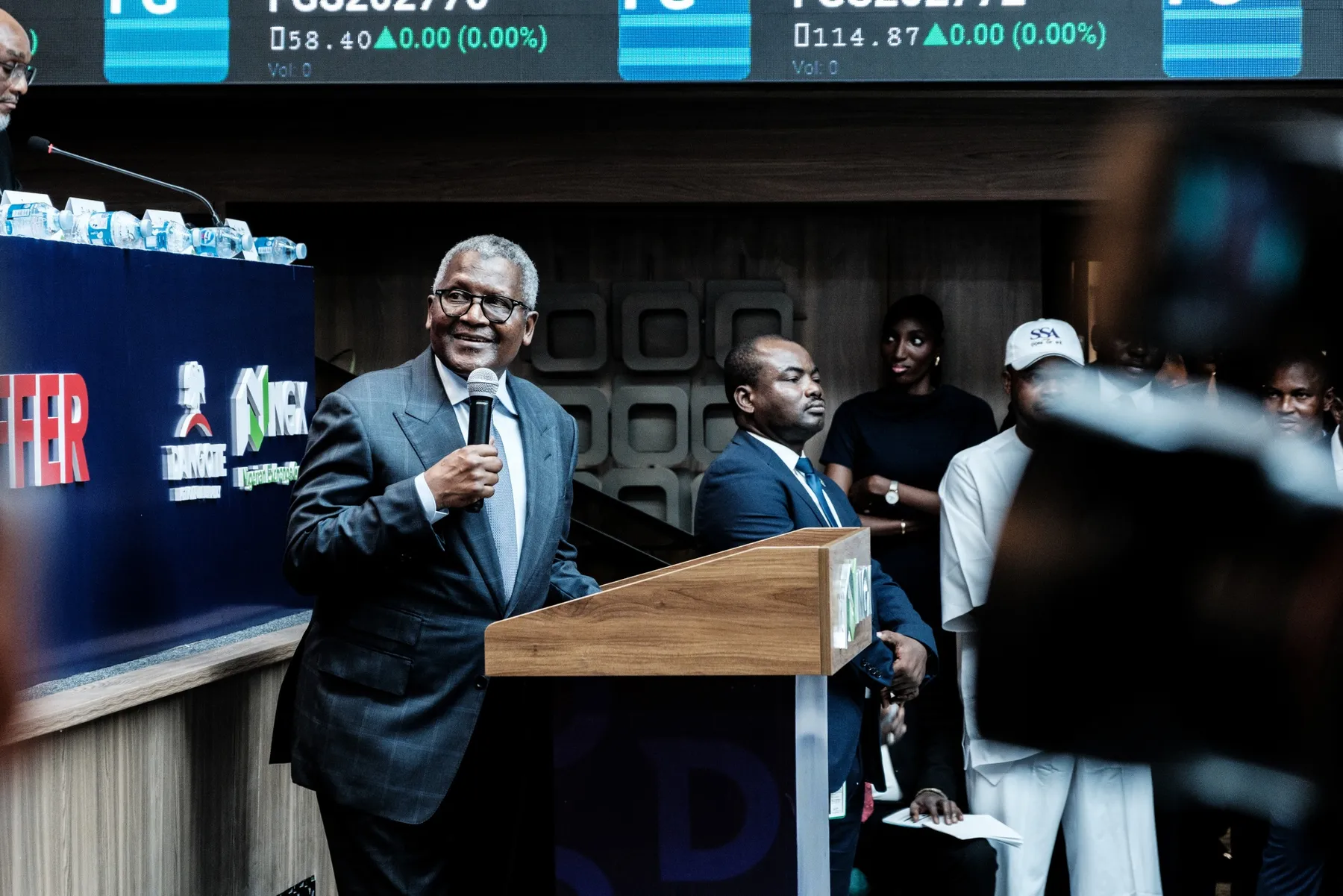
The Aliko Dangote Foundation has announced a share grant initiative aimed at encouraging students to participate in the ongoing investment opportunity surrounding the Dangote Refinery’s planned Initial Public Offering (IPO).
The initiative is designed to promote financial literacy, investment culture and long-term wealth creation among young Nigerians, particularly students who may be taking their first steps into the capital market.
The programme is expected to give eligible students an opportunity to benefit from the refinery’s transition into a publicly listed company, while exposing them to the fundamentals of investing and owning shares in major Nigerian businesses.
The Dangote Refinery, one of Africa’s largest oil refineries, has become a major part of Nigeria’s efforts to strengthen domestic refining capacity and reduce dependence on imported petroleum products.

Its potential listing is therefore attracting considerable attention from investors and other stakeholders in the Nigerian capital market.
For students, the share grant represents more than an opportunity to own an interest in a major industrial project.
It also reflects a broader push towards introducing younger Nigerians to investment as a tool for building wealth over the long term.
The foundation’s initiative could help bridge the gap between young Nigerians and the formal investment market, where limited knowledge and access have historically discouraged many people from participating.
By supporting students with shares, the programme could also encourage beneficiaries to understand how equity ownership works, including the potential benefits and risks associated with investing in publicly traded companies.
The move comes at a time when interest in Nigeria’s capital market is increasing, with investors closely watching major companies and potential listings that could deepen the market and provide new investment opportunities.
The Dangote Refinery is owned by the Dangote Group, founded by Nigerian industrialist Aliko Dangote.
The refinery, located in Lagos, has a processing capacity of 650,000 barrels per day and represents one of the largest private-sector investments in Africa.
If successfully implemented, the student-focused share initiative could give young Nigerians a direct financial stake in one of the country’s most prominent industrial assets while strengthening awareness of responsible investing.
The foundation’s approach also highlights the growing importance of financial education among young people, particularly as Nigeria seeks to expand participation in its capital market and encourage more citizens to consider investment beyond traditional savings.
For the students who benefit, the grant could ultimately serve as an early introduction to equity investment and the potential of long-term ownership in businesses driving Nigeria’s economic growth.




