


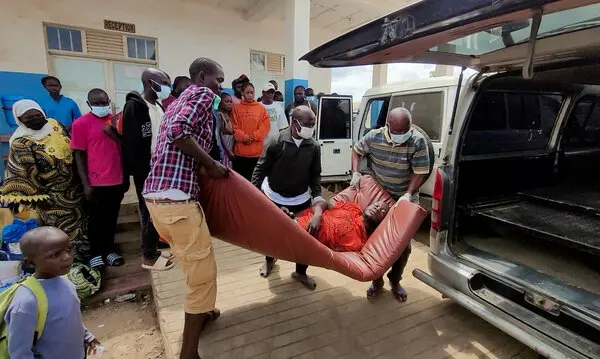
The Ebola outbreak spreading across eastern Democratic Republic of Congo and parts of Uganda has killed at least 131 people, with 26 suspected deaths reported within a 24-hour period, according to health authorities as international concern intensifies over the rapid spread of the virus in densely populated areas.
The World Health Organization (World Health Organization) has declared the outbreak a Public Health Emergency of International Concern, citing the speed of transmission and the emergence of cases in multiple urban centres.
Rapidly Expanding Outbreak Across Borders
The outbreak involves the Bundibugyo strain of Ebola, a rare variant for which no licensed vaccine or specific treatment is currently available.
Health officials report 516 suspected cases and 33 confirmed infections in the Democratic Republic of Congo, alongside additional confirmed cases in Uganda. The virus has been detected in major urban centres, including Butembo in North Kivu State, as well as Kampala and Goma, raising concerns about wider regional transmission.

Medical workers are also among those infected, heightening fears of further spread within healthcare facilities.
Authorities say delayed detection contributed to the scale of the outbreak, with early transmission believed to have gone unnoticed for weeks. Ongoing insecurity, population displacement, and frequent movement of migrant workers in mining areas have further complicated containment efforts.
American Patient Evacuated After Infection
A U.S. citizen working in Congo through a missionary organisation has tested positive for Ebola after developing symptoms over the weekend. The patient, identified by the organisation as Dr Peter Stafford, has been evacuated alongside six other American nationals considered high-risk contacts for specialised treatment in Germany.
U.S. Tightens Entry Rules for Travellers
In response to the outbreak, U.S. authorities have imposed restrictions suspending entry for travellers who have been in affected countries within the past 21 days, with limited exemptions. The measure is expected to remain in place for 30 days.
Emergency Declaration and Global Response
The WHO Director-General Dr Tedros Adhanom Ghebreyesus declared the outbreak a global health emergency ahead of a formal emergency committee review, marking an unusually swift intervention.
The organisation noted that while the situation is serious, it does not currently meet the threshold of a pandemic emergency under international health regulations.
Humanitarian shipments have been scaled up, with several tonnes of protective equipment and medical supplies delivered to affected areas. Additional financial support has also been mobilised by international partners to strengthen response efforts.
Border Restrictions Raise Concern Among Health Experts
Despite WHO guidance urging countries to avoid blanket border closures, several nations in the region have tightened movement across key crossings, including routes between Uganda, Rwanda, and eastern Congo.
Public health experts warn that restricting official crossings may drive movement toward informal routes that are harder to monitor, potentially undermining containment efforts.
The Africa Centres for Disease Control and Prevention has also cautioned that overly restrictive travel measures could discourage transparency during outbreaks.
Challenges in Treating the Bundibugyo Strain
Unlike the more common Ebola Zaire strain, the Bundibugyo variant has no approved vaccine or widely available treatment, making containment efforts more difficult.
Health authorities estimate Ebola’s average fatality rate at around 50%, though outcomes vary depending on strain and access to care.
A WHO expert panel is currently reviewing potential vaccine candidates, although deployment timelines suggest several weeks to months before any large-scale rollout could be possible.
International partners are also exploring experimental antibody-based therapies, while concerns persist over funding gaps and reduced global health coordination capacity affecting the response.




