



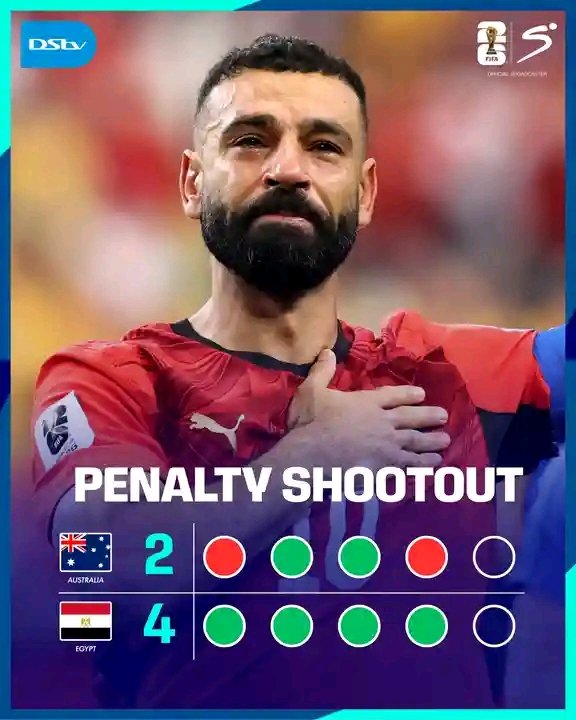
Egypt kept their FIFA World Cup dream alive after defeating Australia in a tense penalty shootout following a fiercely contested 1-1 draw after extra time in Dallas. The Pharaohs showed resilience, composure and determination to secure a memorable victory that earned them a place in the Round of 16.
The match delivered everything expected from knockout football. There were missed chances, an own goal, outstanding goalkeeping, extra time drama and finally the tension of penalties before Egypt celebrated a hard-earned triumph.
Australia made a lively start and almost grabbed an early breakthrough inside the opening five minutes. Cristian Volpato tried his luck from distance, but his powerful effort skimmed the top of the crossbar, providing an early warning to the Egyptian defence.

Egypt gradually settled into the contest and began controlling possession through their experienced midfield. Their patient approach paid off in the 13th minute when Emam Ashour rose highest inside the penalty area to head home a well-delivered cross, giving the North Africans a deserved 1-0 lead.
The goal lifted Egypt’s confidence as they continued to press for a second. Mohamed Salah drifted across the attacking third to create space for his teammates, while Omar Marmoush repeatedly stretched Australia’s back line with intelligent runs behind the defence.
Australia struggled to create clear opportunities before the interval as Egypt’s defenders remained organised and compact. The Socceroos relied mainly on long balls and set pieces, but the Pharaohs comfortably dealt with the pressure to take their one-goal advantage into halftime.
Egypt nearly doubled their lead immediately after the restart. Marmoush found himself with an excellent opportunity in the opening moments of the second half, but his effort drifted wide of the post, allowing Australia to remain within touching distance.
That miss proved costly.
Australia found their equaliser in the 55th minute through an unfortunate own goal. A dangerous delivery into the Egyptian penalty area deflected off defender Mohamed Hany before finding the back of the net, bringing the score to 1-1 and completely changing the momentum of the contest.
The equaliser injected fresh belief into the Australian side, who became more adventurous in attack. Egypt, however, continued to threaten on the counterattack with Salah and Marmoush combining well whenever space became available.
As normal time drew to a close, Egypt came within seconds of winning the match. In the fourth minute of stoppage time, defender Ramy Rabia met a cross with a powerful header that appeared destined for the top corner, only for goalkeeper Patrick Beach to produce an outstanding save and push the ball over the crossbar.
That decisive intervention forced the match into extra time.
The additional 30 minutes produced further drama but no winning goal. Salah became increasingly influential, dropping deeper to collect possession before driving Egypt forward. His movement created several dangerous situations, but Australia’s disciplined defending prevented the Liverpool forward from finding the breakthrough.
With neither side able to settle the contest during open play, attention turned to the penalty shootout.
Australia introduced veteran goalkeeper Mat Ryan shortly before the end of extra time in the hope that his experience would prove decisive from the spot.
Egypt, however, displayed remarkable composure.
Captain Mohamed Salah confidently converted his penalty with a delicate finish straight down the middle, demonstrating the calmness that has defined his career at the highest level.
Australia’s hopes suffered an immediate setback when Harry Souttar failed to convert his penalty. Although several successful spot kicks followed from both teams, another miss by Lucas Herrington handed Egypt a significant advantage.
The decisive moment arrived when Abdelmaguid stepped forward and calmly converted the winning penalty, sending Mat Ryan the wrong way and sparking jubilant celebrations among the Egyptian players and supporters.
The victory was especially significant for Egypt, who had struggled in previous World Cup penalty shootouts. This time, the Pharaohs showed impressive mental strength to overcome that history and keep their campaign alive.
Salah later described the occasion as one of the biggest moments of the players’ careers, urging his teammates before kick-off to embrace the occasion rather than fear it. His leadership throughout the evening extended beyond his successful penalty, as he constantly encouraged younger players during the tense moments of extra time and the shootout.
For Australia, the defeat marked a painful conclusion to an encouraging tournament. The Socceroos demonstrated resilience after falling behind and fought tirelessly to stay in the contest. Their defensive discipline and commitment ensured Egypt had to work for every opportunity.
Coach Tony Popovic praised his players for their effort despite the disappointment of elimination, insisting they had represented Australian football with pride throughout the competition.
Statistically, Egypt enjoyed more sustained periods of possession and created the better scoring opportunities over the course of the match, while Australia relied on defensive organisation and quick transitions. The late save by Patrick Beach was among the game’s defining moments, although it ultimately proved insufficient to prevent Egypt’s progress.
The Pharaohs now move into the Round of 16 filled with confidence. Their disciplined defending, balanced midfield and the experience of Mohamed Salah provide a strong platform as they prepare for an even tougher challenge against one of the tournament favourites.
For Egypt, the victory represented more than simply advancing to the next round. It demonstrated resilience under pressure, composure in football’s most demanding moments and the belief that they can compete with the world’s best as the race for World Cup glory continues.




