



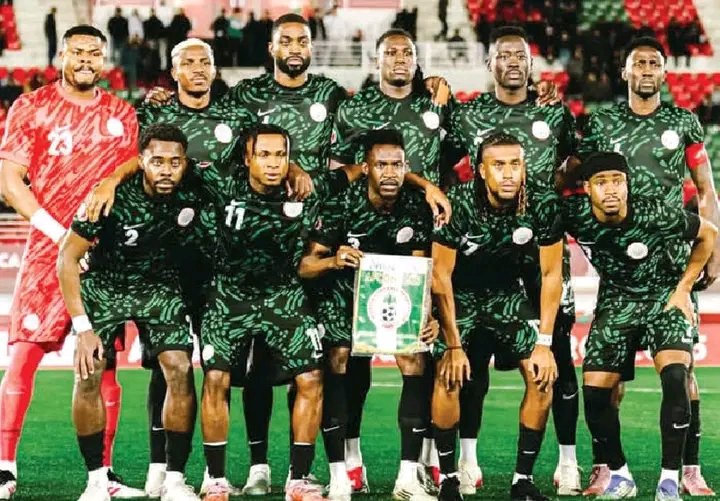
Nigeria’s Super Eagles have been urged to begin laying a solid foundation for the 2030 FIFA World Cup after missing out on qualification for the expanded 2026 edition, with FIFA insisting that the country’s return to football’s biggest stage will depend on careful planning rather than talent alone.
The world football governing body believes Nigeria possesses all the qualities needed to compete at the highest level but warns that consistent leadership, better preparation and long term development will be essential if the Super Eagles are to avoid another painful qualification failure.
The absence of Nigeria from the 2026 FIFA World Cup came as one of the biggest disappointments for African football.

With the continent receiving more qualification slots than ever before, many expected the three time African champions to comfortably book a place at the tournament.
Instead, a series of disappointing results during the qualifying campaign left millions of Nigerian supporters frustrated as one of Africa’s traditional football powers watched the competition from home.
For a nation with a rich football history and a reputation for producing world class players, missing the tournament was seen as a major setback.
However, FIFA believes the disappointment should serve as an opportunity for reflection and renewal rather than despair.
According to the football governing body, Nigeria’s greatest strength remains the abundance of talented players competing in some of Europe’s biggest leagues.
Stars across England, Italy, Spain, Germany, France and other top competitions continue to showcase the country’s immense football potential every week.
The challenge, FIFA notes, is finding a way to transform that individual brilliance into a united national team capable of consistently delivering results throughout a demanding qualification campaign.
One of the biggest lessons from the failed 2026 qualification effort was the importance of stability within the technical department.
Frequent coaching changes disrupted continuity and prevented the Super Eagles from establishing a clear tactical identity.
Every coaching transition brought new philosophies, different player selections and changing systems, making it difficult for the team to build momentum.
The appointment of head coach Eric Chelle has provided an opportunity for a fresh beginning.
The former Mali coach has already introduced greater organisation and tactical discipline within the squad, and many football stakeholders believe he should be given enough time to implement his long term vision.
Sports analysts have repeatedly argued that successful national teams are built through consistency rather than constant managerial changes.
Countries that regularly qualify for major tournaments often allow their coaches to develop projects over several years, creating strong team chemistry and tactical understanding among players.
Another key recommendation is strengthening the depth of the Super Eagles squad.
Nigeria has traditionally relied heavily on a small group of star players.
While the country continues to produce exceptional footballers, injuries, suspensions and loss of form have often exposed the team’s lack of reliable alternatives.
Developing a larger pool of quality players will ensure the Super Eagles remain competitive regardless of player availability.
This process includes giving opportunities to emerging talents from the Nigeria Premier Football League while closely monitoring Nigerian players performing abroad.
Youth development also remains central to FIFA’s recommendations.
Investing in grassroots football, improving youth academies and supporting coaching education will create a stronger pipeline of future internationals.
Many of Nigeria’s greatest football stars emerged through structured youth programmes before going on to enjoy successful careers in Europe and with the national team.
Football experts believe reviving those development structures will significantly improve the country’s chances of sustained success.
Administrative efficiency is another area highlighted as critical to future qualification.
Timely payment of players’ bonuses, proper travel arrangements, quality training facilities and effective communication between the Nigeria Football Federation, coaching staff and players all contribute to creating a professional environment where athletes can perform at their best.
Experts argue that eliminating unnecessary distractions allows players to concentrate fully on achieving results on the pitch.
The National Sports Commission has also expressed confidence in Eric Chelle’s leadership, describing him as the right coach to guide Nigeria into a new era.
Officials believe continuity under the Franco Malian tactician could provide the stability required to build a competitive squad capable of challenging for both the Africa Cup of Nations and a place at the 2030 FIFA World Cup.
Supporters are equally hopeful that the painful lessons from the previous qualification campaign will inspire positive reforms.
With several experienced internationals still available and an exciting generation of young footballers continuing to emerge, optimism remains high that the Super Eagles can quickly rebuild.
The road to the 2030 FIFA World Cup is expected to be fiercely competitive, but Nigeria enters the journey with one significant advantage: an abundance of talent.
Turning that talent into success will require discipline, careful planning and unity across every level of Nigerian football.
For FIFA, the message is clear.
The Super Eagles already possess the players needed to compete with the best in Africa.
What remains is creating a stable football structure that supports those players, rewards consistency and allows long term projects to flourish.
If those lessons are embraced, Nigeria could not only return to the FIFA World Cup in 2030 but also reestablish itself as one of the leading forces in African and global football.




