


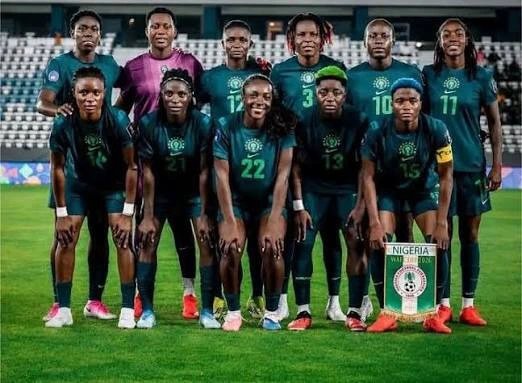
CASABLANCA, MOROCCO — Nigeria’s Super Falcons have suffered a devastating 2-1 defeat to South Africa in a high-stakes World Cup play-off, ending their hopes of qualifying for the 2027 FIFA Women’s World Cup and marking the first time the nine-time African champions will miss the global showpiece since its inception in 1991.
The crushing loss at the Moulay Rachid Stadium in Casablanca on Thursday means Nigeria will be absent from the Women’s World Cup for the first time in the tournament’s history, a staggering fall for a team that has been Africa’s most consistent representative and a source of national pride for over three decades.
The match, a winner-takes-all encounter between two of the continent’s football powerhouses, remained goalless through a tense first half, with both sides creating promising opportunities but failing to convert. The deadlock was finally broken in the 56th minute when South African forward Thembi Kgatlana found the back of the net, sending a wave of anxiety through the Nigerian camp.

Banyana Banyana doubled their advantage in the 77th minute through Refiloe Jane, leaving the Super Falcons staring at elimination with just over ten minutes remaining. Nigeria fought desperately to claw their way back into the contest and were handed a lifeline in stoppage time when a South African player handled the ball inside the box, resulting in a penalty and a red card for the defender.
Christy Ucheibe stepped up and converted the spot-kick with composure, giving the Falcons a glimmer of hope. However, the equaliser never materialised as South Africa held firm in the dying moments, securing a historic victory and advancing to the intercontinental play-offs while Nigeria’s World Cup dream lay in ruins.
The defeat comes just days after the Super Falcons were knocked out of the 2026 Women’s Africa Cup of Nations by Cameroon, a setback that forced the team into the play-off route for the final qualification opportunity. The back-to-back losses have raised urgent questions about the state of women’s football in Nigeria and the team’s preparation for major tournaments.
Social media has been flooded with reactions from heartbroken fans, with many expressing disbelief that the Super Falcons, who have been a fixture at every Women’s World Cup since 1991, will not be on the plane to Brazil in 2027. Former players, analysts, and supporters have voiced frustration over what they perceive as inadequate support, poor planning, and a lack of investment in the women’s game.
The result is particularly painful given Nigeria’s storied history in women’s football. The Super Falcons have won the Africa Women’s Cup of Nations a record 11 times and have produced some of the continent’s greatest players, including Perpetua Nkwocha, Mercy Akide, and the legendary Asisat Oshoala. Their failure to qualify for the World Cup represents a significant blow to the country’s footballing reputation.
South Africa, by contrast, have continued their rise as a force in African women’s football, building on their 2022 WAFCON triumph and their Round of 16 appearance at the 2023 World Cup. Banyana Banyana’s victory over Nigeria signals a changing of the guard in African women’s football, with South Africa now firmly establishing themselves as the continent’s top side.
For Nigeria, the focus will now shift to rebuilding and addressing the systemic issues that have led to this historic low. Calls for better funding, improved coaching structures, and greater support for women’s football development are likely to intensify in the coming weeks. The road to redemption will be long, but the Super Falcons have overcome adversity before.
As the final whistle echoed through the stadium, the tears of Nigerian players told a story of shattered dreams and lost opportunities. For the first time in 36 years, the world will watch a Women’s World Cup without the green-and-white of Nigeria. It is a sobering moment for a footballing nation that once stood as the undisputed queen of African football.




