


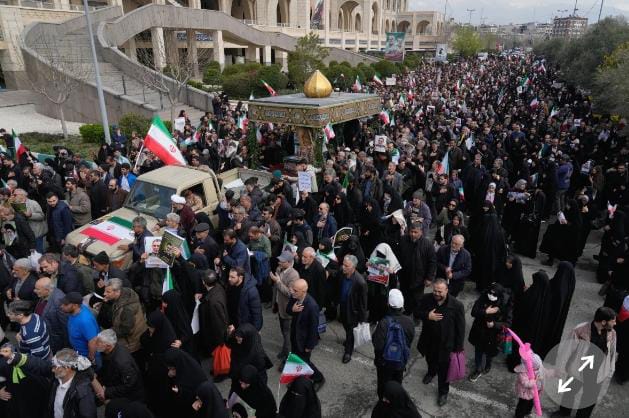
(DDM) — Fresh hostilities have erupted in the Middle East as Israel launched a new wave of airstrikes on Tehran, escalating its ongoing conflict with Iran and heightening fears of a wider regional war.
The latest strikes reportedly targeted infrastructure linked to Iran’s military and missile production capabilities, according to Israeli authorities.
The renewed bombardment marks a continuation of weeks-long hostilities, with both sides engaging in sustained military exchanges across multiple fronts.
In response, Iran has intensified threats against strategic energy installations across the Gulf, warning it could strike power plants, oil facilities, and desalination systems in neighboring countries.

Tehran has also signaled its readiness to expand attacks beyond Israel, potentially targeting interests linked to the United States and its allies in the region.
The conflict has now entered a dangerous phase, with Iran reportedly maintaining pressure around the Strait of Hormuz, a critical route through which a significant portion of the world’s oil supply passes.
Global markets have reacted sharply, with oil prices rising amid fears of prolonged disruption to energy supply chains.
Military analysts warn that continued escalation could trigger a full-scale regional conflict involving Gulf nations, especially if energy infrastructure becomes a primary target.
Reports indicate that Iran has demonstrated its capacity to strike beyond its borders, including the use of missiles and drones against Israeli targets.
The United States has also become increasingly involved, issuing ultimatums and deploying additional military assets to the region, further heightening tensions.
Iranian officials have warned that any direct attack on its critical infrastructure could provoke severe retaliation across the Middle East.
The growing confrontation has already resulted in casualties across affected regions, underscoring the human cost of the conflict.
Security experts say the targeting of energy facilities could have devastating global consequences, potentially triggering one of the worst energy crises in decades.
There are also mounting concerns about the proximity of strikes to sensitive nuclear-related sites, prompting calls from international bodies for restraint and de-escalation.
Despite global appeals, both Israel and Iran appear to be preparing for a sustained confrontation, with military operations expected to continue in the coming weeks.
As tensions rise, the conflict is increasingly being viewed not just as a regional dispute, but as a global security threat with far-reaching economic and geopolitical implications.




