


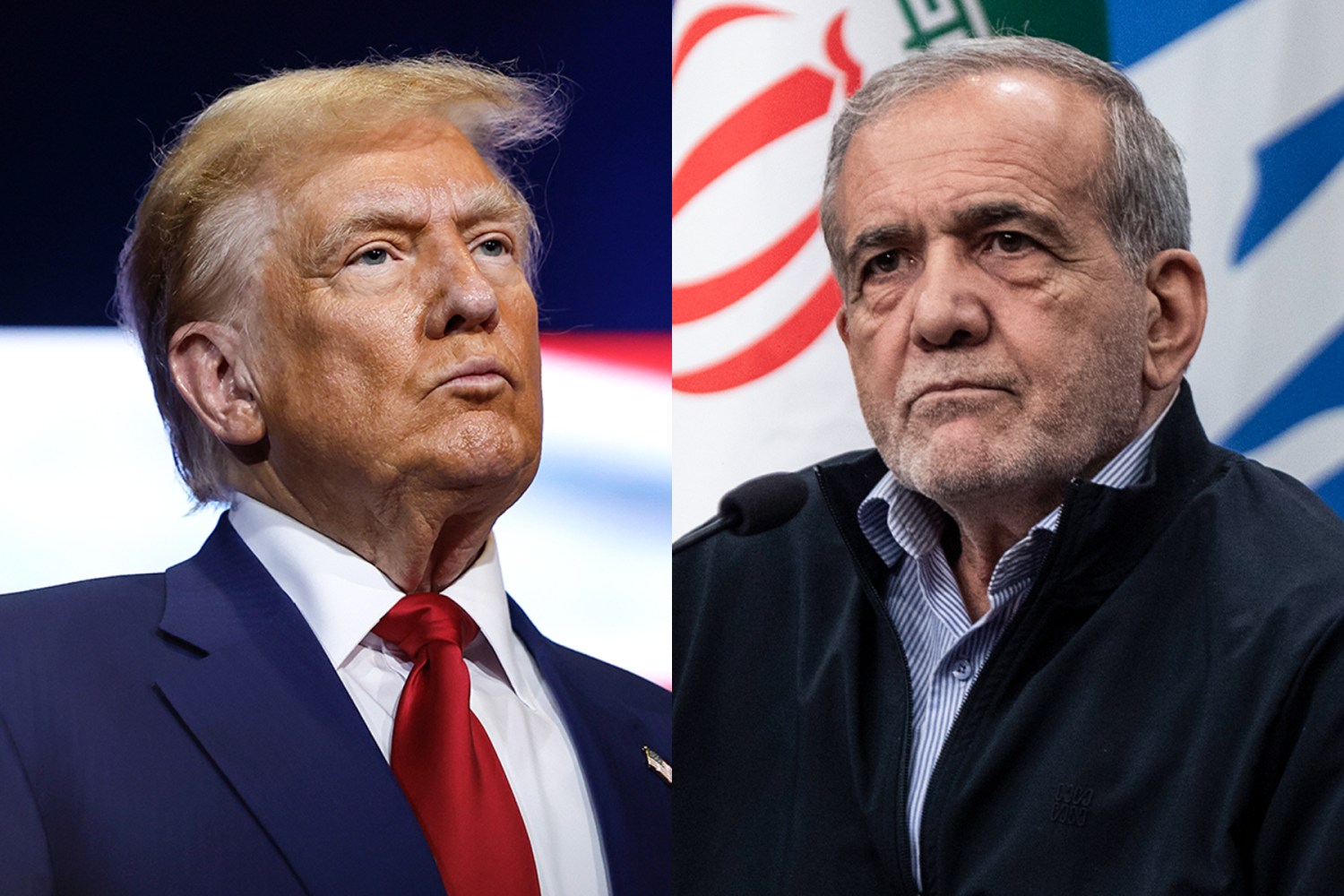
The United States and Iran have formally signed an interim agreement aimed at ending months of war, but President Donald Trump has made clear that military action remains an option if Tehran fails to comply with the deal.
Speaking at the G7 summit in France on Wednesday, Trump welcomed the agreement while warning that any violation by Iran could trigger fresh US attacks.
“We’re going to bomb the hell out of them if they violate the agreement,” Trump told reporters, adding that he hoped Iran would honour its commitments and pursue peace.
The agreement, signed digitally by Trump and Iranian President Masoud Pezeshkian, extends an existing ceasefire for another 60 days and opens the door for negotiations on a permanent settlement.

Iranian officials hailed the accord as a diplomatic breakthrough. Parliament Speaker Mohammad Baqer Qalibaf said Tehran had achieved through negotiations what military confrontation could not deliver, pointing to the unfreezing of Iranian assets and the easing of sanctions.
The deal marks the most significant agreement between Washington and Tehran since Iran’s 1979 Islamic Revolution.
Under its terms, hostilities are to cease across all fronts, including Lebanon. The agreement also provides for the reopening of the Strait of Hormuz, the lifting of the US blockade on Iranian ports, the suspension of American sanctions and the creation of a $300 billion reconstruction fund for Iran.
Markets reacted positively to the development, with oil prices falling as traders anticipated the return of Iranian exports and the reopening of one of the world’s most important shipping routes.
Iran also reaffirmed that it will not pursue nuclear weapons and agreed to international supervision of its enriched uranium stockpile. However, Tehran rejected Washington’s demand to remove the material from the country.
Despite declaring the agreement a success, Trump appeared to walk back some of the objectives he outlined when the war began in February. Iran’s government remains in power, its missile programme remains intact and its network of regional allies, including Hezbollah, has not been dismantled.
The US president also softened his previous stance on Iran’s missile capabilities, telling reporters it would be “unfair” to deny Iran missiles if other countries possess them.
The agreement received backing from G7 leaders meeting in France, who described it as an important step toward stability and called for an immediate ceasefire in Lebanon.
Still, questions remain over whether the truce can hold. Fighting continued in parts of southern Lebanon on Wednesday, with reports of Israeli airstrikes and Hezbollah drone attacks despite the agreement’s call for an end to hostilities.
The deal has also exposed growing tensions between Trump and Israeli Prime Minister Benjamin Netanyahu, who has publicly distanced himself from the negotiations.
Trump suggested Israel should adopt a less aggressive approach in Lebanon, saying its military response had at times gone too far.
“Netanyahu is a good man, but he gets a little excited sometimes,” Trump said. “You don’t have to knock down a building every time somebody from Hezbollah walks into it.”
For now, the agreement offers a pause in a conflict that has killed more than 7,000 people, disrupted global energy markets and heightened fears of a broader regional war. Whether it becomes the foundation for lasting peace or merely another temporary truce will depend on what happens over the next 60 days.




