


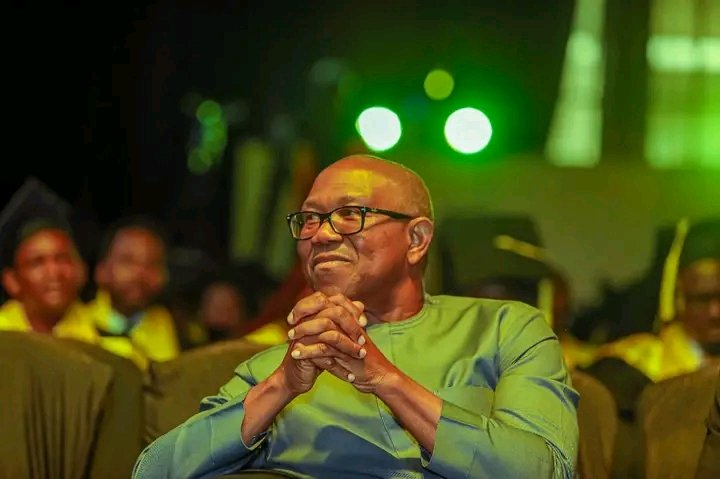
ABUJA, Nigeria — Political history often remembers leaders by the offices they held, the elections they won, or the power they exercised. Time, however, is a far sterner judge. It asks not how long they occupied power but what they did with it. Did they strengthen institutions or merely consolidate personal influence? Did they elevate public discourse or diminish it? Did they leave behind a culture of accountability or one of entitlement? Above all, did they inspire citizens to believe that leadership is ultimately defined by character rather than convenience? Those are the enduring questions that frame any serious reflection on Mr. Peter Gregory Obi, the presidential candidate of the Nigeria Democratic Congress (NDC) in the 2027 general elections, as he marks his 65th birthday, political commentator Kalu Okoronkwo has said.
Okoronkwo made the observation in a statement on Tuesday, describing Obi as a leader whose political journey has been defined by a consistent commitment to accountability, fiscal discipline, and a departure from the conventional politics of patronage and entitlement. He noted that while many politicians measure success by the positions they attain, Obi’s legacy will be assessed by the values he upheld and the example he set.
According to Okoronkwo, Obi’s tenure as Governor of Anambra State from 2006 to 2014 remains a reference point for prudent financial management and institutional strengthening. He noted that Obi left behind a culture of accountability, saved funds for future generations, and demonstrated that governance could be conducted with integrity and purpose, even in a challenging environment.
The commentator also reflected on Obi’s role in national politics, particularly his emergence as a leading opposition figure and his ability to galvanise a generation of young Nigerians around a message of hope, competence, and inclusion. He argued that Obi’s appeal transcends ethnic and religious lines, and that his candidacy represents a break from the old order of transactional politics.

Okoronkwo stressed that the true measure of Obi’s leadership will not be found in electoral victories alone but in whether he inspired citizens to believe that leadership is ultimately defined by character rather than convenience. He noted that in a political landscape often dominated by self-interest, Obi’s consistency and willingness to challenge the status quo have set him apart.
“As Peter Obi turns 65, the question is not whether he will win or lose the next election, but whether he has helped redefine what Nigerians expect from their leaders,” Okoronkwo said. “In that sense, his impact may already be greater than many of those who have held the highest offices in the land.”
The commentator also noted that Obi’s message of fiscal discipline, human capital development, and inclusive growth has resonated with a generation of Nigerians who are demanding a break from the politics of the past. He expressed hope that Obi’s example would inspire a new breed of leaders who prioritise service over self-enrichment, and accountability over impunity.
For now, Okoronkwo’s reflection on Obi’s 65th birthday offers a timely reminder that true leadership is not measured by the offices one occupies but by the values one upholds and the lives one touches. As Nigeria prepares for the 2027 elections, the question of character versus convenience will remain central to the nation’s political discourse, and Obi’s example will continue to be a reference point for those seeking a new direction for the country. The challenges ahead are significant, but so too are the opportunities for change. For now, the reflection on Obi’s legacy invites citizens to think beyond political affiliations and consider the kind of leadership that Nigeria truly needs. It is a call to action for all who believe that a better Nigeria is possible, and that character must ultimately triumph over convenience in the country’s political life. As Okoronkwo concluded, the enduring question remains: will Nigerians choose leaders of character, or will they settle for the familiar convenience of the past? For now, Peter Obi’s example offers a compelling answer. The coming years will reveal whether that example will shape the future of Nigerian politics. For now, the reflection stands as a testament to the power of character and the promise of a new dawn for Nigeria. The choice, ultimately, lies with the people. The future of the nation hangs in the balance. The answer awaits the Nigerian electorate at the ballot box. The time for change is now. The moment for character to triumph over convenience has arrived. Peter Obi’s 65th birthday is not just a celebration of a life, but a call to action for a nation. The promise of a new Nigeria is within reach. The question is whether Nigerians will seize it. The opportunity is now. The future beckons. The answer is in the hands of the people. The story of Nigeria is still being written. Will character be the defining chapter? The choice is ours to make.




