


tech-ai-startup-manus-resumes-independent-operations
AI Startup Manus Regains Independence From Meta
The $2B cross-border acquisition collapsed following regulatory intervention, prompting Manus to restore solo operations and wipe recent user data.
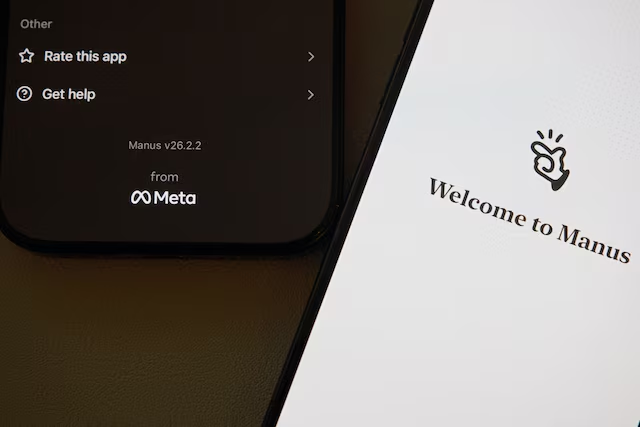
Meta Platforms and AI startup Manus have officially terminated their multibillion-dollar buyout deal. Consequently, the artificial intelligence company will now resume fully autonomous market operations. Beijing authorities blocked the cross-border transaction on strategic national security grounds. Furthermore, this outcome shows rising regulatory friction across global technology investments.
Deal Collapse Ends High-Profile Big Tech Union
Consequently, AI startup Manus has fully separated from social media giant Meta Platforms. Meta had originally purchased the Chinese-founded artificial intelligence firm on December 29, 2025. According to reports from Reuters, the deal carried a valuation exceeding $2 billion. However, Chinese regulators from the National Development and Reform Commission stepped in swiftly. In fact, officials ordered Meta to cancel the transaction in April 2026. Therefore, the founding team took control again to build an independent research lab.
Meanwhile, global investors continue to track major shifts across enterprise computing markets. For example, market coverage on Diaspora Digital Media highlights how high-performance chip demand reshapes tech corporate finance. Specifically, big cloud firms now encounter heavy political hurdles during cross-border expansions. Indeed, governments increasingly view artificial intelligence models as crucial sovereign assets. As a result, cross-border mergers face strict national security reviews worldwide.

Data Deletion Mandate Impacts Global Users
Additionally, the unraveling of the buyout created direct operational headaches for users. Manus announced that it had to delete specific user records immediately. Specifically, any data generated on or after December 29, 2025, faced deletion. Furthermore, the firm conducted this purge between August 23 and August 24. The company confirmed the measure satisfied strict cross-border regulatory mandates. Of course, Manus made clear that no cyber security breach caused the reset.
However, affected customers received a temporary backup window before the database purge began. Detailed analysis in the South China Morning Post showed users subsequently accessed a restoration portal. Consequently, clients retrieved their work files once the firm established its independent servers. In contrast, unaffected accounts experienced continuous platform access throughout the transition. Through this measure, the company severed all operational integration with Meta systems.
New Backers and Fresh Product Roadmaps
Subsequently, major domestic venture capital players stepped in to support the independent company. Financial reporting from Caixin Global confirmed that Tencent held talks for a primary stake. Simultaneously, previous venture backers like ZhenFund and HSG helped repurchase shares from Meta. Therefore, Manus gained substantial fresh capital to fund its computational infrastructure. As a result, the engineering team quickly resumed work on autonomous agent software.
Essentially, the company aims to dominate personal productivity tools and enterprise software workflows. Tech industry tracker Digitimes reported that Manus already revealed its new agent tools. Specifically, the firm introduced Manus 2.0 alongside an agent application named Cue. In fact, the founders intend to prove that agile labs can outpace corporate giants. Consequently, the standalone company is advancing autonomous tools directly into global consumer markets.
Ultimately, the collapse of Meta’s buyout marks a major turning point for tech dealmaking. Regulators will continue to block strategic acquisitions that threaten data boundaries. However, Manus has successfully reclaimed its independence without pausing long-term technical innovation. Therefore, standalone artificial intelligence firms may thrive outside the control of Silicon Valley.




