


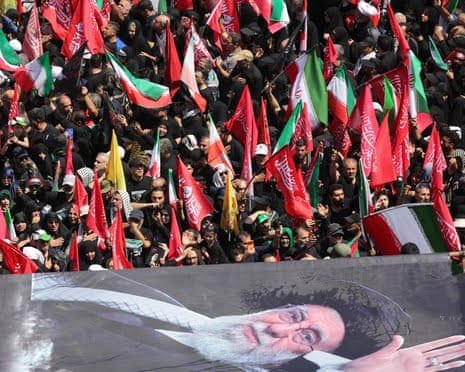
Large crowds filled the streets of Tehran on Monday as Iran observed a national day of mourning with a funeral procession for senior figures killed during the recent conflict, amid heightened security and emotional scenes across the capital.
Authorities implemented extensive crowd-control measures to prevent a repeat of past funeral incidents that resulted in deadly stampedes and thousands of injuries. Officials erected barriers along parts of the procession route and increased security presence to help manage the large turnout.
Many mourners carried Iranian national flags, Hezbollah banners and red flags associated with calls for retaliation. According to state media, some participants gathered at Imam Hussein Square, where an effigy of U.S. President Donald Trump was reportedly displayed during the event.
Former Iranian President Mahmoud Ahmadinejad was among the public figures reported to have attended the funeral ceremonies.

With high temperatures affecting the capital, water trucks sprayed crowds to provide relief, while volunteers distributed flags and portraits of Iranian leaders to participants. The funeral procession stretched for approximately 20 kilometres across Tehran.
Thousands had already gathered at Tehran’s Grand Mosalla on Sunday to pay tribute to those killed in the recent airstrikes, including members of Iran’s leadership. Concrete barriers were placed around the coffins to reduce the risk of overcrowding and improve public safety.
The funeral ceremonies are expected to continue in the religious city of Qom on Tuesday before moving to the Iraqi cities of Najaf and Karbala on Wednesday. Burial ceremonies are scheduled to conclude in Mashhad on Thursday.
Several members of the late leader’s family made public appearances during the mourning events, although one prominent family member was notably absent. Iranian officials have said he was injured during the attack but have not released details about his condition.
Senior military officials, including newly appointed Revolutionary Guards commander Ahmad Vahidi and Quds Force commander Esmail Qaani, also attended the ceremonies in one of their first public appearances since the conflict escalated.
The government is expected to view the large turnout as a demonstration of public support during a period of heightened political and regional tensions. Although a ceasefire has temporarily halted hostilities, officials in both Iran and the United States have warned that military action could resume if negotiations fail.
Calls for retaliation were heard from sections of the crowd, reflecting the anger and grief expressed by many mourners. Iran has continued to maintain close ties with regional armed groups, including Hamas and Hezbollah, both of which reportedly sent representatives to the funeral ceremonies.




