


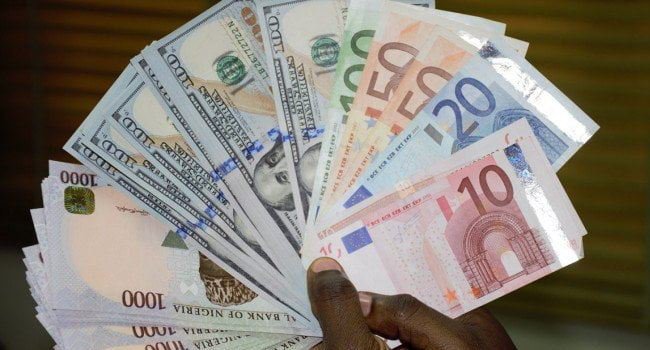
LAGOS, Nigeria — The Nigerian naira recorded a mild appreciation against the euro in the fourth trading session of the week, closing at ₦1,573 per euro, according to data from the Central Bank of Nigeria (CBN), reflecting modest gains driven by improved market sentiment and external monetary conditions.
The local currency strengthened slightly from ₦1,574/€1 recorded in the previous session, indicating a continued but cautious recovery trend in the foreign exchange market. Traders noted that the movement reflects a broader pattern of stability in the naira’s performance against major global currencies in recent sessions.
Market analysts attributed the marginal gain partly to shifting dynamics in global monetary policy, particularly the stance of the European Central Bank (ECB), which has maintained a hawkish approach to inflation management. Expectations of tighter monetary policy in the Eurozone have influenced currency flows and contributed to volatility in the EUR/NGN exchange rate.
The naira’s performance in 2026 has been shaped by a combination of domestic policy adjustments and external economic conditions. Nigeria’s foreign reserves, estimated at around $50 billion, have provided some support to the Central Bank’s efforts to stabilise the currency through interventions in the foreign exchange market.

The CBN’s monetary policy stance has also played a role, with higher interest rates introduced in recent policy cycles aimed at curbing inflation and attracting foreign portfolio inflows. While these measures have offered some support for the naira, inflationary pressures continue to affect real returns and overall market stability.
In addition, Nigeria’s foreign exchange earnings have benefited periodically from crude oil receipts and financial inflows from multilateral institutions such as the World Bank and the African Development Bank. However, analysts caution that structural challenges, including import dependency and persistent inflation, continue to weigh on the currency’s long-term outlook.
The economy remains heavily reliant on imports of European goods such as machinery, chemicals, and finished products, which sustains demand for foreign exchange and places ongoing pressure on the naira. Market participants continue to monitor key technical levels, with traders identifying ₦1,550/€1 as a psychological support zone and ₦1,650/€1 as a resistance level in the official market.
Globally, attention has shifted to the European Central Bank’s policy direction, with expectations of possible rate adjustments aimed at addressing inflationary pressures linked to energy prices and broader economic uncertainty in the Eurozone. A tighter monetary stance in Europe could strengthen the euro in the short term, adding further volatility to emerging market currencies like the naira.
Analysts say the medium-term trajectory of the naira will depend largely on the Central Bank of Nigeria’s ability to sustain foreign exchange interventions, manage inflation expectations, and support non-oil export growth. For now, the currency’s modest gains against the euro reflect a fragile but improving market balance influenced by both domestic reforms and global monetary shifts.



