
Analysis
Nigeria And The Latest Presidential Pardons
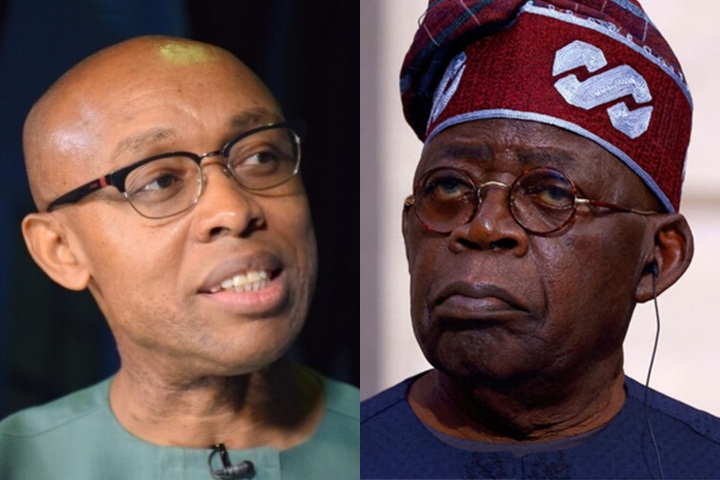
By Chidi Anselm Odinkalu

King Jaja of Opobo
In September 1887, Harry Johnston, Acting Consul of the Oil Rivers Protectorate (Niger Delta) procured the arrest in the wharves of the Niger Delta of King Jaja of Opobo on the rather dubious charge of “obstruction of trade”. It accused King Jaja of violating a trade treaty with the British, which did not, however, have any penal provisions.
The previous year, a Royal Charter granted in the name of Queen Victoria had placed the territory under the rule of the Royal Niger Company (RNC) which empowered it to “undertake and carry on the government or administration of any territories, districts, or places in Africa….” Essentially, the company was government.
After arresting him, the RNC shipped King Jaja for trial over one thousand kilometres away to Accra, capital of what is today known as Ghana. The day before the beginning of his trial in November 1887, the company notified King Jaja that he would stand trial in what was effectively a Court Martial.
Rear-Admiral Walter Hunt Grubbe of the Royal Navy presided. The notice was so short, King Jaja could not call any witnesses in his defence. Historian, Elvar Ingimundarsson, who researched the history of the RNC, called it “a Kangaroo court.” It found King Jaja guilty and sentenced him to exile, from which he did not return alive.

Thirteen years later, the RNC lost its Royal Charter and Her Majesty’s Government took over direct administration of the territory that would later become Nigeria. It comprised a colony in Lagos and two protectorates, one to the north and the other in the south of the country.
On the 108th anniversary of the show trial of King Jaja in a Kangaroo court, the regime of General Sani Abacha re-enacted a similar script leading to the execution on 10 November 1995 of Ken Saro-Wiwa, Saturday Dorbee, Nordu Eawo, Daniel Gbooko, Paul Levura, Felix Nuate, Baribor Bera, Barinem Kiobel, and John Kpuinene, together known today as the “Ogoni Nine”.
Their crime was advocacy for responsible exploitation of the hydrocarbons in their communities in Ogoni-land. Unable to call witnesses in their defence, their fate was pre-determined before a tribunal headed by Ibrahim Auta, a kinsman of Alhaji Abacha Maiduguri, who was the father of General Abacha. Like King Jaja, they were not allowed any right of appeal.
Ogoni Nine
On 12th October 2025, the Presidency announced that the Ogoni Nine were among 175 persons “who (had) received President (Ahmed Bola) Tinubu’s mercy.”
The announcement followed a meeting of the National Council of State at which the Honorable Attorney-General of the Federation (HAGF), Lateef Fagbemi, a Prince of the Offa Kingdom in Kwara State, who chairs the Committee on the Prerogative of Mercy, reportedly presented the proposed list of those to be granted pardon.
While the Ogoni Nine were included among the beneficiaries of the President’s mercy, King Jaja was excluded. Some would think that is because the injustice he suffered happened so long ago that the reach of the president’s forgiving memory could not be expected to travel that far back in time.
Herbert Macaulay
However, the list included Herbert Macaulay, the pioneer surveyor and nationalist, whose unfair conviction for theft occurred in 1913, some 26 years after the trial and exile of King Jaja. He was also a beneficiary of a latest post-humous pardon.

Herbert Macaulay engraved on one Naira note
The pardon granted Herbert Macaulay raises at least three significant issues. One is the scope and reach of the pardon powers of the president. Section 175(1) of Nigeria’s Constitution empowers the president to “grant any person concerned with or convicted of any offence created by an Act of the National Assembly a pardon, either free or subject to lawful conditions.”
The trial and conviction of Herbert Macaulay occurred in the Colony of Lagos in 1913. The Amalgamation of the Colony of Lagos with the Protectorates of Southern and Northern Nigeria which created the territory now known as Nigeria, occurred the following year.
Nigeria became a federation in 1951, 38 years after the trial of Herbert Macaulay. (How) was he convicted of a crime created by the National Assembly?
“Prerogative of Mercy”
Second, there is an implicit procedural requirement in the process of the prerogative of mercy: prior to making a recommendation, the Committee should have had access to and reviewed the transcripts and records of the proceedings leading to the conviction in respect of which it chooses to recommend the exercise of the presidential prerogative.
In the case of Herbert Macaulay, it appears that the Committee did not even bother to have access to the records. This is not difficult to understand given that the trial occurred so long ago. But it is a requirement.
Third, the purported pardon to Herbert Macaulay raises deeper issues about how best to immortalise and honour the heroes and sheroes of Nigeria’s colonial struggles. The Presidency chose to pardon Herbert Macaulay in a list which, by its own admission, comprised almost exclusively of “illegal miners, white-collar convicts, ….drug offenders, foreigners,….capital offenders.”
93% of the 175 beneficiaries of the prerogative of mercy announced by the president involved the most serious crimes known to law anywhere: 29.2% were traffickers in serious drugs, such as Cocaine.
Another 1.8% were convicted for human trafficking; 24% were convicted for unlawful mining (itself the cause of insecurity in places like Zamfara State); 13.5% were murderers; 12.3% were convicted of looting the country and another 5.8% were convicted for the crime of hijacking.
4.6% were convicted for firearms and robbery respectively; and another 1.8% were convicted for kidnapping.
It is impossible to dream up a more squalid register of beneficiaries of the prerogative of mercy or a more criminally cynical exercise of presidential pardon.
It is unthinkable that the government could persuade itself that the “labours of our heroes past” – among whose pantheon Herbert Macaulay is deservedly a doyen – are best honoured by festooning them with the company of drug-lords, murderers, kidnappers, gunrunners and human traffickers. It is entirely understandable that Herbert Macaulay’s descendants should feel scandalized by this.
It is no surprise that the publication of the list has been attended by credible allegations that certain insertions were oiled by generous inducements in the form of a quid pro quo. The list of beneficiaries is so seedy, it reads like a bazaar for mostly people in a position to purchase the pardon.
Those who do not fit this description, such as Herbert Macaulay or Ogoni Nine appear to have been inserted to lend credibility to a seedy assemblage.
Presidential pardon or presidential abuse?
It is a dreadful commentary on the Committee on the Prerogative of Mercy, the Presidency, and indeed the participants in the last meeting of the Council of State that they could reduce the institution of presidential pardon to this level of abuse.
In addition to the requirement that presidential pardon is only available for crimes created by the National Assembly, the constitution also imposes a procedural constraint on the presidential power of pardon.
It is to be exercised after consultation with the National Council of State. The list was, therefore, only published after the Council of State meeting.
More than one week thereafter, the HAGF now claims, because of the scandal and stink unleashed by what they have done, that the list of beneficiaries is “still under review and had not been finalised.”
The only reaction to this line is: pardon me?! The HAGF did not cite any law as empowering him to do this because there is none. Important and powerful as the office of HAGF is, he lacks any lawful powers to make these things up as he goes along in this way.
There is no way to diminish the damage that Lateef Fagbemi’s Committee on the Prerogative of Mercy has done to the presidential pardon. There are clear elements of illegality in what it has done and in what it proposes to do. It is seedy and the immorality of it all plainly stinks.
Above all, the damage to national security cannot be quantified. Law enforcement and security agents will be reluctant to break sweat in pursuit of serious offenders when they know that a president will cynically let the convicts loose to make prey of them.
That is the ultimate crime in these presidential pardons. The biggest job a president does is to guarantee public safety and national security. In these pardons, President Tinubu retrenches and casualizes both.
A lawyer and a teacher, Odinkalu can be reached at chidi.odinkalu@tufts.edu.

Analysis
It is time to let Nyesom Wike go
By Onwuasoanya FCC Jones, PhD.
I was trying to write something more extensive about how the current crisis ravaging our country’s supposed main opposition Party started, but as I wrote, I realised that it was becoming too lengthy, hence, I decided to take out an important part of that long essay and publish it as a separate post, to avoid the message getting lost in the voluminous write-up, that I might still conclude and publish.
Politics, especially, democratic politicking cannot be played without factoring in public opinion. The public opinion might be informed by propaganda or outright fake news, but if it is the popular opinion, then, a responsible government must take it seriously and work to correct the wrong opinion or the actual reality.
Even in Communist States like North-Korea, Cuba and China and authoritarian democracies like Russia, Belarus and elsewhere, people’s opinions are not discarded as worthless, but they are closely monitored, and while these governments invest huge resources into State propaganda, they do not also fail to take important actions to defuse tension when public opinion is getting too negative concerning a particular action.
Nyesom Wike’s endorsement of Mr. President and his subsequent contributions towards the successful election of the President in 2023, cannot be denied, and the President has shown enough gratitude by appointing him as the Minister of the Federal Capital Territory, an appointment that should have been originally reserved for top members of the ruling Party.
While it must be acknowledged that the FCT Minister is doing some fantastic jobs in the FCT, it is also obvious that he is being distracted by his involvement in the tussle for the control of his own Party. His actions have also brought immerse reputational damage on the APC administration at the federal level, as he regularly puts himself forward as an untouchable appointee of the President, even as some of his actions could not have been possible without his access to some presidential protections.
The FCT Minister wouldn’t have had the resources and security to challenge sitting governors of his own Party to the extent of attempting to evict them from the Party’s secretariat, if he didn’t have access to enormous federal government accessories. His insistence on remaining in the PDP, while working openly for the APC, is outright political treachery, which the President must not continue to condone. If the Minister loves our Party so much and detests his own Party that much, then, he should quit the PDP officially and join the APC.
Mr. Wike is ruining our Party’s reputation before Nigerians and the international community, and the sooner the President relieves him of his job as FCT Minister, to enable him focus more resources and attention to “rebuilding” his Party and pocketing its structure, the better for us as a Party and as a nation.
Onwuasoanya FCC Jones, PhD is a former State Publicity Secretary of the All Progressives Congress.
It was difficult to miss the trending videos, photos and reports of Nigeria’s Federal Capital Territory (FCT) Minister Nyesom Wike and Naval Officer Lieutenant A. M. Yerima staring each other down at a property site in Abuja, the Nigerian capital, recently.
The full picture may never be known, but there are many versions of the narratives, which may or may not be from Wike’s office or the military establishment. There are numerous write-ups and analyses on whether Wike or the officer was right or wrong.
Perhaps, one day, an opportunity will present itself for various sides to tell their own versions of the event. In this digital age, there are many possibilities to colour stories, or even mislead the public.
But what happened between Wike and the naval officer was yet another portrayal of a power show (thanks to Fela Kuti, the Afro-beat King), and a failure of law and order in the society. It started a long time ago, and it is getting worse.
Individuals, institutions and governments use and misuse their authorities, their wealth, and their instruments of power including positions, guns, uniforms, security personnel… – to force their way, and achieve their objectives. Whether the objectives are right or wrong, it does not matter.
The use of established, official adjudication process is disregarded, and not even explored. Might is right.
There are real-life examples of how it happens every day. At levels small and big.
A soldier stands by the side of the highway and waves down every truck (or trailer, as we call it) that passes by. He needs a lift, after all, he is in uniform, purportedly serving the nation. Wrong! He is on a mission for illegal extortion. He is one of the many service personnel in uniform who accompany trucks across the country on highways. It is not official business. But they profit from the fact that there are many roadblocks manned by police, customs, immigration agents, and other unformed entities.
Some of these entities extort “monies” from truck drivers for “assisting” them through the roadblocks. A soldier sitting next to the truck driver means that the truck gets a through pass without paying an illegal toll. Instead, the soldier is “settled” by the truck driver for the “service”. It is cheaper and faster for the truck driver.
Some individuals with strong connections in the military can obtain the services of soldiers to help them secure their properties against intruders. Whoever can mobilise soldiers to secure the property has a higher claim, irrespective of whether the property is illegally acquired.
A tenant who fails in his financial obligations but can pay his way through the police or the court can scare his landlord away.
Policemen accompany criminals and “big men”, who break the law, and provide cover or security to keep others at a distance.
The rogue behaviour of these military or unformed persons are not necessarily backed or approved by their superiors or their organisations.
Yet, there are too many examples of the use/misuse of uniformed security officials for illegal purposes. It is not limited to the uniformed services. Politicians also use their positions to bend rules and circumvent normal processes and procedures.
Some senior government officials assume all manner of powers. A well-connected politician can take over public roads, public facilities and access areas, and “nothing will happen”. Having a political title is power.
Such power is used to determine who votes and how. Hence, snatching of ballot boxes and disenfranchising voters in so many ways has become the norm.
A wealthy person can “buy” security officials, or pay for the rights of ordinary persons to be taken away. An innocent citizen can be arrested for any reason, jailed or detained illegally for a long time.
If and when the citizen musters the means to go to court against the wealthy or money bag, the case could go on for years until the highest bidder prevails.
It is not a new trend, but it is wrong, and it must stop. It may not be easy to stop, but it can be minimised. Unfortunately, the trend is rather on the increase.
In full public glare, Wike and the naval officer demonstrated the use of “power” to determine who/what is right.
Sadly, it degenerated into another “two-fighting” power play – the one representing government power and the other, a decoy for his Oga, representing the power of the military uniform. A regular citizen could not have stood against either of them. S/he would be destroyed and “nothing will happen”.
By shouting at each other in public, Wike and the naval officer represent the unqualified use of authority that has effectively replaced the application of due process for adjudication of contending claims.
The FCT authorities and the former Chief of Naval Staff, Vice Admiral Awwal Zubairu Gambo, who is said to be the owner of the property in question, could have used other legal and dignified mechanisms of adjudication to settle the matter, without unnecessary drama. There was no need for the “show of power.”
This legitimate process of adjudication is no longer attractive to those who have the power to determine the outcomes of their own matters. They use their positions, wealth, uniforms, and paraphernalia of office to force their way through. Those lacking such powers are denied justice.
Both Wike and the naval chief will ultimately sort out their differences. The bravado in public only reinforces the “powerlessness” of the ordinary citizen.
Citizen Nigerian has no standing against Wike and his arsenal, or the naval officer and his boss. Under these circumstances, it is immaterial whether Citizen Nigerian has genuine documents or legal claims; S/he is the loser in the game between and among the powerful in society.
Bunmi Makinwa is an Analyst and CEO, AUMIQUEI Communication for Leadership.
An unlikely coincidence of elections in over a period of 45 days period from the middle of September to the end of October 2025 has cast a new light on the state of democratic governance in Africa and now threatens to unscramble the ritual hollowness that has become the fate of elections on the continent under the indifferent watch of the African Union and other regional institutions in Africa. How the continent’s leaders and institutions handle the aftermath could have serious implications for the stability of the continent.
On 16 September 2025, Malawi went to the polls to elect their president. The last time the country did that in 2019, it produced results that were so transparently rigged that five judges of the Constitutional Court of Malawi wearing bullet-proof vests were needed to set aside the result declared by the electoral commission. That was only the second time in Africa’s history that a court would nullify the declared outcome in a presidential election.
The annulled result had favoured then incumbent and fifth president of the Republic, Peter Mutharika (a long-serving law professor and brother of Malawi’s third president, Bingu wa Mutharika), in a contest against Lazarus Chakwera, a theologian and pastor with the Assemblies of God Church in Malawi. In the re-run that followed the judicial nullification in 2020, Chakwera prevailed, and the people ousted Peter Mutharika from the presidency.
The contest in September 2025 pitted 85-year-old Peter Mutharika in a sequel against his nemesis, Lazarus Chakwera. In the preceding five years, President Chakwera had managed to implausibly squander the considerable civic goodwill that powered him into office. Despite being 15 years younger than President Mutharika, President Chakwera lost resoundingly to his older opponent who secured 56.8% of the vote.
Malawi may have vindicated the trust of both the voters and of the candidates in a test of the will of the people but it is an outlier in a continent that has grown used to seeing elections as charades. This reluctance for credible ballots was evident when the central African country of Cameroon went to the polls nearly one month later on 12 October 2025, to elect their president. The incumbent, Paul Biya, was a 92 year-old whose sojourn in Cameroon’s government dates back to his appointment as Chief of Staff in the cabinet of the Minister of Education in 1964. In 1975, President Ahmadou Ahidjo made him Prime Minister. On 6 November 1982, two days after the resignation of President Ahidjo on grounds of ill-health, Biya ascended to the presidency and has ruled the country for 43 years since.
At 92, Paul Biya is the oldest serving president in the world, only outlasted in office by Teodoro Obiang, president of the neighbouring Equatorial Guinea, who has been in office since he toppled his uncle, Macias Nguema, in August 1979 before executing him. In the election this year, his main opponent was Issa Tchiroma, a 35-year veteran in the cabinet of President Biya, who stepped down from the ruling Cameroon Peoples’ Democratic Movement (CPDM) and from the Cabinet in order to run against his former boss.
It took the Constitutional Council 15 days to tabulate the figures in an election which had 8.1 million registered voters with an average turnout of about 68.5%. When it eventually declared that outcome on 27 October, the Constitutional Council announced Biya as winner with 53.66% of the votes in disputed results and in an election in which he was unable to campaign because of infirmity. Independent analysts who have examined the official numbers insist he “couldn’t have won.”
With the result, Biya, who was born one month after Adolf Hitler assumed office as German Chancellor and in the month preceding the inauguration of Franklin Delano Roosevelt as the president of the United States of America – entered upon his seventh presidential term in a country in which the median age belongs to children who were born in 2006. By the time of the next election, he will be nearly one century old. In the wake of the announcement, United Nations Secretary-General, António Guterres, pointedly declined to extend congratulations to President Biya, instead focusing his attention on the need for a “thorough and impartial investigation” of the “post-electoral violence and…. reports of excessive use of force.”
Paul Biya can at least claim that he had a genuine contest against a genuine opponent. In Côte d’Ivoire, West Africa, the contest two weeks later on 25 October 2025 pitted incumbent president, Alassane Ouattara, whose ambitions drove the country to the brink of fragmentation at the beginning of the millennium – against no one.
When the result
was announced, President Ouattara, a child of the Second World War, having been born on New Year’s Day in 1942, contrived at 83 years to award himself nearly 90% of the vote and a fourth term in office in an election from which he barred every credible competition. That was indeed a generous four percentage points lower than the 94% of the votes that he awarded himself in 2020. In power since 2010, Ouattara was supposed to be term-limited after two terms of ten years in office. At 83, he expects to rule until at least he is 88, which would still be five years younger than President Biya’s current age.
The election in Tanzania four days after Côte d’Ivoire’s took place in a graveyard. The incumbent and candidate of the ruling Chama Cha Mapinduzi (Party of the Revolution) was Samia Suluhu Hassan, who inherited the office when her principal, John Pombe Magufuli, died in March 2021.
Ahead of the contest, however, it became evident that Samia would not tolerate a contest. Under her leadership, the government unleashed what Amnesty International described as a “wave of terror” designed to make her candidacy unopposed and the ruling party unchecked in its march to a pre-determined seventh decade in power. On the day of the contest on 29 October, protests unexpectedly erupted in key cities, such as Dar-Es-Salaam, Arusha, Mbeya, and Mwanza. Under cover of a media blackout complemented by an internet shutdown imposed on the day of the ballot, Samia’s government orchestrated a campaign of targeted mass murder in population centres suspected to be opposition strongholds.
President Samia’s electoral commission declared her winner with 87% voter turnout and nearly 98% of the vote. As Tanzanians in different parts of the country woke up to find bodies on their courtyards with fatal injuries from unknown persons and morgues overflowing with fresh cadavers reportedly being disappeared under instructions of the government, President Samia turned up at a military base in new capital city, Dodoma, where on the fourth night following the vote, she was stealthily inaugurated for a new term.
Initial estimates putting the casualty count in the hundreds were quickly eclipsed by more updated tallies of over 3,000 killed in under 72 hours. Fresh reporting by the New Humanitarian put the number over 5,000 and suggests that the casualty count may indeed be over 10,000. Around the country, initial trepidation gave way to alarm at the scale of the massacre. That alarm has now been ousted by outrage.
Meanwhile, for the first time in their histories, official election observer missions deployed by the African Union (AU) and the Southern African Development Community (SADC) both concluded separately that the election in Tanzania “did not comply with AU principles.” This caught many people unprepared. Now both institutions are scrambling to figure out what to do. There is an emerging consensus that President Samia is illegitimate. The leaders of both institutions must articulate consequences and citizens have a right to expect them to do so clearly.
The consensus is also growing around the urgent need for an independent, international investigation and accountability. Meanwhile, Tanzania’s young people prepare for nationwide protests on 9 December 2025. The symbolism is significant: it is World Anti-Corruption Day; it is the anniversary of the adoption of the Genocide Convention; and it is Tanzania’s Independence Day.
A lawyer and a teacher, Odinkalu can be reached at chidi.odinkalu@tufts.edu.
-
News1 day agoBREAKING: ISWAP executes Nigerian Brigade Commander
-
News6 days agoBREAKING: President Tinubu Snubs Wike, Backs Lieutenant Yerima, Military
DDM News
-
News1 day agoPHOTO: Nigerian Brigade Commander executed by ISWAP has been identified as Brigadier General Uba
-
World News4 days agoBREAKING: Multiple explosions hit oil installations in Bakassi Peninsula as group calls for Kanu release
-
News4 days agoObiano’s Camp Debunks Death Rumour, Warns Against Fake News
-
News3 days agoBREAKING: PDP expels Wike, Fayose, Anyanwu
-
News3 days agoBrigadier General reappears after ISWAP ambush
-
World News7 hours agoBREAKING: 7 killed as militants calling for Kanu’s release bomb security checkpoint
-
News4 days agoISWAP ambushes military convoy, reportedly abducts Brigade Commander
-
News4 days agoTENSION IN UNIUYO: VC PROF. NDAEYO NOMINATES JUNIOR PROFESSORS TO SCREEN SENIOR COLLEAGUES
- ALLEGED PLOT FOR VIOLENCE IF “LAST-MINUTE GAME” FAILS

