


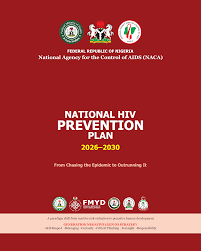
Nigeria has launched its National HIV and AIDS Strategic Plan (NSP) 2026–2030, outlining a major transition from donor-supported interventions to a more domestically financed and government-led HIV response.
The plan was unveiled on Thursday in Abuja amid concerns over declining international funding and renewed calls for stronger national ownership of HIV programmes.
Speaking at the event, the Director-General of the National Agency for the Control of AIDS (NACA), Temitope Ilori, said Nigeria’s HIV response is entering a new phase that requires stronger integration into national systems.
She said the new framework builds on previous gains in reducing new infections and expanding access to treatment, but reflects changing global financing realities.

According to her, the strategy is not a replacement of existing efforts but a recalibration designed to align the country’s response with emerging evidence and sustainability needs.
Push for Domestic Ownership
Ilori said the plan prioritises a shift away from fragmented, donor-driven programming toward a coordinated national response anchored in government systems.
She added that implementation will increasingly depend on domestic financing, expanded health insurance coverage, digital health systems, and stronger accountability mechanisms across sectors such as health, education, gender, youth development and justice.
The NACA chief said the plan was developed through consultations with government agencies, civil society groups, development partners, the private sector and community organisations.
She urged stakeholders to strengthen collaboration to ensure a more resilient and sustainable HIV response.
Progress Made, But Gaps Remain
Presenting the framework, NACA’s Deputy Director of Policy, Planning and Coordination, Mariam Ezekwe, said Nigeria has recorded notable progress in HIV control but still faces structural and financing challenges.
She noted a 52 per cent reduction in new infections since 2010 and said about 80 per cent of people living with HIV now know their status, according to recent national estimates.
However, she warned that long-term success depends on stronger domestic funding and better integration of services into primary healthcare systems.
Ezekwe also highlighted the estimated 1.98 million people currently living with HIV in Nigeria.
Stakeholders Call for Broader Participation
During a panel discussion, stakeholders from the private sector, civil society and faith-based organisations called for wider participation in HIV financing and service delivery.
Representing the Nigeria Business Coalition Against AIDS (NIBUCCA), Opeyemi Yekini said the private sector should be recognised as a full partner in the national HIV response, noting that employee health is closely linked to productivity and economic stability.
Executive Secretary of the Country Coordinating Mechanism (CCM), Tajudeen Ibrahim, said Nigeria’s transition strategy must go beyond enrolling patients in health insurance schemes to building systems capable of sustaining HIV financing in the long term.
He stressed the need for stronger tracking and transparency in domestic HIV funding to improve accountability and efficiency.
Emmanuel Okechukwu of the Nigeria Interfaith Coalition on AIDS (NIFCOB-AIDS) also called for the formal integration of faith-based organisations into national HIV programming, citing their longstanding role in community-level care and support.
Long-Term System Integration Goal
The NSP 2026–2030 sets out a goal of fully integrating HIV services into routine health systems, reducing reliance on parallel donor-funded programmes.
The National Agency for the Control of AIDS said implementation will increasingly depend on domestic resources, expanded health insurance coverage, digital health tools and coordinated multi-sector accountability frameworks.
By 2030, Nigeria aims to sustain its HIV response through fully integrated and nationally financed systems at both federal and subnational levels.




