


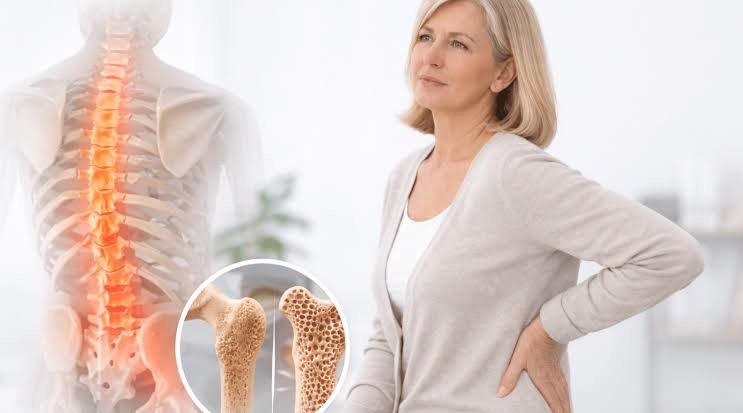
Osteoporosis is a condition that causes bones to become weak, brittle, and more likely to break. It affects both men and women, but women are at a much higher risk, especially after menopause when oestrogen levels decline. Because bone loss occurs gradually and often without symptoms, many women do not realise they have osteoporosis until they suffer a fracture.
Health experts say building and maintaining strong bones throughout life, especially after the age of 40, can significantly reduce the risk of osteoporosis and fractures.
What Is Osteoporosis?
Osteoporosis is a disease in which bone density and bone quality decrease over time.
Healthy bones are constantly being broken down and rebuilt. As people age, especially after menopause, bone loss begins to occur faster than new bone can be formed, making bones weaker and more fragile.

The hips, spine, and wrists are the bones most commonly affected.
What Causes Osteoporosis?
The main cause of osteoporosis in women is the decline in oestrogen after menopause.
Other factors that contribute include:
- Ageing.
- Inadequate calcium and vitamin D intake.
- Lack of physical activity.
- Smoking.
- Excessive alcohol consumption.
- Long-term use of corticosteroid medications.
- Certain medical conditions such as thyroid disorders and rheumatoid arthritis.
Risk Factors
You may have a higher risk if you:
- Are over 50 years of age.
- Have gone through menopause.
- Have a family history of osteoporosis.
- Have a small or thin body frame.
- Have low calcium or vitamin D intake.
- Smoke or drink excessive alcohol.
- Lead a sedentary lifestyle.
The presence of one or more risk factors does not necessarily mean you will develop osteoporosis, but it increases the likelihood.
Symptoms
Osteoporosis is often called a “silent disease” because it usually causes no symptoms in its early stages.
As the condition progresses, symptoms may include:
- Back pain caused by spinal fractures.
- Loss of height over time.
- A stooped posture.
- Bones that break more easily than expected after a minor fall or injury.
Many women first discover they have osteoporosis after experiencing a fracture.
How Is Osteoporosis Diagnosed?
Your healthcare provider may recommend:
- A review of your medical history and risk factors.
- A physical examination.
- A bone mineral density (DEXA) scan.
- Blood tests to check calcium, vitamin D, and other factors affecting bone health.
The DEXA scan is the standard test used to diagnose osteoporosis.
Treatment
Treatment aims to strengthen bones and reduce the risk of fractures.
Medications
Doctors may prescribe medicines that slow bone loss or help build new bone.
Calcium and Vitamin D
Adequate calcium and vitamin D are essential for maintaining healthy bones.
Regular Exercise
Weight-bearing exercises such as walking, dancing, climbing stairs, and resistance training help strengthen bones and improve balance.
Preventing Falls
Reducing fall hazards at home, wearing appropriate footwear, and maintaining good vision can help prevent fractures.
Can Osteoporosis Be Prevented?
Although bone loss cannot always be prevented, you can lower your risk by:
- Eating calcium-rich foods such as dairy products, leafy green vegetables, and fortified foods.
- Getting enough vitamin D through safe sunlight exposure, diet, or supplements if recommended.
- Exercising regularly.
- Avoiding smoking.
- Limiting alcohol intake.
- Maintaining a healthy body weight.
- Attending regular health check-ups.
These habits help protect bone health throughout life.
When Should You See a Doctor?
Consult a healthcare professional if you:
- Are over 50 and have never had a bone density test.
- Experience a fracture after a minor fall.
- Notice a loss of height or a stooped posture.
- Have long-term risk factors for osteoporosis.
- Have gone through menopause and are concerned about bone health.
Early diagnosis can help prevent future fractures.
The Bottom Line
Osteoporosis is a common condition that weakens bones and increases the risk of fractures, particularly in women after menopause. Because it often develops without symptoms, regular screening, a calcium-rich diet, vitamin D, exercise, and healthy lifestyle choices are essential for protecting bone health. Early diagnosis and treatment can help women remain active and independent as they age.
Disclaimer: This article is for informational purposes only and should not replace professional medical advice. Women concerned about osteoporosis or bone health should consult a qualified healthcare professional for appropriate screening and personalised treatment.




