


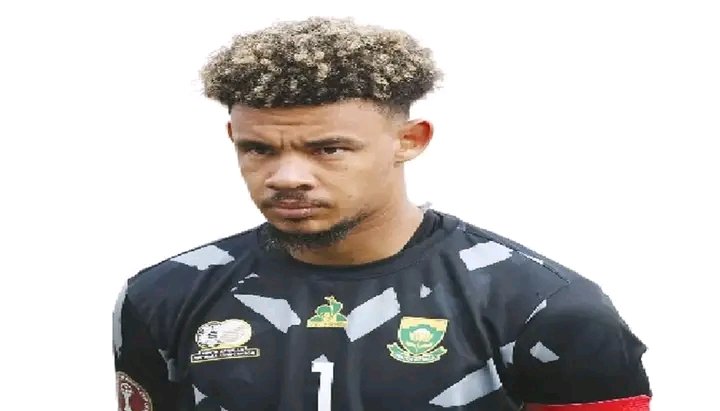
South Africa captain Ronwen Williams has opened up about his disappointment over what he believes is a lack of support from fellow Africans during Bafana Bafana’s campaign at the 2026 FIFA World Cup, a statement that has sparked widespread debate across the continent and reignited conversations about unity, identity and solidarity in African football.
The experienced goalkeeper made the remarks after South Africa’s disappointing 2-0 defeat to Mexico in their opening Group A fixture at the global tournament. While reflecting on the result and the challenges facing his team, Williams revealed that he had expected stronger backing from football fans across Africa.
According to the South African captain, international tournaments often provide opportunities for African nations to unite behind one another in pursuit of continental pride. He noted that historically, when African teams compete against countries from other continents, many African supporters rally behind them regardless of national differences.

Williams said he was surprised to see what appeared to be a significant number of African football fans supporting Mexico during the match instead of backing South Africa, one of the continent’s representatives on the world stage.
His comments quickly gained attention across social media platforms, sports forums and football communities, with supporters from different African countries offering varied reactions.
For some observers, Williams’ concerns reflect a genuine desire for greater continental unity. They argue that African nations often face significant challenges in competing against football powerhouses from Europe and South America and that stronger solidarity could help boost morale and confidence for teams representing the continent.
Supporters of this view point to memorable moments in football history when Africans united behind teams that advanced deep into international competitions.
Examples include Cameroon’s historic run to the quarter-finals of the 1990 FIFA World Cup, Ghana’s impressive campaign in 2010, Senegal’s breakthrough performances on the global stage and Morocco’s remarkable achievement at the 2022 World Cup, where the Atlas Lions became the first African nation to reach the semi-finals.
During those tournaments, many African football lovers embraced the success of those teams as victories for the continent as a whole rather than achievements limited to a single nation.
However, Williams’ remarks have also exposed underlying tensions that continue to shape perceptions of South Africa in parts of the continent.
Many social media users responding to the goalkeeper’s comments referenced past incidents of xenophobic violence in South Africa, where foreign nationals from several African countries were targeted during periods of unrest.
Over the years, reports of attacks on migrants from countries such as Nigeria, Zimbabwe, Mozambique, Malawi, Ghana and Kenya have generated anger and criticism across Africa.
The incidents attracted international attention and prompted diplomatic engagements between governments seeking to protect their citizens and improve relations.
As a result, some football supporters argued that the lack of enthusiasm for South Africa among certain Africans cannot be separated from broader social and political experiences.
Several commenters maintained that genuine solidarity requires mutual respect and positive treatment of fellow Africans beyond the football pitch.
Others, however, insisted that sports should serve as a bridge rather than a barrier. They argued that football offers a unique opportunity to foster unity and understanding among people from different nations and that historical grievances should not determine who receives support during international competitions.
Sports analysts believe the debate reflects the complex relationship between football and society.
Football has long been more than just a game in Africa. It serves as a powerful expression of identity, national pride and collective aspiration. Major tournaments often bring millions of people together, creating moments of celebration that transcend language, ethnicity and geography.
At the same time, football frequently mirrors broader societal realities, including political tensions, cultural differences and historical disputes.
For South Africa, the discussion comes at a crucial moment in the team’s World Cup campaign.
The defeat to Mexico has placed Bafana Bafana under pressure heading into their remaining group-stage matches. With qualification hopes hanging in the balance, the team must now focus on securing positive results against upcoming opponents to remain in contention for a place in the knockout rounds.
Williams, who is widely regarded as one of Africa’s finest goalkeepers, remains a key figure in South Africa’s ambitions.
The Mamelodi Sundowns star has earned praise for his leadership qualities, consistency and performances for both club and country. His influence extends beyond his goalkeeping abilities, making him one of the most respected voices within South African football.
Many observers believe his comments were not intended to create division but rather to encourage reflection on the importance of African unity in global sporting competitions.
As discussions continue across the continent, the episode has highlighted both the challenges and opportunities facing African football.
The growth of the game in Africa has been remarkable in recent decades, with more players competing in elite leagues, improved investment in football infrastructure and increasing success at international tournaments.
Yet many experts argue that the continent’s full potential can only be realised through stronger collaboration, mutual respect and shared support among African nations.
Whether fans agree with Williams’ perspective or not, his comments have undoubtedly sparked an important conversation about what it truly means to support Africa on the global stage.
For now, South Africa’s immediate task remains on the field as Bafana Bafana seek to bounce back from their opening setback and keep their World Cup dream alive. If they can produce strong performances in the matches ahead, they may yet inspire broader support from across the continent and turn a moment of controversy into one of unity and collective pride..




