


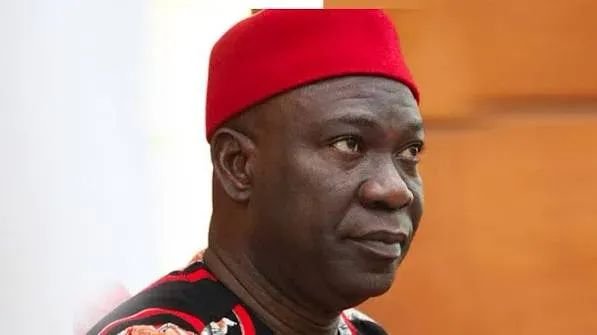
ABUJA, Nigeria — The decades-long advocacy for state police in Nigeria has finally reached a watershed moment, with Senator Ike Ekweremadu’s foresight, President Bola Tinubu’s courage, and the example of Senator Patrick Mbah’s earlier advocacy now converging to reshape the nation’s security architecture.
The journey toward establishing state police in Nigeria has been a long and arduous one, spanning multiple administrations and legislative sessions. For over two decades, proponents of state policing have argued that the existing centralised police structure is incapable of effectively addressing the diverse and complex security challenges facing the country. The passage of the constitutional amendment bill by the National Assembly marks the culmination of years of advocacy, debate, and political negotiation.
Senator Ike Ekweremadu, a former Deputy Senate President, was among the earliest and most consistent advocates for state police in Nigeria. As far back as 2014, during the National Conference convened by the Goodluck Jonathan administration, Ekweremadu championed the establishment of state police as a critical component of security reform. His arguments, rooted in the need for localised policing that could respond swiftly to community-specific threats, laid the intellectual and political foundation for the current reform.

Ekweremadu’s foresight was informed by his deep understanding of Nigeria’s security challenges. He argued that the centralised policing model, which places all police personnel under the control of the Inspector-General of Police in Abuja, was ill-suited to address the unique security dynamics of different states and communities. He contended that state police forces would be more responsive to local security needs, more accountable to communities, and better equipped to gather intelligence and prevent crime.
President Bola Tinubu’s decision to transmit the Constitution Alteration Bill to the National Assembly has been widely hailed as a courageous step that has brought the long-standing advocacy to fruition. The President’s willingness to champion a reform that many previous administrations had shied away from reflects his commitment to addressing Nigeria’s security challenges through innovative and structural solutions.
Tinubu’s courage in pushing the state police bill through the National Assembly cannot be overstated. The reform has faced significant opposition from various quarters, including those who fear that state police could be abused by governors for political purposes. However, the President has remained steadfast, insisting that the security of Nigerians must take precedence over political considerations.
The example of Senator Patrick Mbah, who represented Benue State in the Senate, also serves as an inspiration for the current reform. Mbah was a vocal advocate for state police during his tenure, consistently raising the issue on the floor of the Senate and engaging with stakeholders to build consensus. His commitment to the cause, even in the face of opposition, demonstrated the kind of political courage that has now been vindicated by the passage of the bill.
The state police bill, which has been passed by both chambers of the National Assembly, now awaits ratification by at least two-thirds of the 36 state Houses of Assembly. The bill establishes a legal framework for the creation of state police forces, with constitutional safeguards designed to prevent political abuse and ensure accountability.
The National Assembly has embedded robust safeguards in the legislation, including the establishment of State Police Service Commissions responsible for recruitment, discipline, and oversight. The bill also grants the Federal Police Service authority to intervene in state policing under exceptional circumstances, subject to presidential authorisation, Senate oversight, and judicial review.
As the ratification process unfolds, the legacy of Ekweremadu’s advocacy, Tinubu’s courage, and Mbah’s example will continue to inspire the ongoing efforts to reform Nigeria’s security architecture. For now, the stage is set for a new era of policing in Nigeria, one that promises to bring law enforcement closer to the communities they serve.




