


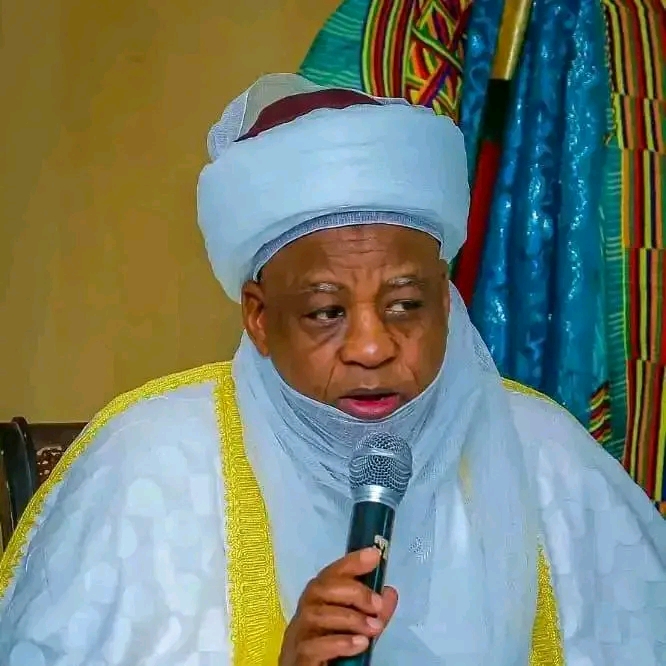
SOKOTO, Nigeria — The Sultan of Sokoto and President-General of the Nigerian Supreme Council for Islamic Affairs (NSCIA), Alhaji Sa’ad Abubakar III, has called on Nigerian Muslims to actively participate in sighting the new moon of Muharram 1448AH to mark the beginning of the Islamic New Year.
The Sultan made the appeal in a statement issued on Sunday through the Chairman of the Advisory Committee on Religious Affairs of the NSCIA, Professor Sambo Junaidu. He urged Muslims across the country to look out for the new crescent moon on the 29th day of the current Islamic month of Dhul Hijjah, corresponding to Tuesday, June 16, 2026.
According to the statement, Muslims are encouraged to report any credible sighting of the new moon to the nearest district or village head, or directly to the Sultanate Council in Sokoto. The council will then collate all reports and make an official announcement regarding the commencement of Muharram, the first month of the Islamic calendar.
The Sultan emphasized that the sighting of the new moon is a religious obligation for Muslims, as it determines the timing of important Islamic observances. He reminded the faithful that the Islamic calendar is based on lunar cycles, making the physical sighting of the moon a traditional and spiritual practice that predates modern astronomical calculations.

The Islamic New Year, also known as Al-Hijrah, commemorates the migration of Prophet Muhammad from Mecca to Medina in 622 CE. The first month of Muharram is considered one of the four sacred months in Islam, during which warfare is traditionally prohibited and acts of worship are highly encouraged.
Muslim scholars note that the Islamic New Year is not typically celebrated with elaborate festivities like the Gregorian New Year. Instead, it is a period for reflection, prayer, fasting, and spiritual renewal. Many Muslims choose to fast on the 10th day of Muharram, known as Ashura, following the tradition of Prophet Muhammad.
The Sultan also used the occasion to pray for peace, unity, and prosperity in Nigeria. He called on Muslims to use the advent of the new Islamic year to recommit themselves to the values of compassion, justice, tolerance, and obedience to Allah. He further urged the faithful to pray for the nation’s leaders and for an end to the security and economic challenges facing the country.
In his statement, the Sultan encouraged Islamic organisations, mosques, and community leaders to educate their congregations on the significance of Muharram and the Islamic calendar. He also advised Muslims to avoid any form of extravagance or un-Islamic practices that could detract from the spiritual essence of the sacred month.
The NSCIA has consistently maintained that moon sighting should be based on physical observation rather than purely astronomical calculations, in keeping with the teachings of the Prophet Muhammad, who instructed Muslims to begin and end fasts based on actual sightings of the crescent moon.
As Tuesday approaches, Muslim communities across Nigeria will be watching the evening sky. Telescopes, binoculars, and the naked eye will all be put to use as faithful Muslims scan the horizon for the thin sliver of the new moon. For now, the Sultan’s message is clear: the Islamic New Year is approaching, and it is the duty of every able Muslim to participate in the time-honoured tradition of moon sighting.




