


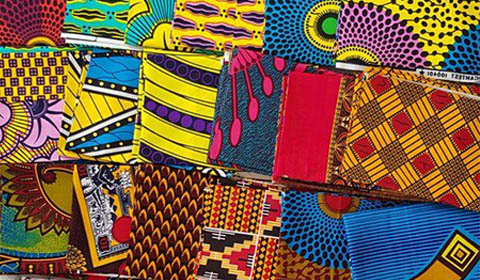
Few fabrics command attention quite like Ankara. With its vibrant colours, dramatic patterns and endless ability to transform into everything from traditional outfits to modern streetwear, Ankara has become one of the most recognisable fabrics associated with African fashion. Across Nigeria and much of West and Central Africa, it is worn at weddings, cultural celebrations, religious ceremonies, birthdays, political events and everyday social gatherings. Yet behind the colourful prints lies a fascinating history that crosses continents and raises important questions about culture, trade, identity and African creativity.
Today, when many people hear the word Ankara, they immediately picture colourful African prints. The fabric has become so deeply connected with African identity that it is sometimes assumed to have originated entirely on the continent. However, the history is considerably more complicated. What is commonly called Ankara, African wax print or Dutch wax has roots in Indonesian batik, European industrial textile production and the West African market. Over time, African consumers and designers transformed the material into something that became strongly associated with African culture and identity.

The story begins in the nineteenth century, when Dutch textile manufacturers experimented with mechanically reproducing Indonesian batik. Batik was traditionally produced by applying wax to fabric to create patterns before dyeing it. The wax protected selected areas of the cloth from the dye, allowing intricate designs to emerge through successive stages of colouring. Dutch manufacturers developed industrial methods of reproducing aspects of this process, initially with the intention of competing in the Indonesian textile market.
The European-made imitation did not achieve the success its manufacturers expected in Indonesia, but the cloth found another audience. Dutch merchants began taking the colourful textiles to West Africa, where they discovered a market that was receptive to the distinctive designs. By the mid-nineteenth century, the fabric was being traded along West Africa’s coastal communities and gradually became popular among consumers.
One of the companies that became particularly important in this story was the Dutch textile manufacturer that eventually became known as Vlisco. Established in 1846, the company developed a long-standing relationship with West and Central African markets and became synonymous with high-quality Dutch wax prints. Academic research into Vlisco notes that although the textiles were designed and produced in the Netherlands, they became deeply interconnected with African culture and identity because they were created largely with African consumers in mind.
The name Ankara itself is also interesting. The term is commonly associated with the Hausa word for Accra, Ghana’s capital. Accra was an important centre of trade for African textiles, and the name eventually became associated with the colourful printed fabric in Nigeria and beyond. In different parts of Africa, the material acquired different names. It is commonly called Ankara in parts of West Africa, while terms such as wax, pagne and kitenge are used in other regions.
As the fabric became established in West Africa, something remarkable happened. Africans did not simply consume the material; they incorporated it into their own cultural expression. Tailors and designers began creating garments specifically suited to African lifestyles, ceremonies and aesthetics. Patterns acquired local names, and certain designs became associated with particular occasions, social messages or communities.
This transformation is one of the most important chapters in the evolution of Ankara. Its industrial production may have originated outside Africa, but its cultural meaning was shaped extensively by African consumers. The fabric became a canvas through which people could communicate status, celebration, belonging and personality.
In Nigeria, Ankara eventually became deeply embedded in the country’s fashion culture. It moved beyond being merely a piece of imported textile and became part of the visual language of Nigerian dressing. Women began wearing Ankara in carefully tailored gowns, wrappers, blouses, skirts and head ties, while men’s fashion incorporated the fabric into shirts, trousers, jackets, agbada details and other contemporary outfits.
Traditional tailoring also helped Ankara evolve. Instead of limiting the material to conventional styles, Nigerian designers began experimenting with silhouettes, cuts and combinations. Ankara could be paired with lace, chiffon, velvet, denim and other fabrics. It could be transformed into elegant evening wear, corporate outfits, casual clothing and avant-garde designs.
The evolution became even more dramatic with the emergence of a new generation of African fashion designers. Designers began taking Ankara beyond conventional African silhouettes and presenting it as a material capable of competing on international fashion platforms. Structured jackets, corsets, jumpsuits, mini dresses, suits, trousers, coats and contemporary gowns demonstrated that Ankara could adapt to virtually any fashion direction.
This development also challenged the idea that African fashion had to look traditional to be authentically African. Modern designers increasingly used Ankara to create pieces that combined African visual identity with global fashion trends.
Social media accelerated this transformation. Instagram, TikTok, Pinterest and other digital platforms gave African designers access to audiences far beyond their immediate communities. A beautifully designed Ankara outfit could now be photographed in Lagos, posted online and admired within minutes by fashion enthusiasts in London, New York, Johannesburg or Paris.
Celebrities also played a major role in the transformation. Nigerian musicians, actors, influencers and public figures increasingly embraced Ankara in ways that made the fabric attractive to younger audiences. Instead of being associated only with older generations or formal ceremonies, Ankara became part of contemporary celebrity styling.
Fashion houses began experimenting with oversized silhouettes, asymmetric cuts, minimalist designs and unusual combinations, proving that Ankara could be both culturally rooted and globally fashionable.
Interestingly, the global fashion industry has also been moving toward greater experimentation with prints, texture, craftsmanship and bold personal expression. Current 2026 fashion coverage highlights a strong movement toward maximalism, vibrant colour, intricate details and personality-driven dressing. These developments create an environment in which bold African prints such as Ankara can fit naturally into contemporary fashion conversations.
However, the history of Ankara also comes with a complicated question: how African is a fabric whose production history began outside Africa?
This question has generated considerable discussion among historians, researchers and fashion commentators. The answer is not necessarily straightforward. Ankara’s technical origins are connected to Indonesian batik and European industrial production, but its cultural identity was profoundly shaped in Africa. The V&A describes Ankara’s history as one involving colonial trade, cultural appropriation and African agency, while also recognising the fabric’s importance within African fashion and identity.
That distinction is important. Culture is not always defined solely by where an object was first created. Objects can travel, be adopted, transformed and acquire entirely new meanings. Ankara’s journey is a powerful example of this process.
The fabric travelled from Asia through Europe into Africa, but once it entered African societies, it became part of a new cultural story. African designers, tailors and consumers gave it new forms, meanings and identities. In this sense, the evolution of Ankara is also a story about cultural adaptation and creativity.
The manufacturing landscape has changed as well. Although Dutch production, particularly through companies such as Vlisco, remains an important part of the history of wax prints, Africa itself has developed textile manufacturing industries. Ghana, Côte d’Ivoire and other African countries have become important production centres, with companies producing fabrics for regional markets.
Nigeria, meanwhile, has developed a particularly strong fashion ecosystem around Ankara. Local tailors and designers have turned the fabric into an enormous creative industry, with designs ranging from affordable everyday clothing to luxury fashion.
The economic importance of Ankara should therefore not be overlooked. Every stage of the fashion process creates opportunities — from textile sellers and importers to tailors, fashion designers, photographers, makeup artists, models, influencers and retailers. Weddings and other social events in Nigeria alone generate enormous demand for coordinated fabrics and custom-made outfits.
Ankara has also become part of the language of celebration. Families and groups often choose particular fabrics for weddings and special occasions, with coordinated outfits creating a strong visual sense of unity. In many Nigerian communities, what someone wears to an important ceremony communicates not only personal taste but also respect for the occasion and connection to the people being celebrated.
For DDM News, the evolution of Ankara demonstrates how fashion can tell a story that is much bigger than clothing. Behind every colourful print is a history of international trade, cultural exchange, industrialisation, African creativity and changing ideas about identity.
Today, Ankara continues to evolve. Young designers are cutting it into modern streetwear, combining it with Western silhouettes and incorporating it into accessories such as handbags, shoes, hats and even jewellery. The boundaries are becoming increasingly blurred between traditional African clothing and global contemporary fashion.
The future of Ankara may therefore look very different from its past. As designers continue experimenting with technology, sustainability, digital fashion and new production techniques, the fabric is likely to take on even more forms. Its greatest strength may be its adaptability: it can remain recognisably African while continuously changing with the times.
From Indonesian batik traditions to Dutch factories, West African markets and Nigerian fashion studios, Ankara’s journey is a remarkable example of how textiles can cross borders and acquire new identities. What began as an international experiment in textile manufacturing eventually became one of the most powerful visual symbols of African fashion.
For DDM News, Ankara’s story ultimately reminds us that culture is constantly evolving. A fabric can travel across continents, be transformed by different communities and eventually become a symbol of identity far removed from its original point of production. Ankara is no longer simply a piece of printed cotton. It is a fashion language — one that speaks of colour, creativity, celebration, heritage and the continuing ability of African designers and consumers to redefine what African fashion can be.




