


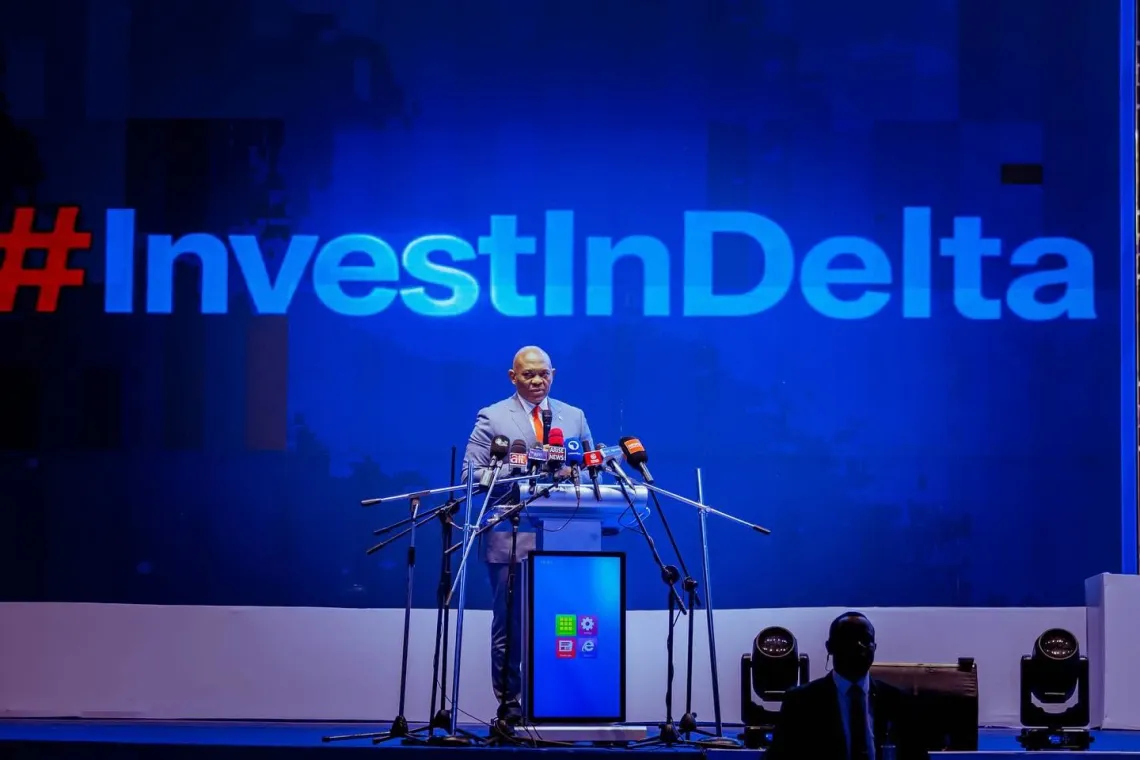
Plans by renowned Nigerian businessman and investor Tony Elumelu to partner with the Delta State Government in electricity generation and distribution have generated widespread discussions among energy experts, economists, business leaders, and residents, with many describing the initiative as a significant step toward addressing the country’s persistent power challenges. While the proposed collaboration has been welcomed as a bold effort to improve electricity supply and stimulate economic growth in Delta State, industry stakeholders have also cautioned that the long-term success of the project will depend on affordability, sustainability, and a carefully diversified energy strategy capable of withstanding global market fluctuations.
Nigeria’s electricity sector has struggled for decades with inadequate generation capacity, aging infrastructure, inconsistent distribution, and a widening gap between supply and demand. These challenges have forced millions of households and businesses to depend heavily on diesel and petrol generators, significantly increasing the cost of living and the cost of doing business. Against this backdrop, private sector participation has increasingly been viewed as an important catalyst for improving electricity access, modernizing infrastructure, and attracting much-needed investment into the energy sector.
The proposed partnership involving Tony Elumelu, one of Africa’s most influential investors and advocates for private sector-led development, has therefore attracted considerable attention. Many believe that leveraging private capital, technical expertise, and innovative business models could accelerate improvements in electricity supply within Delta State while supporting industrial development, job creation, and economic expansion. Reliable electricity remains one of the most important foundations for sustainable development, directly influencing manufacturing productivity, healthcare delivery, education, agriculture, digital services, and the growth of small and medium-sized enterprises.
However, alongside the optimism surrounding the proposed investment, several industry observers have expressed reservations regarding the economic realities of electricity generation based primarily on natural gas. While acknowledging the technical feasibility of expanding gas-fired power generation, analysts argue that affordability remains one of the most significant obstacles confronting consumers and businesses alike. Although Nigeria possesses some of Africa’s largest natural gas reserves, fluctuations in production costs, infrastructure limitations, pricing mechanisms, and broader international market conditions continue to influence the final cost of electricity delivered to end users.

Critics note that households across Nigeria are already experiencing the effects of rising energy costs in various forms. The increasing prices of liquefied petroleum gas used for domestic cooking have demonstrated how vulnerable consumers can become when energy prices respond to both domestic and international market dynamics. Many believe that similar pricing pressures could affect electricity generated predominantly from gas if adequate long-term pricing mechanisms and supply guarantees are not established. For many residents of Delta State, where average household incomes remain under pressure from broader economic challenges, affordability may ultimately determine whether expanded electricity access translates into meaningful improvements in living standards.
Business analysts further argue that electricity projects must be designed with careful consideration of the economic profile of the communities they intend to serve. While industrial customers often consume significantly larger volumes of electricity and may provide stable revenue streams for power providers, residential consumers require pricing structures that remain accessible without imposing excessive financial burdens. Achieving this balance requires efficient generation, modern transmission infrastructure, effective distribution networks, and supportive regulatory frameworks capable of encouraging investment while protecting consumers.
Questions have also been raised regarding the role of industrial customers within the proposed electricity framework. Some observers point out that many large manufacturing companies and industrial facilities already possess the capacity to source natural gas directly from suppliers and generate their own electricity independently. As a result, attracting these major consumers into a centralized electricity distribution model may prove more challenging than anticipated unless the new system offers clear economic advantages through lower costs, improved reliability, or enhanced operational efficiency.
According to DDM News, one of the central issues emerging from discussions surrounding the Delta electricity initiative is the importance of developing a comprehensive national energy strategy rather than relying solely on isolated state-level projects. Energy experts emphasize that although individual investments by state governments and private sector partners are valuable, long-term national energy security requires coordinated planning, integrated infrastructure, and policy consistency across all levels of government. Electricity generation, transmission, distribution, and fuel supply must function as interconnected components of a unified energy ecosystem capable of delivering reliable power across the country.
Another recurring concern involves Nigeria’s continued dependence on a relatively narrow mix of electricity generation sources. Analysts argue that overreliance on gas-fired power plants exposes the electricity sector to multiple risks, including supply disruptions, pipeline vandalism, exchange rate volatility, and international energy market fluctuations. Changes in global geopolitical events, commodity prices, or export demand can influence domestic gas markets, creating uncertainty that may eventually affect electricity tariffs paid by consumers. Such exposure underscores the importance of developing a more balanced and resilient energy portfolio.
Energy specialists frequently point to international examples where diversification has strengthened long-term electricity security. Countries that have successfully expanded electricity access often rely on multiple generation technologies, including hydroelectric power, solar energy, wind farms, natural gas, coal where appropriate, biomass, and increasingly advanced renewable energy systems supported by battery storage technologies. This diversified approach helps reduce dependence on any single fuel source while improving energy resilience during periods of market instability or supply disruptions.
China is frequently cited as one example of strategic energy diversification. Over several decades, the country invested heavily across multiple energy sources, including hydroelectric projects, coal-fired generation, renewable energy technologies, nuclear power, and extensive electricity transmission infrastructure. While each country’s circumstances differ significantly, many analysts believe the broader lesson lies in avoiding excessive dependence on one energy source while continuously expanding investment across complementary technologies capable of ensuring both affordability and long-term energy security.
Historical experience within Nigeria’s electricity sector also continues to shape contemporary discussions. Previous national electricity expansion initiatives focused heavily on gas-fired power generation, reflecting the country’s abundant natural gas reserves. Although these projects significantly expanded installed generation capacity, infrastructure limitations, gas supply challenges, transmission constraints, and operational inefficiencies prevented the sector from fully achieving its intended objectives. Industry observers now argue that future electricity investments should incorporate lessons learned from earlier experiences by embracing greater technological diversity alongside improvements in governance, maintenance, and regulatory oversight.
The evolving constitutional framework granting greater authority to state governments in electricity generation and distribution presents new opportunities for innovation and localized investment. States can increasingly develop electricity markets tailored to their economic strengths, resource availability, and development priorities. Nevertheless, experts caution that state-level initiatives should complement rather than replace broader national planning, particularly regarding transmission infrastructure, grid stability, and long-term energy policy coordination.
According to DDM News, the proposed partnership between Tony Elumelu and the Delta State Government represents an important milestone in Nigeria’s continuing efforts to strengthen electricity infrastructure through greater private sector participation. Beyond the immediate investment itself, the initiative has reignited critical national conversations about affordability, energy diversification, infrastructure modernization, and sustainable economic development. As implementation plans evolve, stakeholders across government, industry, and the financial sector are expected to closely monitor how the project addresses pricing, operational efficiency, customer accessibility, and long-term sustainability.
Ultimately, Nigeria’s electricity future will likely depend not on a single investment or technology but on a comprehensive strategy that combines visionary leadership, private sector innovation, supportive government policies, diversified energy sources, and substantial infrastructure investment. If effectively executed, partnerships such as the one proposed in Delta State could become valuable building blocks within a broader national transformation capable of delivering reliable, affordable, and sustainable electricity to millions of Nigerians. Achieving that vision will require careful planning, strategic collaboration, and a commitment to balancing commercial viability with the broader public interest, ensuring that improved electricity access becomes a genuine driver of economic growth, industrial competitiveness, and national prosperity.




