


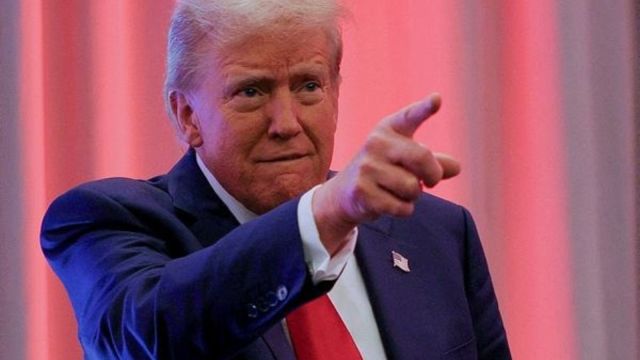
WASHINGTON, UNITED STATES — President Donald Trump has vowed that the United States will respond after Iran allegedly shot down a U.S. Army Apache helicopter near the Strait of Hormuz, in an incident that has sharply escalated already tense relations between both countries.
Trump said he was informed by U.S. military officials that the helicopter was brought down while conducting patrol operations in the Gulf region. He insisted that Washington “must respond” to the attack, describing it as an unacceptable escalation amid fragile regional tensions.
The helicopter reportedly went down near the Strait of Hormuz, a critical global oil shipping route that has repeatedly been a flashpoint in U.S.-Iran confrontations. According to military sources, both pilots on board were safely rescued after the crash and are in stable condition.
The development comes at a time of heightened military activity in the Middle East, where U.S. and Iranian forces have exchanged strikes in recent months alongside wider regional tensions involving Israel and other actors. The latest incident has raised fears that ongoing hostilities could expand into a broader conflict.

U.S. officials have not released full details on how the helicopter was downed, but Trump publicly attributed responsibility to Iran and warned of an imminent response. Military analysts say the situation remains fluid, with Washington weighing its next steps while attempting to avoid full-scale war.
Iranian authorities have not issued a detailed response confirming responsibility for the incident, but have previously denied targeting U.S. aircraft in the region and often accuse Washington of escalating tensions through its military presence near Iranian waters.
The incident has also renewed concerns over the security of the Strait of Hormuz, through which a significant portion of the world’s oil supply passes. Any sustained conflict in the area could have major implications for global energy markets.
Despite the escalation, Trump has also indicated that diplomatic engagement with Tehran is still possible, suggesting that negotiations over broader security and nuclear issues have not been completely ruled out.
As investigations continue, both sides appear to be preparing for potential further action, raising uncertainty over whether the situation will de-escalate or develop into a wider confrontation in the region.




