



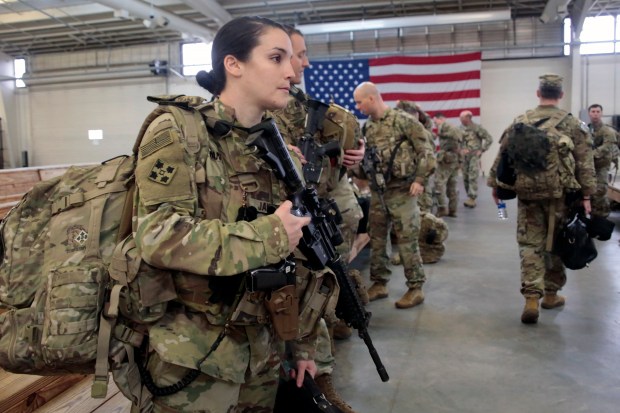
The United States will begin a multi-day air exercise in the Middle East as Washington strengthens its military posture in the region amid rising tensions with Iran.
According to a statement credited to Lt. Gen. Derek France, commander of US Central Command’s Air Forces (AFCENT) and Combined Forces Air Component, the drills are designed to test whether US airmen can “disperse, operate, and generate combat sorties under demanding conditions safely, precisely and alongside our partners.”
Why the drills matter
The exercises come at a politically sensitive moment, following President Donald Trump’s warning that an “armada” is moving toward Iran and his repeated threats of possible military action, as Tehran faces international condemnation over its crackdown on anti-government protests.
CENTCOM confirmed that the USS Abraham Lincoln carrier strike group has already arrived in the region, reinforcing the US military footprint as tensions intensify.
However, despite the heavy military signaling, US sources cited by CNN say Trump is still weighing options, and there is no clear sign that a final decision on military action has been taken.

“We have a lot of ships going that direction, just in case… we’re watching them very closely,” Trump said.
CENTCOM did not disclose the exact location, duration, or full list of assets involved in the exercise.
Iran protest deaths fuel the crisis
The current standoff is being driven largely by the deadly protest crackdown inside Iran.
A US-based rights group, the Human Rights Activists News Agency (HRANA), claims that more than 5,800 protesters have been killed, with over 17,000 additional deaths still under review.
CNN noted it could not independently verify those figures, although Iran has acknowledged that thousands have died.
Trump has warned Iran against continuing the killings, but has also hinted at possible diplomacy, saying at one point that Iran “wants to talk.”
Iran warns US: we will retaliate
Iran has responded with increasingly aggressive rhetoric, warning that any US attack could destabilize the entire Middle East.
Foreign Ministry spokesperson Esmaeil Baghaei said Iran is “more than capable” of responding to any aggression, insisting that the arrival of US warships would not weaken Iran’s resolve.
In Tehran, government-linked propaganda has reportedly intensified, including posters threatening the destruction of an American aircraft carrier, carrying the warning:
“If you sow the wind, you will reap the whirlwind.”
Even as the US increases its military activity, some regional allies are distancing themselves from direct involvement.
Countries such as Saudi Arabia and the UAE have reportedly warned they will not allow their airspace to be used for any attack on Iran.
The UAE, which hosts US forces at a base in Abu Dhabi, has also said it will not provide logistical support for any military action.
CENTCOM stated the exercises would be conducted with the approval of host nations and in coordination with civil and military aviation authorities, emphasizing safety and respect for sovereignty.
The US is flexing military readiness while keeping the door slightly open to diplomacy. Iran is projecting defiance and warning of retaliation.
Meanwhile, key US partners in the region appear unwilling to be dragged into a direct confrontation making the situation even more volatile and unpredictable.

