


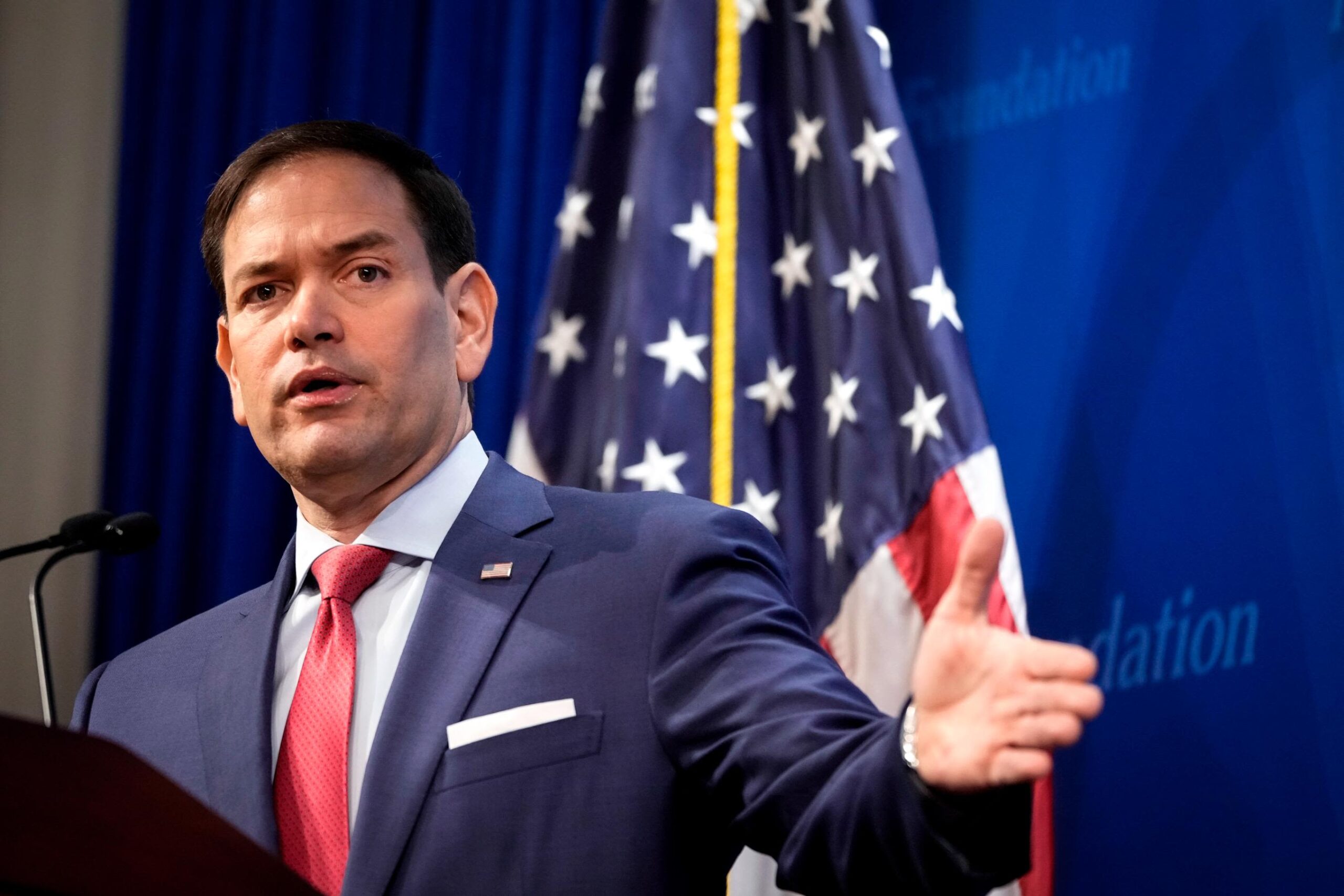
United States Secretary of State Marco Rubio has warned that Washington will pursue “another way” if ongoing negotiations with Iran fail to produce a deal, as fragile diplomacy continues amid the prolonged Middle East conflict.
Speaking to reporters in New Delhi on Monday, Rubio said the US would continue giving diplomacy a chance before considering alternative measures against Tehran.
“We’ll either have a good agreement with Iran or deal with the country another way,” Rubio said.
The talks focus on reopening the strategically vital Strait of Hormuz, easing regional tensions, and launching broader negotiations over Iran’s nuclear programme.

Rubio said there was a “pretty solid” proposal on the table that could lead to the reopening of the strait and “a significant, time-limited negotiation on the nuclear matter”.
The comments came a day after Donald Trump said he had instructed US negotiators “not to rush” into an agreement with Tehran.
Trump also confirmed that the US naval blockade on Iranian shipping would remain in place until a final agreement is formally signed.
Despite growing optimism, several key disputes remain unresolved, including Iran’s nuclear ambitions, the release of frozen Iranian assets, sanctions relief, and the future of Tehran’s highly enriched uranium stockpile.
A senior Trump administration official told Reuters that Iran had agreed “in principle” to reopen the Strait of Hormuz in exchange for the lifting of the US naval blockade.
The official also claimed Tehran had broadly accepted plans to dispose of its highly enriched uranium.
However, Iranian officials have not publicly confirmed those claims.
Iran’s parliament spokesperson, Ebrahim Rezaei, insisted Tehran would not bow to pressure or threats, warning that Washington’s policies were contributing to soaring fuel prices.
The latest diplomatic developments pushed global oil prices down by about six percent, as investors became more hopeful that a broader peace framework could eventually emerge.
Before the conflict erupted in February, roughly one-fifth of the world’s oil and liquefied natural gas shipments passed through the Strait of Hormuz, making the waterway one of the world’s most important energy routes.
The war between the US, Israel and Iran has already caused major disruptions across the region, with thousands reportedly killed in Iran and Lebanon since fighting began earlier this year.
Although a fragile ceasefire has held since early April, negotiators are still struggling to bridge deep disagreements over nuclear policy, sanctions and regional security.




