


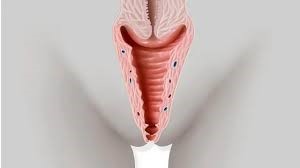
There is no single “type” of vagina. The vagina and external genital structures, known as the vulva, naturally vary in shape, size, color, and appearance from person to person. Medical experts emphasize that this diversity is normal and not usually a sign of health problems.
Concerns about whether genital appearance is “normal” are common, but clinicians stress that healthy anatomy exists on a wide spectrum.
Understanding the Vagina and Vulva
The term “vagina” is often used informally to describe the entire external genital area, but medically it refers to the internal muscular canal. The visible external structures are collectively called the vulva.
The vulva includes the labia majora (outer lips), labia minora (inner lips), clitoris, and the vaginal and urethral openings.

Shape and Structural Variation
The external genital area varies significantly in appearance between individuals. Research has shown a wide range of normal anatomical differences.
Labia majora (outer lips)
The outer lips may be:
- Full or thin
- Symmetrical or asymmetrical
- Closed, partially open, or more prominent
In some individuals, the outer lips fully cover the inner structures. In others, they do not.
Labia minora (inner lips)
The inner lips also vary widely. They may:
- Extend beyond the outer lips
- Remain hidden inside them
- Differ in size from one side to the other
Asymmetry is considered a normal anatomical variation.
Inside the Vagina
The vaginal canal is a flexible muscular structure that adapts to different shapes and sizes. It typically narrows near the opening and expands toward the cervix.
Average vaginal length varies, but research using imaging studies suggests a range of roughly 4 to 7 inches depending on the individual. The vagina can stretch during sexual activity, tampon use, or childbirth and then return toward its baseline state.
The Hymen
The hymen is a thin membrane partially surrounding the vaginal opening in some individuals. Its shape, thickness, and elasticity vary widely.
Contrary to common belief, the presence or condition of the hymen is not a reliable indicator of sexual activity or “virginity.” It can naturally stretch or change over time due to normal activities such as exercise or tampon use.
Size and Flexibility
The vagina is a highly elastic structure capable of expanding and contracting. This flexibility allows it to accommodate menstruation, sexual activity, and childbirth.
Changes in size or sensation may occur after childbirth, but these vary widely and are not uniform across all individuals.
Color Variations
Vulvar skin color differs naturally between individuals and may include shades such as:
- Pink
- Red or burgundy
- Brown or dark brown
- Purplish tones during increased blood flow
Temporary changes in color can also occur due to hormonal shifts, arousal, or infection.
Pubic Hair
Pubic hair varies in density, texture, and growth patterns. It typically develops during puberty and is influenced by hormonal activity.
Hair growth tends to decrease with age due to hormonal changes. Pubic hair may also play a protective role by reducing friction and limiting exposure to bacteria.
Vaginal Discharge
Vaginal discharge is a normal bodily function that helps maintain vaginal health by cleansing and balancing bacteria.
Discharge may change in consistency or amount during the menstrual cycle, especially around ovulation. However, unusual changes such as green, gray, or foul-smelling discharge may indicate infection and should be evaluated by a healthcare provider.
Menstrual Bleeding
Menstrual flow varies widely between individuals. Some people experience light spotting, while others have heavier bleeding.
Heavy or prolonged menstrual bleeding that affects daily life or causes symptoms such as dizziness may require medical evaluation, as it can indicate underlying conditions or lead to anemia.
Vaginal Odor
The vagina naturally contains bacteria that produce a mild odor, which can vary throughout the menstrual cycle.
Changes in odor are usually harmless, but a strong or unpleasant smell may be associated with infections such as bacterial vaginosis or trichomoniasis.
When to See a Doctor
Medical attention is recommended if a person experiences:
- Unusual discharge or odor
- Persistent pain or discomfort
- Heavy or irregular bleeding
- Pain during sexual activity
- Changes in menstrual patterns
- Difficulty inserting tampons
Some individuals are also born with structural differences, such as a vaginal septum or hymenal variations, which may affect menstruation or sexual function and can often be treated medically if needed.
Summary
There are no distinct “types” of vagina. Instead, there is a wide range of normal anatomical variation in the vagina and vulva. Differences in shape, size, color, and function are expected and generally not a cause for concern.
However, changes in discharge, bleeding, pain, or odor may indicate underlying health conditions and should be assessed by a healthcare professional when they occur.




